Why Is My Tyre Deflating? Common Causes
29 August 2026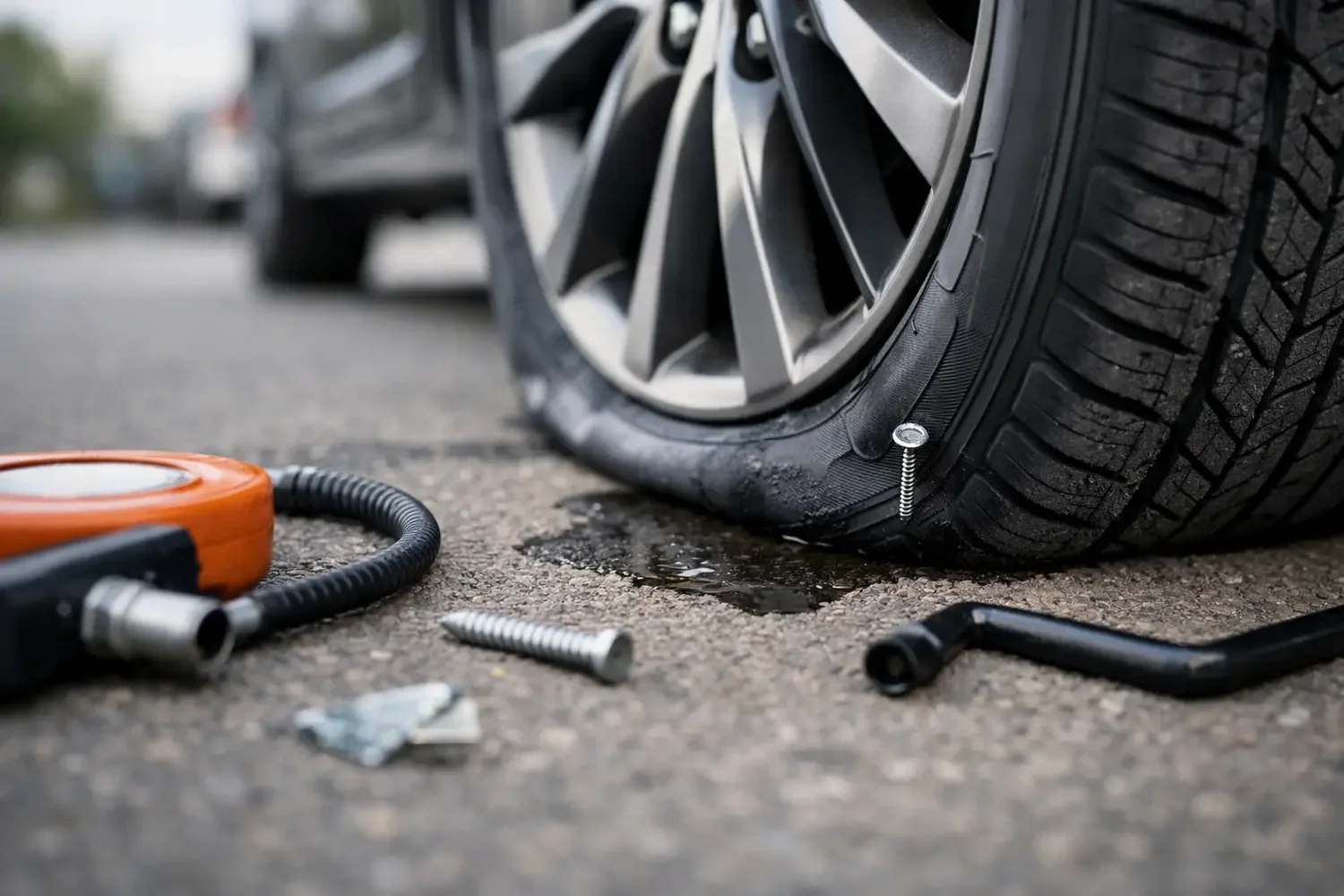
A tyre that looks low when you leave the house can turn a normal journey into a roadside problem within minutes. If you are asking, why is my tyre deflating, treat it as a safety issue rather than something to keep topping up and hoping will settle. A slow leak can become a flat tyre without much warning, especially during a motorway journey or when the car is carrying passengers and luggage.
The good news is that many tyre problems have a clear cause and can be repaired or dealt with quickly. The key is knowing when it is safe to stop, when a repair may be possible, and when you need roadside assistance instead of driving any further.
Why is my tyre deflating? The most common causes
A puncture from a nail, screw or road debris
This is one of the most common reasons for gradual tyre pressure loss. A nail or screw can work its way into the tread without causing an immediate blowout. You may notice that the tyre needs air every few days, the steering feels slightly different, or a tyre-pressure warning light appears on the dashboard.
Do not pull a screw or nail out at the roadside. It may be helping to slow the air loss, and removing it can leave you with a completely flat tyre. Park somewhere safe, inspect the tyre only if you can do so without putting yourself at risk, and arrange help if the pressure is dropping quickly.
A puncture in the central tread area can sometimes be repaired, depending on its size, angle and the tyre’s condition. Damage near the shoulder or sidewall is usually not safely repairable and often means the tyre must be replaced.
A damaged valve or valve cap
The small valve where you connect an air pump can also leak. Valve damage is easy to miss because the tyre itself may look fine. The rubber can deteriorate with age, the valve core can loosen, or dirt can prevent it from sealing correctly.
A missing valve cap does not normally cause a tyre to deflate on its own, but it allows moisture and debris to reach the valve. If one tyre repeatedly loses pressure and there is no obvious puncture, a garage should check the valve and wheel seal.
A leaking wheel rim
Air can escape where the tyre meets the alloy or steel wheel. Corrosion, kerb damage and a build-up of dirt around the rim can stop the tyre sealing properly. This is more likely with older wheels and can become noticeable after colder, wetter weather.
A bent wheel from a deep pothole can create the same problem. You may not see the damage easily, but you might feel vibration through the steering wheel, notice uneven tyre wear, or find the same tyre is always lower than the others. A wheel inspection is needed before the car is returned to regular use.
A split, cut or bulge in the tyre
A cut in the sidewall, a visible bulge, or cracking in the rubber is more serious than a simple puncture. These faults can result from hitting a kerb, pothole or road debris, or from driving on an underinflated tyre. The tyre’s internal structure may be damaged even when the outside cut looks small.
Never drive on a tyre with a sidewall bulge. It can fail suddenly. Pull over safely and call for assistance, particularly if you are on a fast road, in poor weather, or travelling with children.
Temperature changes and natural pressure loss
Tyres lose a small amount of air naturally over time. Cold weather makes this more noticeable because air pressure drops as temperatures fall. A tyre that was correctly inflated during a warm spell can trigger a warning light on a cold morning.
That said, temperature is not a convincing explanation if one tyre is repeatedly much lower than the others. Check pressures against the vehicle manufacturer’s recommended figures, usually found inside the driver’s door frame or in the handbook. If the same tyre keeps deflating after being inflated correctly, have it inspected.
A faulty tyre-pressure monitoring system
Some cars have a direct tyre-pressure monitoring system with sensors inside the wheels. A sensor fault, weak sensor battery or incorrect system reset can trigger a warning despite the tyres being properly inflated. Other vehicles use the ABS system to detect changes in wheel rotation, which can also need resetting after pressures are adjusted.
Do not assume the warning is false until you have physically checked each tyre. Use a reliable pressure gauge where possible. If all pressures are correct but the warning remains, book a diagnostic check.
Can you drive with a tyre that is deflating?
It depends on how quickly the tyre is losing air and where you are. If the tyre is visibly flat, has a sidewall cut or bulge, or the car is pulling sharply to one side, do not drive it. Continuing can damage the wheel, make the vehicle difficult to control, and turn a repairable puncture into a replacement tyre.
If the tyre is only slightly low and you are close to a safe place to stop, inflate it to the correct pressure and monitor it closely. However, this should only be a short-term measure to get out of immediate danger or reach a tyre professional. It is not a solution for a leak.
Driving on a severely underinflated tyre also creates heat in the tyre walls. At speed, that heat can lead to rapid failure. This is why a tyre that looks merely soft at the petrol station should not be ignored before joining a motorway or dual carriageway.
What to do when you notice a tyre losing pressure
First, reduce your speed gradually and avoid sudden braking or sharp steering. Find a safe, level place away from moving traffic. On a motorway, aim for the next safe exit or service area only if the tyre still holds enough air to move safely. If it is flat or the car feels unstable, stop as safely as possible and seek help.
Once you are parked, switch on your hazard lights. Check the tyre from a safe position for obvious nails, cuts, bulges or damage to the wheel. Do not place yourself near live traffic to investigate, and do not crawl underneath the vehicle.
If you have a suitable spare wheel, know how to fit it safely, and are parked well away from traffic, changing the tyre may be an option. Many newer cars do not carry a spare, however. They may have a temporary inflation kit instead, and these kits are not suitable for every puncture. They should not be used on sidewall damage, large holes or tyres that have been driven flat.
For a safer roadside decision, remember these four checks:
- A flat tyre, sidewall damage or a bulge means stop driving.
- A nail or screw should be left in place until the tyre is assessed.
- A temporary sealant kit is only for limited, suitable tread punctures.
- If you are in an exposed or unsafe location, call for roadside help rather than attempting a repair.
When roadside assistance is the right call
Tyre issues become more stressful after dark, in rain, on a busy route, or when you are not confident changing a wheel. There is no benefit in taking risks beside fast-moving traffic to save a short wait. A trained roadside technician can assess the tyre, fit your spare where appropriate, help with a temporary solution where safe, or arrange recovery if the vehicle should not continue.
This is especially useful if you have locking wheel nuts but cannot find the key, the spare tyre is also flat, the locking nut is damaged, or the wheel is stuck due to corrosion. These are common problems that can turn a straightforward tyre change into a difficult job at the roadside.
Car Recovery 24 provides 24-hour roadside support for motorists who need practical help with tyre problems in areas including Glasgow, Manchester, Liverpool, Preston and Coventry. Clear updates and a realistic arrival time can make a difficult stop feel far more manageable.
How to reduce the chance of another flat tyre
Check tyre pressures at least once a month and before a long journey, using the manufacturer’s recommended pressures for your load. Check them when the tyres are cold, rather than immediately after a drive. Include the spare tyre if your vehicle has one.
Take a quick look at each tyre for cuts, embedded objects and uneven wear. Try to avoid mounting kerbs and slow down for potholes where possible. If you regularly lose pressure from the same wheel, do not keep refilling it. Ask for the tyre, valve and rim to be checked together so the real cause is found.
A deflating tyre rarely fixes itself. Acting early protects your wheel, your wallet and, most importantly, everyone in the vehicle. If there is any doubt about whether it is safe to continue, stop somewhere secure and get the right help before the problem gets worse.