Vehicle Recovery Versus Roadside Repair UK
27 August 2026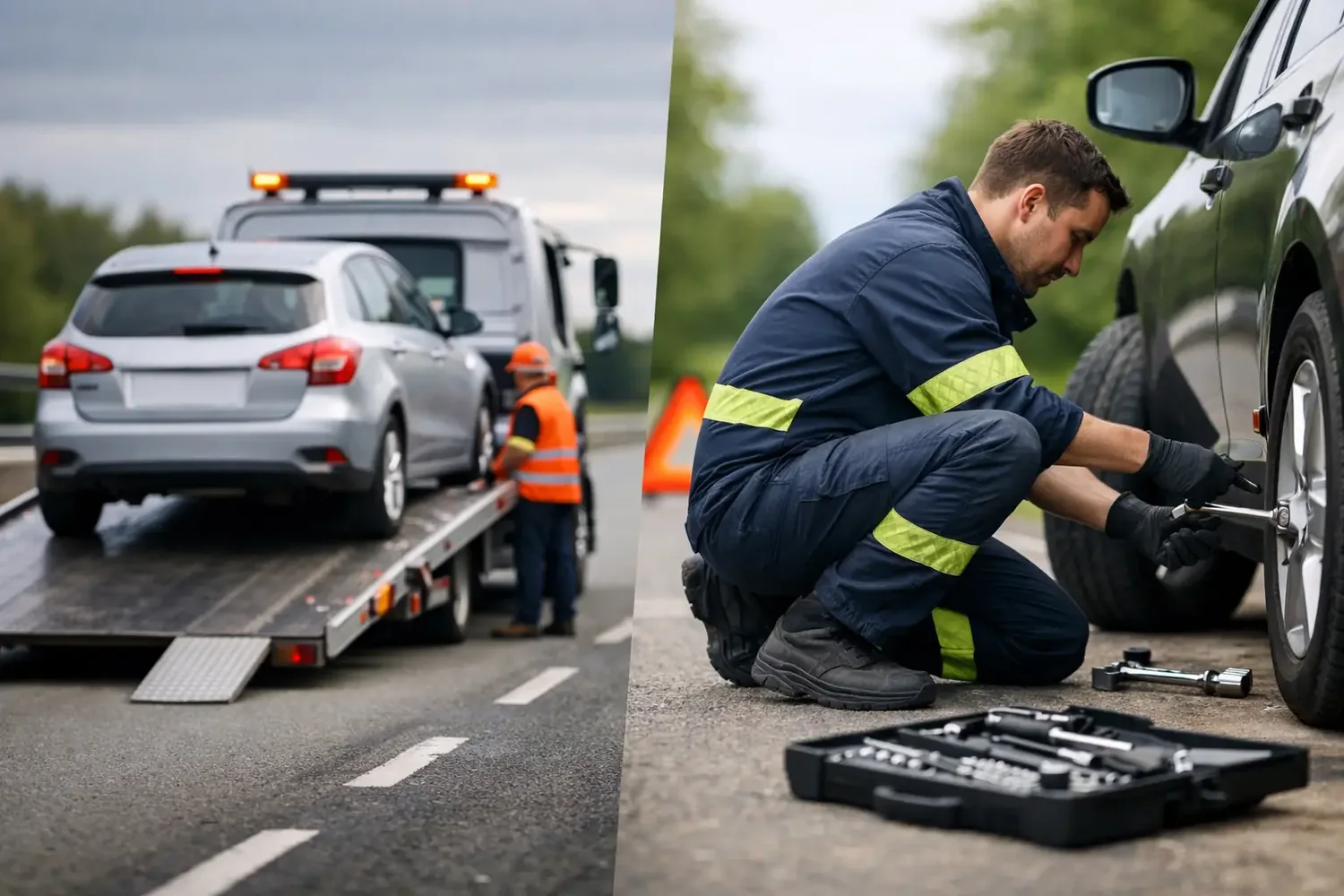
A warning light on the motorway, a flat tyre before work, or an engine that will not restart in a supermarket car park all create the same immediate question: can this be fixed where you are, or does the vehicle need moving? Vehicle recovery versus roadside repair is not simply about convenience. The right decision protects you, your passengers, other road users and your vehicle from further damage.
A dependable assistance provider will assess the fault first, explain the realistic options in plain English and avoid pushing a roadside repair when recovery is the safer choice. Sometimes a quick fix gets you back on the road within minutes. Other times, the best outcome is a professional recovery to a safe destination, garage or home.
What roadside repair means
Roadside repair is practical on-site assistance intended to make your vehicle safe and roadworthy enough to continue its journey. It is most useful when the cause of the breakdown is clear, the repair is straightforward and there is no sign of a wider mechanical problem.
Common examples include a flat or damaged tyre where a suitable spare is available, a flat battery that needs a jumpstart, a battery that can be replaced, or low oil, coolant or screenwash that can be topped up safely. A driver may also need help after running out of fuel, fitting a spare wheel or dealing with a loose battery connection.
The value is obvious: you stay where you are, avoid arranging onward transport and can often continue with your plans. For commuters, parents with children in the car and anyone stopped in poor weather, a successful roadside repair can remove a great deal of stress.
That said, a roadside repair is not a promise that every fault has disappeared for good. A jumpstarted battery, for example, may get the engine running, but the battery could be worn out or the alternator may not be charging it correctly. A responsible technician should tell you when you can drive on, when you should head directly to a garage, and when not to drive at all.
When vehicle recovery is the safer option
Vehicle recovery means transporting your vehicle rather than attempting to return it to the road at the roadside. This may be to your home, a local garage, a dealership or another safe destination, depending on the situation and the service agreed.
Recovery is usually the right call if the vehicle cannot be made safe to drive, if the fault needs workshop equipment or if working beside the road creates too much risk. On a busy motorway, smart motorway, narrow rural road or poorly lit street, even a minor-looking issue can become unsafe quickly.
A recovery vehicle is also the sensible option after a collision, serious overheating, steering problems, brake concerns, major fluid leaks, a snapped belt, clutch failure or an engine warning that is accompanied by loss of power, smoke, unusual noises or a burning smell. Continuing to drive could turn a repairable fault into a much larger bill.
The same applies when a tyre has no usable spare, the wheel itself is damaged, or more than one tyre is affected. A sealant kit is not suitable for every puncture, particularly when there is damage to the tyre sidewall. Trying to make do can put you and other road users at risk.
Vehicle recovery versus roadside repair: how the decision is made
The first priority is always safety, not speed. A technician will consider where the vehicle is stopped, traffic conditions, visibility, the weather and whether passengers can wait safely. A fault that may be manageable on a quiet driveway can require recovery if it happens on a live carriageway.
Next comes the nature of the problem. Some faults have a clear, limited solution. A flat battery caused by leaving the interior light on may respond well to a jumpstart. Other faults are symptoms rather than a simple cause. If the battery repeatedly goes flat, warning lights remain on or the engine starts but runs badly, further diagnosis is needed.
Finally, there is the question of roadworthiness. A vehicle should only continue if it can be driven legally and safely. This is where honest advice matters. Getting a car moving is not the same as making it safe for a long journey, high-speed roads or carrying a family home late at night.
A good recovery operator will not guess. They will assess the situation, tell you what they can do at the roadside and provide clear information if transport is recommended.
Faults that may be repaired at the roadside
Many everyday breakdowns can be dealt with quickly when conditions are safe. Battery problems are among the most common. A trained technician can test the likely issue, attempt a jumpstart and, where appropriate, fit a replacement battery. If the vehicle starts and charges correctly, you may be able to continue.
Tyre assistance is another frequent roadside service. If you have an inflated, roadworthy spare wheel and the locking wheel nut key, a tyre change may be all that is required. It is still wise to arrange a tyre inspection or replacement as soon as possible, especially if the puncture came from a pothole or kerb impact.
Low fluid levels can occasionally be handled on site, but they need context. Topping up coolant or oil may help when a level is low, yet a rapidly falling level suggests a leak or another fault. If the engine has overheated, do not open the coolant cap while the engine is hot. Stop safely, switch off the engine and wait for professional assistance.
Signs you should not continue driving
Some situations call for immediate caution rather than another attempt to start the car. Stop driving if you see smoke, smell burning, have a serious fuel or oil leak, lose braking performance, struggle to steer, or hear loud knocking from the engine. A red warning light, particularly for oil pressure, brakes, temperature or the charging system, should never be ignored.
Overheating deserves particular care. Pull over safely, turn off the engine and allow it to cool. Do not keep driving in the hope that the temperature will drop. Severe engine damage can happen quickly.
After an accident, recovery is often the best route even if the car appears to run. Damage underneath, to the suspension, tyres, steering or cooling system is not always obvious from the driver’s seat. Let the vehicle be checked properly before it goes back into normal use.
What to do while waiting for help
Move to a safe place if you can do so without risk. On a motorway, follow the guidance for your location and use an emergency area where possible. If you stop on the hard shoulder, leave the vehicle from the left-hand side when safe, get behind the barrier if there is one, and keep well away from moving traffic.
On ordinary roads, use your hazard warning lights, avoid standing near the vehicle and keep children and passengers in a safe position away from traffic. Do not attempt tyre changes or repairs where passing vehicles are close or visibility is poor.
When you call for assistance, have your exact location ready. A road name, motorway junction, nearby landmark or live map pin can save valuable time. Explain what happened, any dashboard warnings, whether the vehicle is in a safe location and whether you have passengers, especially children or vulnerable people.
Choosing help that puts safety first
Fast attendance matters, but clear communication matters too. You should know what is happening, receive a realistic arrival estimate and understand whether the plan is a repair, a jumpstart, a tyre change or full vehicle recovery. A rushed promise to fix everything roadside is not always in your best interests.
Car Recovery 24 provides 24-hour assistance for motorists who need practical support without uncertainty. Whether you are stranded in Glasgow, Manchester, Liverpool, Preston or Coventry, the priority should be the same: assess the fault properly, keep you informed and get you moving safely or recover the vehicle with care.
If you are unsure which service you need, do not worry about making the technical decision yourself. Describe the symptoms, your location and whether the vehicle feels safe to drive. The right assistance team can then make the call that protects your journey, rather than asking you to take a chance on the road.