10 Signs Your Car Needs Towing, Not a Restart
8 September 2026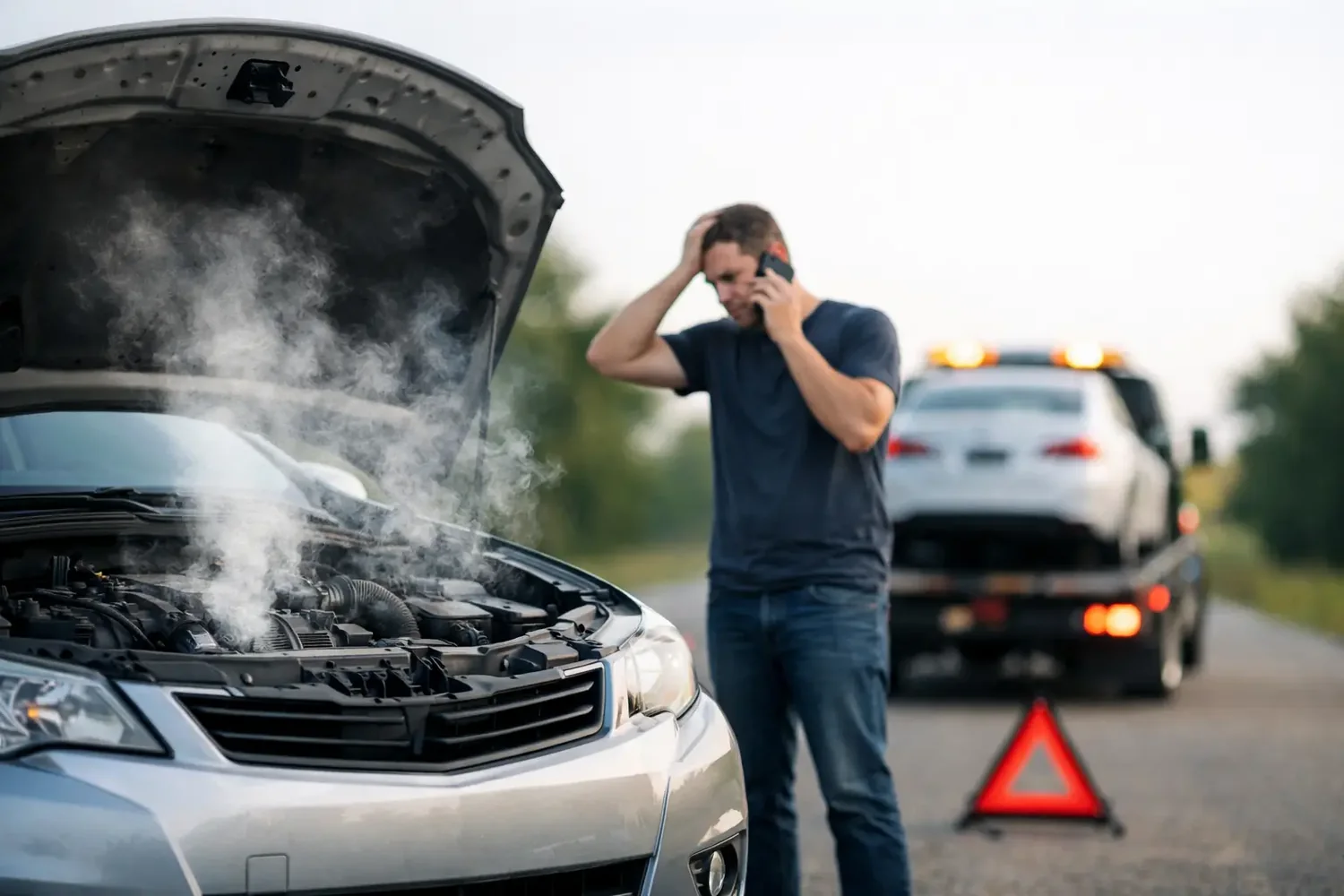
A car that will not start outside your home is frustrating. A car that loses power in moving traffic, starts smoking or develops a loud mechanical noise is a safety issue. Knowing the signs your car needs towing can prevent a stressful breakdown becoming a dangerous roadside situation - and can save your vehicle from much more expensive damage.
The right decision is not always obvious. Some faults can be safely dealt with at the roadside, such as a flat battery, a puncture with a usable spare tyre, or low coolant caught before the engine overheats. Others mean the car should not move another metre. When in doubt, stop somewhere safe and arrange professional recovery.
Signs Your Car Needs Towing Immediately
1. The engine is overheating or steam is coming from the bonnet
If the temperature gauge reaches the red, an overheating warning appears, or steam is rising from the bonnet, pull over as soon as it is safe. Continuing to drive an overheated engine can warp the cylinder head, damage the head gasket and lead to a repair bill far beyond the cost of recovery.
Do not open the radiator cap or coolant reservoir while the engine is hot. Pressurised coolant can cause serious burns. Switch off the engine, keep clear of traffic and let the vehicle cool. A low coolant level may have a simple cause, but a leak, failed water pump or cooling-system fault needs proper diagnosis before driving again.
2. Warning lights appear with a loss of power
One dashboard warning light does not always mean you need a tow. For example, a tyre-pressure warning may simply mean you need to check a tyre safely. But a red oil-pressure light, battery light combined with stalling, engine-management warning with severe power loss, or multiple warnings appearing at once should be treated seriously.
If the vehicle enters limp mode, struggles to accelerate, cuts out or will not restart, do not force it onwards. Driving with low oil pressure can destroy an engine quickly. A charging fault can leave you without power steering, lights or a working engine. Recovery is the sensible option when the car cannot perform safely and predictably.
3. You can smell burning, fuel or strong electrical fumes
A burning smell after heavy braking may sometimes come from overheated brakes, particularly after driving downhill. However, a persistent burning rubber smell, melting-plastic odour or smoke from the engine bay is not something to ignore.
The smell of petrol or diesel is another clear reason to stop. Fuel leaks create a fire risk and should not be investigated beside a live carriageway. Turn off the engine when safe to do so, move passengers away from the vehicle and arrange recovery. If there is smoke, flames or immediate danger, call 999.
4. The brakes, steering or suspension do not feel right
Your car needs towing if braking becomes weak, the brake pedal sinks to the floor, the steering suddenly feels loose or unusually heavy, or the vehicle pulls violently to one side. These are not faults to "drive carefully" with. You need reliable control of the car at every speed, especially on wet roads, roundabouts and motorway slip roads.
A loud clunk, scraping sound or severe vibration after hitting a pothole or kerb can also indicate damage to a wheel, suspension component or steering system. It may still roll, but that does not mean it is roadworthy. A recovery operator can transport it safely for inspection rather than risking a loss of control on the way to a garage.
5. A tyre is shredded, badly damaged or cannot hold air
A puncture does not automatically require a tow. If you are in a safe location, have the correct spare wheel or approved repair kit, and know how to use it, roadside help may get you moving again. But do not drive on a flat tyre just to reach a petrol station or garage. Doing so can ruin the tyre, damage the wheel and affect handling.
Arrange recovery when the sidewall is split, the tyre has come apart, the wheel is bent, there is no safe spare, or more than one tyre is damaged. This is particularly relevant on motorways, dual carriageways and narrow roads where changing a wheel places you too close to passing traffic.
6. There is a serious fluid leak beneath the car
A small patch of clear water is often normal air-conditioning condensation. Other fluids are more concerning. Fresh oil may look brown or black, coolant can be pink, green, orange or blue, and brake fluid is usually clear to amber. Any large or fast-growing leak needs attention before the vehicle is driven.
Do not rely on colour alone, and do not put your hands into leaking fluid or under the vehicle. If the leak follows an impact, comes with warning lights or is accompanied by poor braking, overheating or a burning smell, keep the car parked and have it recovered.
When a Breakdown May Be Fixed at the Roadside
Not every call-out ends with towing. A trained roadside technician may be able to jumpstart a flat battery, replace a battery, fit a spare wheel, provide an oil or coolant top-up, or identify a minor issue that allows a safe onward journey.
The key difference is whether the fault can be resolved without compromising safety. A battery that has simply gone flat may be restarted, although it should still be checked if it keeps happening. A car that will not start because of an electrical fault, immobiliser problem or damaged charging system may need transport instead. It depends on the condition of the vehicle, where you are stopped and whether a safe repair can be made on site.
What to Do While Waiting for Recovery
First, get yourself and your passengers safe. On a normal road, stop as far from moving traffic as possible, switch on hazard lights and leave the car only if it is safe. On a motorway, aim for a service area, exit or emergency refuge area if the vehicle can still be moved without risk. If you stop on the hard shoulder, exit from the left-hand side where possible and wait behind the safety barrier, well away from traffic.
Do not stand in front of or behind the vehicle. Do not attempt repairs beside fast-moving traffic. Keep children close, wear high-visibility clothing if you have it and use your mobile phone only once you are in a safe place.
When arranging assistance, be ready to share your exact location, registration number, vehicle make and model, the fault symptoms and whether you are carrying passengers. Mention if the car is in an awkward position, has locked wheels, is automatic, electric or has suffered accident damage. Clear information helps the recovery team send the right vehicle and equipment first time.
Do Not Risk Turning a Fault Into Major Damage
It is tempting to try one more restart or drive "just a few miles" to avoid the inconvenience of a tow. That decision can turn a manageable issue into a failed engine, damaged gearbox or unsafe roadside emergency. If the car is overheating, leaking heavily, losing control, smoking, making severe noises or showing critical warning lights, stop and call for help.
For drivers in Glasgow, Manchester, Liverpool, Preston and Coventry, Car Recovery 24 provides 24-hour roadside assistance and vehicle recovery, with clear communication and live ETA updates when you need to know what happens next. A prompt recovery gives you one less thing to worry about and gives your car the best chance of reaching a garage without further damage.