Roadside Mechanic Versus Towing: Which Is Best?
25 August 2026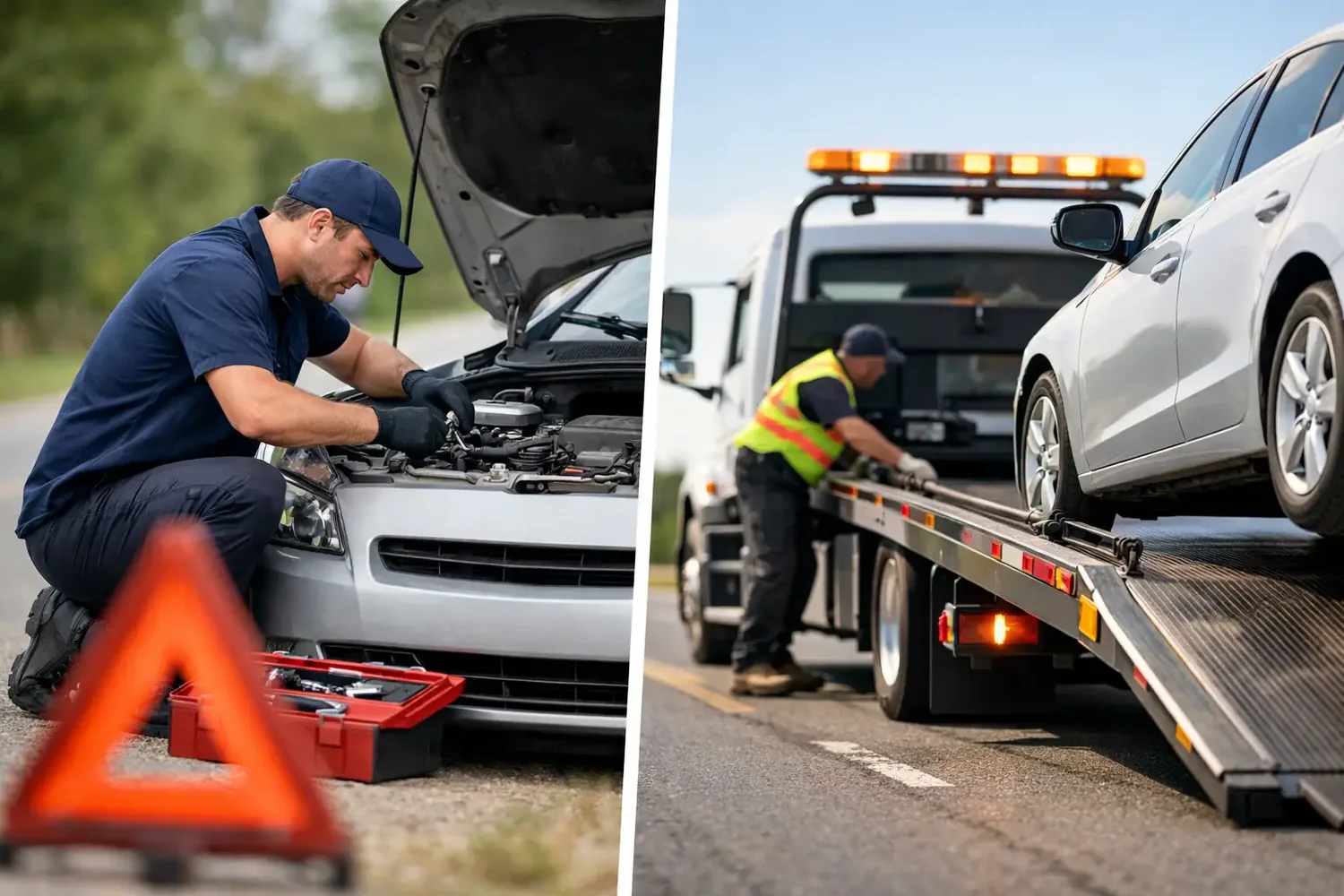
A flat tyre outside your home is frustrating. A warning light on the M8 with children in the car is a different situation entirely. The choice between a roadside mechanic versus towing is not simply about getting the cheapest option. It is about getting the right help quickly, keeping everyone safe, and avoiding further damage to your vehicle.
Sometimes a skilled roadside technician can get you moving again in minutes. Other times, attempting a repair at the roadside is not sensible, safe or possible. Knowing the difference helps you make a calmer decision when the pressure is on.
Roadside mechanic versus towing: safety comes first
Before thinking about repairs, look at where you are and whether the vehicle is safe to approach. A minor fault can become a serious risk if you are stopped on a fast road, a blind bend, a narrow country lane or an active traffic lane.
If your car has stopped in a dangerous position, recovery should usually take priority over repair. Move to a safe place if the vehicle can be driven without risking damage. On a motorway, use the hard shoulder or an emergency area where possible, leave the vehicle from the side away from traffic if it is safe to do so, and stand behind a barrier. If you feel at risk from passing traffic, contact the emergency services.
A roadside mechanic is most useful when the vehicle is parked safely and the fault is clear, manageable and likely to be fixed using mobile equipment. Towing is the safer answer when access is poor, the fault is severe, or there is any doubt about whether the car can be driven.
When a roadside mechanic is the right call
Roadside assistance is designed for common faults that prevent a car from starting or continuing its journey, but do not necessarily require a garage. The best outcome is straightforward: the technician arrives, checks the problem, carries out a safe repair or temporary fix, and you can continue on your way.
Battery and starting problems
A flat battery is one of the most common reasons drivers call for help. It may be caused by leaving lights on, cold weather, an ageing battery or a charging issue. A jumpstart can often get the engine running quickly. If the battery has failed completely, a replacement may be possible at the roadside.
There is a trade-off. If the car starts after a jump but the battery warning light remains on, the alternator may not be charging it. In that case, driving on could leave you stranded again a few miles later. A proper assessment matters more than simply getting the engine to turn over.
Flat tyres and wheel changes
If you have a puncture, an undamaged spare wheel and a safe place to stop, a mobile technician can usually fit the spare and get you moving. This is often much faster and less disruptive than arranging recovery to a tyre centre.
However, towing may be necessary if you have no spare, more than one damaged tyre, a broken wheel, damaged wheel studs or a vehicle that cannot be lifted safely. Driving on a flat tyre, even for a short distance, can damage the tyre beyond repair and may harm the wheel as well.
Fluids, overheating and minor roadside faults
Low coolant, low engine oil or a loose connection can sometimes be dealt with on site. A technician can inspect for obvious leaks, top up suitable fluids where appropriate and advise whether it is safe to continue.
But an overheating engine is not always a simple coolant issue. Steam from under the bonnet, repeated overheating, a strong sweet smell, leaking fluid or a temperature gauge in the red can point to a more serious cooling-system fault. Let the engine cool and do not keep driving in the hope that it will settle. Recovery is often the sensible choice because continued driving can cause expensive engine damage.
Lockouts and simple electrical issues
Some non-mechanical problems also suit roadside support. A locked vehicle, a loose battery terminal or a minor electrical fault may be resolved without loading the car onto a recovery vehicle. The technician will still assess the vehicle before recommending that you drive away.
When towing is the better option
Recovery is not a failure of roadside assistance. It is the correct service when a roadside repair would be unsafe, unreliable or likely to cause more damage. A professional recovery operator protects your vehicle, your passengers and other road users while getting the car to a suitable destination.
Towing is normally the right decision after a collision, even when the vehicle appears to run. Damage to steering, suspension, brakes, tyres, lights or the underside may not be obvious from the driver’s seat. If airbags have deployed, fluids are leaking or panels are rubbing against tyres, do not attempt to continue your journey.
Mechanical faults that usually need recovery include a snapped timing belt or chain, clutch failure, gearbox problems, major engine noise, steering faults and brake issues. The same applies if the engine will not start after basic roadside checks or if a dashboard warning indicates a serious fault.
Modern vehicles add another consideration. Hybrid, electric, automatic and four-wheel-drive vehicles may have specific recovery requirements. Towing them incorrectly can cause damage to the drivetrain or electrical systems. Tell the recovery company exactly what vehicle you have so the correct equipment can be sent.
Cost, time and the risk of a second breakdown
It is understandable to look first at the cost of a roadside repair compared with towing. A simple jumpstart or wheel change may be the most economical route because it avoids transport and lets you continue with your plans. For commuters, families and drivers heading to work or an appointment, that speed can make a real difference.
Yet the lowest immediate price is not always the best value. A temporary repair is only useful if it gives you a safe, reliable journey. If the fault is likely to return, recovery can save you from paying for a second call-out, damaging the vehicle further or breaking down in a less safe place.
Ask what the technician has found, whether the car is safe to drive, and how far it can reasonably travel. Clear advice should not pressure you into one option. It should explain the condition of the vehicle and let you understand the risk.
What to do while help is on the way
Once you have arranged assistance, focus on staying visible, safe and easy to locate. Put your hazard lights on if appropriate, keep passengers away from moving traffic and use warm clothing or blankets if you are waiting in cold weather. If you are on a motorway or another high-speed road, follow the relevant road safety guidance rather than trying to inspect or repair the car yourself.
When you call, have your registration, make and model ready. Give the exact location, including the road number, direction of travel, nearby junction, landmark or postcode. Explain what happened before the fault, whether any warning lights are showing and whether the vehicle is in a safe position.
It also helps to mention if you have children, vulnerable passengers, pets or a medical need to reach a destination. A responsive recovery provider can plan the right response, give a realistic arrival estimate and keep you updated while you wait.
Choose help that can make the right call on scene
The most useful service is not one that promises a repair in every case or towing in every case. It is one that can assess the vehicle properly and act in your best interests. A trained technician should arrive equipped to handle routine roadside problems, while also having the option to arrange safe recovery when the diagnosis points to a bigger issue.
For drivers across Glasgow, Scotland and the wider UK, Car Recovery 24 provides 24-hour roadside support and vehicle recovery with direct communication and live updates. Whether you need a battery jumpstart, tyre change, fluid top-up or a careful recovery, the goal is the same: reduce the uncertainty and get the right vehicle safely to the right place.
If the car is safely parked and the fault looks minor, roadside help may get your day back on track quickly. If the vehicle is unsafe, badly damaged or showing signs of a major mechanical problem, choose recovery without hesitation. Your journey can wait a little longer. Your safety and your vehicle are worth protecting.