Roadside Assistance When Your Car Lets You Down
12 July 2026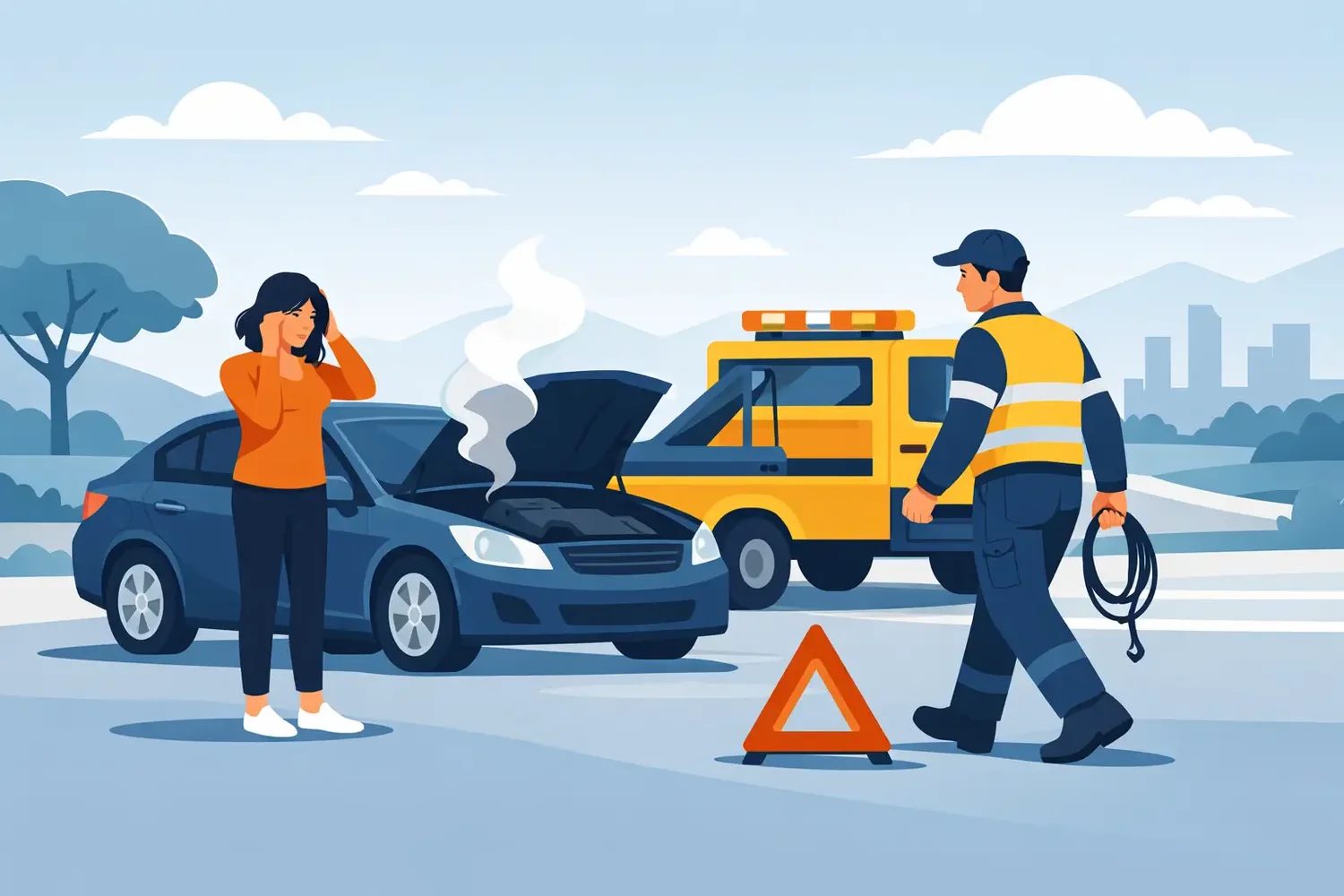
A warning light on the M8, a flat tyre outside the school gates or an engine that will not start before work can turn a normal day into a stressful one very quickly. Roadside assistance gives you a clear next step: get yourself safe, explain the problem, and have the right help sent to your location.
The best response is not always a tow. Many faults can be sorted at the roadside, allowing you to continue your journey without the cost and delay of a garage visit. When a repair is not safe or practical, professional vehicle recovery gets your car transported securely to a destination you choose.
What roadside assistance can do for you
Roadside assistance is practical help for a vehicle that cannot be driven safely or reliably. It may be needed at home, at work, in a supermarket car park, on a country road or at the roadside during a longer journey. The aim is simple: assess the issue, resolve it where possible, and protect you and your vehicle when recovery is required.
Common call-outs include a flat or damaged tyre, a dead battery, an empty fuel tank, low coolant, an overheating engine, a puncture, a mechanical fault, a lost key situation or a car that has simply refused to start. The right service depends on the fault and the condition of the vehicle. A battery that has run flat may need a jumpstart, for example, while a battery that will not hold charge may need replacing.
For drivers around Glasgow, Edinburgh, Falkirk and Stirling, speed matters, but clear communication matters just as much. You should know that help is on its way, have a realistic estimated arrival time, and be able to update the recovery team if your location changes. A direct call and WhatsApp updates can remove a lot of uncertainty when you are stranded.
What to do first when you break down
Your priority is personal safety, not diagnosing the car. If the vehicle is moving, steer it to the safest available place. Use your hazard warning lights and, where appropriate, switch on sidelights if visibility is poor. On a motorway, get as far left as possible and follow motorway safety guidance. Do not attempt repairs beside fast-moving traffic.
Once stopped safely, take a moment to assess whether you and your passengers need to move away from the vehicle. Children, older passengers and anyone who feels unwell should be kept safe and warm. If you are in an unsafe position, such as a live lane or a dangerous bend, contact the emergency services first.
When calling for assistance, give your exact location, vehicle registration, make and model, the symptoms you have noticed, and the number of people travelling with you. A motorway junction, nearby landmark, postcode, road name or live phone location can all help a recovery operator find you faster. Tell them if you have a baby, pets, luggage, a mobility requirement or a vehicle that cannot roll freely.
The roadside help you may need
A good recovery operator will ask a few clear questions before dispatching help. This is not to delay your call. It helps send the correct equipment and technician first time.
Flat tyres and wheel changes
A puncture can sometimes be dealt with by fitting your spare wheel, provided the spare is safe, inflated and suitable for the vehicle. Not all cars carry one. Some have a tyre repair kit, while others need a replacement tyre arranged after recovery. If wheel nuts are seized, the locking wheel nut key is missing, or the tyre has failed in an unsafe location, recovery may be the sensible option.
Do not drive on a visibly flat tyre. It can damage the wheel, affect steering and make a small tyre issue much more expensive.
Battery jumpstarts and replacements
A flat battery is one of the most common reasons drivers call for help, particularly during cold weather or after a car has been left unused. A jumpstart may get the engine running, but it does not automatically mean the problem is solved. If the battery is old, the alternator is faulty, or there is an electrical drain, the car may fail again soon after.
A professional can assess the situation and advise whether a jumpstart is appropriate or whether a replacement battery or recovery is safer. Avoid repeated jumpstarts without finding the cause, especially if warning lights remain on.
Coolant, oil and fluid problems
Low oil, coolant or other fluids can trigger warning lights and cause serious engine damage if ignored. A simple top-up may be possible when the correct fluid is available and there is no sign of a leak. However, an overheating engine, steam from under the bonnet, a strong smell, or a puddle beneath the car should be treated seriously.
Never open a hot coolant cap. Let the engine cool, keep clear of steam, and arrange assistance. Continuing to drive an overheating vehicle can turn a manageable fault into a major repair.
Vehicle recovery when a repair cannot wait
Some faults cannot be fixed safely at the roadside. Examples include significant engine trouble, gearbox issues, accident damage, a snapped suspension component, multiple warning lights or a vehicle that will not start after basic checks. In these situations, a suitable recovery vehicle can transport your car to a garage, your home or another agreed destination.
Recovery is also the right choice after an accident where the car may look driveable but has hidden damage. A damaged bumper, wheel, tyre or light can affect roadworthiness. It is better to have the vehicle checked than risk another incident on the way home.
How to choose a roadside assistance provider
When you need help now, you should not have to decode vague promises or wait for a callback. Look for a provider that offers 24-hour availability, explains what happens next, gives a realistic ETA and can communicate directly while help is travelling to you.
Before agreeing to a job, ask about the call-out cost, what is included, whether onward recovery is available, and whether there may be additional charges for distance, specialist equipment or out-of-hours work. Fair pricing does not always mean the lowest quote. It means knowing what you are paying for before your vehicle is loaded.
You should also check that the operator is properly insured and licensed, and that they have experience handling vehicles like yours. Careful loading and secure transport are essential, particularly for automatic, electric, lowered or damaged vehicles. Car Recovery 24 provides direct, practical support for motorists who need a fast response and clear updates rather than a complicated claims process.
A few checks that can prevent a longer wait
You cannot prevent every breakdown, but a small amount of preparation makes an emergency easier to handle. Keep your phone charged where possible and carry a charging cable, especially before a long journey. Check tyre condition and pressure regularly, including the spare if your vehicle has one. Pay attention to warning lights rather than hoping they disappear.
It also helps to keep these essentials in the car:
- Your locking wheel nut key, if your wheels use one
- A high-visibility vest and warm layer for poor weather
- Water, particularly when travelling with children or pets
- Your vehicle documents and any relevant breakdown cover details
If the car begins making a new noise, loses power, pulls to one side, smells of burning or shows an overheating warning, stop somewhere safe and seek advice. Acting early may prevent a roadside fault becoming a dangerous situation.
Stay safe, then get the right help
Breakdowns are inconvenient, but they do not have to leave you guessing. Give yourself space from traffic, share an accurate location, and be honest about what the vehicle is doing. Whether you need a tyre changed, a battery boost, fluid support or full vehicle recovery, calm, professional assistance can get you out of a difficult moment and back to a safe plan for the rest of your journey.