Mobile Coolant Top Up When You Need It Fast
7 July 2026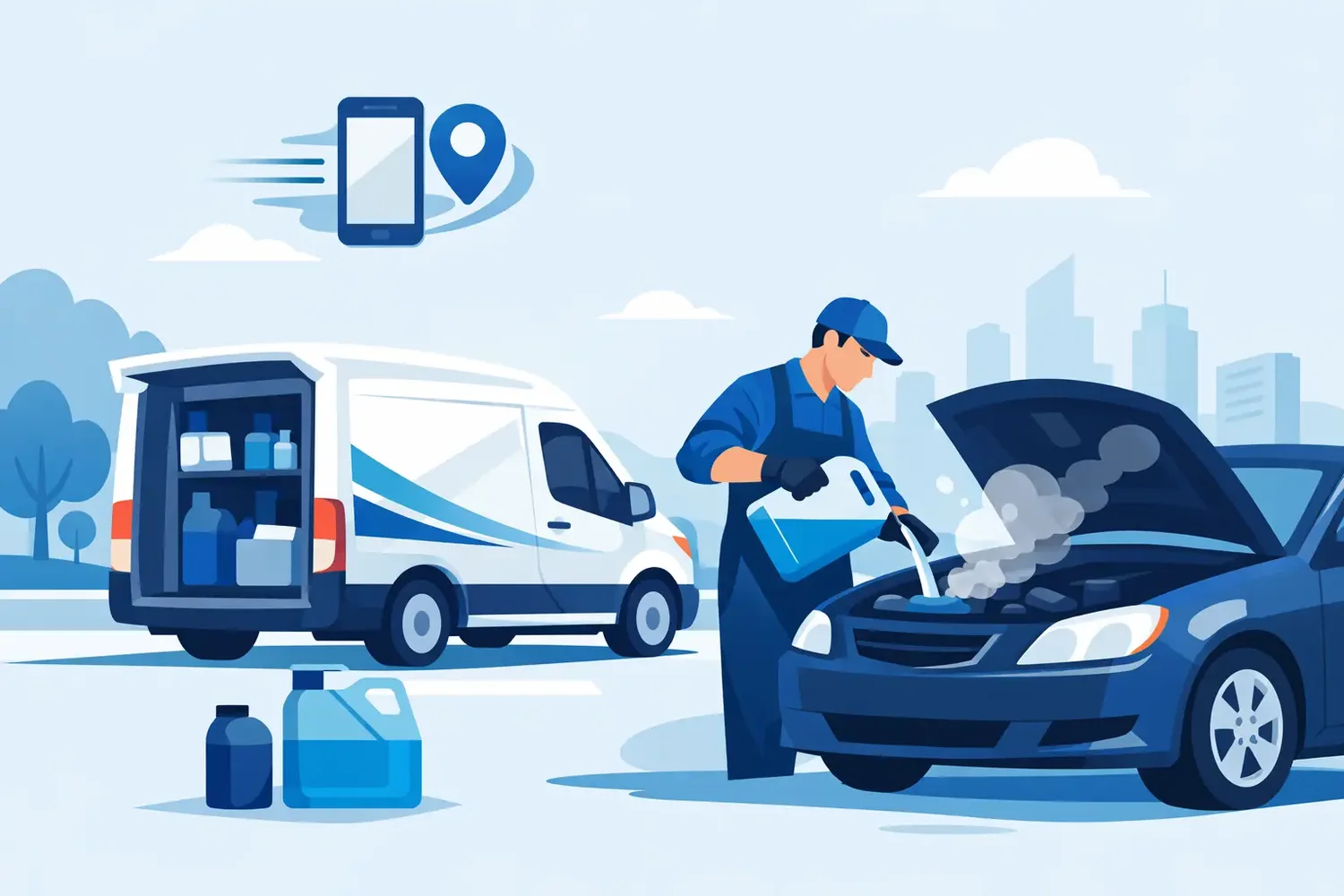
One warning light on the dash can turn a normal journey into a stressful stop at the roadside. If your car is overheating, showing a low coolant alert, or leaking fluid, a mobile coolant top up can be the quickest way to prevent bigger engine trouble and get you moving again safely.
Coolant problems rarely arrive at a convenient time. It might happen on the school run, on the motorway, outside work, or late at night when most garages are shut. The main thing is not to guess your way through it. Driving with low coolant can lead to overheating, loss of heater performance, steam from the bonnet, and in the worst cases, serious engine damage.
What a mobile coolant top up actually does
A mobile coolant top up is a roadside service where a technician comes to your location, checks the coolant level, looks for obvious signs of leaks or overheating, and tops the system up with the correct fluid if that is the safe next step. It is a practical fix for drivers who cannot easily reach a garage or do not want to risk driving with a warning light showing.
It is worth being clear about one thing. A top up is not always a full repair. If the coolant has dropped because of a minor loss over time, topping it up may be enough to get the vehicle back to normal. If the car has a split hose, failed radiator, damaged cap, faulty water pump, or head gasket issue, a top up may only be temporary. In those cases, the priority is keeping the engine protected and deciding whether the car can continue or needs recovery.
That is why a proper roadside assessment matters. Pouring coolant into a hot engine without checking the cause can make a bad situation worse.
Signs you may need a mobile coolant top up
Some drivers only realise there is a problem when they see steam or smell something hot. Others get an earlier warning from the dashboard. Either way, common signs include a low coolant warning light, the temperature gauge climbing higher than normal, poor cabin heating, visible fluid under the car, or a sweet smell from the engine bay.
You may also notice the engine cutting power, a fan running constantly, or the car asking you to stop immediately. Modern vehicles are better at warning you before serious failure, but they are not all the same. Some give a clear coolant message. Others only show an engine temperature warning, which can be easy to ignore until the problem gets worse.
If you have had to top coolant up more than once in a short period, that is a strong sign there is a leak or another fault. Coolant does not simply disappear without a reason.
When it is not safe to keep driving
This is the part many drivers get wrong. Low coolant is not always an emergency, but overheating is. If the temperature gauge is in the red, steam is coming from the bonnet, or the car is telling you to stop, pull over somewhere safe as soon as you can and switch the engine off.
Do not remove the coolant cap while the engine is hot. The system is pressurised, and hot coolant can spray out with enough force to cause burns. Even if you are in a rush, it is not worth the risk.
If the warning light came on but the car is still running at normal temperature, you may have a little more room to act. Even then, it depends on distance, traffic, and whether there are signs of leakage. A short drive to a safe stopping place may be reasonable. Carrying on for miles and hoping for the best usually is not.
Why roadside coolant help makes sense
For many drivers, the issue is not just the coolant level. It is the uncertainty. You are standing beside the car, maybe with children in the back, maybe in the rain, trying to decide whether the vehicle is safe to drive or about to overheat. That is exactly where mobile assistance helps.
A roadside technician can check the obvious causes, confirm whether the engine is cool enough to work on, and use the right type of coolant or suitable fluid for the situation. That matters because not every car uses the same specification. Mixing the wrong coolant types is not always catastrophic in the short term, but it is not good practice and can create problems later.
There is also the practical side. Not everyone keeps coolant in the boot. Not everyone knows where the expansion tank is. And not every roadside stop gives you a safe place to open the bonnet and sort it yourself.
Mobile coolant top up versus recovery
Sometimes a mobile coolant top up is the right answer. Sometimes recovery is the safer option. The difference usually comes down to the cause of the loss and whether the car has already overheated.
If the coolant is only slightly low, there are no obvious leaks, and the engine temperature is stable, a top up may be enough to get you going. If there is a visible leak, repeated warning lights, or signs the car has run too hot, recovery becomes more sensible. The same applies if coolant is emptying quickly after refill or the engine is running rough.
This is where honest advice matters. A driver under stress needs a clear answer, not guesswork. A good roadside service will tell you when a top up is reasonable and when driving any further risks a larger repair bill.
What happens during a roadside visit
The first step is safety. The vehicle needs to be in a suitable place to inspect, especially if it has stopped on a busy road or hard shoulder. Once safe, the technician checks whether the engine has cooled sufficiently and looks for obvious signs such as split hoses, leaks around the radiator, residue near the expansion tank, or fluid under the vehicle.
If a mobile coolant top up is appropriate, the system is replenished carefully and the vehicle is checked for immediate warning signs. In some cases, pressure loss or fresh leaking becomes obvious straight away. In others, the system may hold long enough for the vehicle to continue to a garage or back home.
The aim is not to pretend every coolant issue is minor. The aim is to give you the safest practical next step with no confusion.
Can you top it up yourself?
Possibly, but only if the engine is fully cool, you are in a safe place, and you know what you are adding. If you are on a dark roadside, stuck in traffic, or unsure what fluid the car needs, it is better not to guess.
Water can sometimes be used as a temporary emergency measure, especially if the immediate goal is to prevent damage and move the vehicle a short distance. But it is not a proper substitute for coolant, especially in cold weather or for ongoing use. Coolant does more than stop freezing. It also helps with corrosion protection and proper operating temperature.
So yes, there are situations where a careful self top up is fine. There are also plenty where calling for help is faster, safer, and cheaper than risking an overheated engine.
Why fast response matters with coolant problems
Coolant faults can escalate quickly. A small issue in traffic can become a full breakdown ten minutes later. That is why drivers often want roadside help now, not a garage appointment next week.
For urgent support, the value is simple. Quick dispatch, clear updates, and a direct answer on whether the vehicle can continue. That matters even more in poor weather, at night, or when you are stranded away from home. In places such as Glasgow, Edinburgh, Falkirk, and Stirling, where busy roads and changing weather add pressure, speed and communication are not extras. They are part of the service.
Car Recovery 24 focuses on exactly that kind of practical roadside support - calm advice, quick attendance, and help that fits the real situation at the kerbside rather than a one-size-fits-all answer.
How to reduce the chance of another coolant issue
Most coolant problems give some warning before they become serious. If your level keeps dropping, if the heater goes cold unexpectedly, or if you notice dried white or pink residue around the engine bay, get it checked before the next long trip. Routine checks matter more on older vehicles, especially before motorway driving or family journeys.
It also helps to keep an eye on the temperature gauge and not ignore minor changes. Drivers often wait for a full warning light, but a gauge creeping higher than normal is already telling you something.
A coolant problem does not always mean a major repair. Sometimes it is a simple top up and a faulty cap. Sometimes it points to something larger. The smart move is dealing with it early, before a manageable issue turns into a roadside breakdown.
If your car is warning about low coolant or running hot, trust the signs and act quickly. A calm decision at the right moment can save your engine, your time, and a much bigger bill later.