Mobile Car Battery Replacement Fast
5 July 2026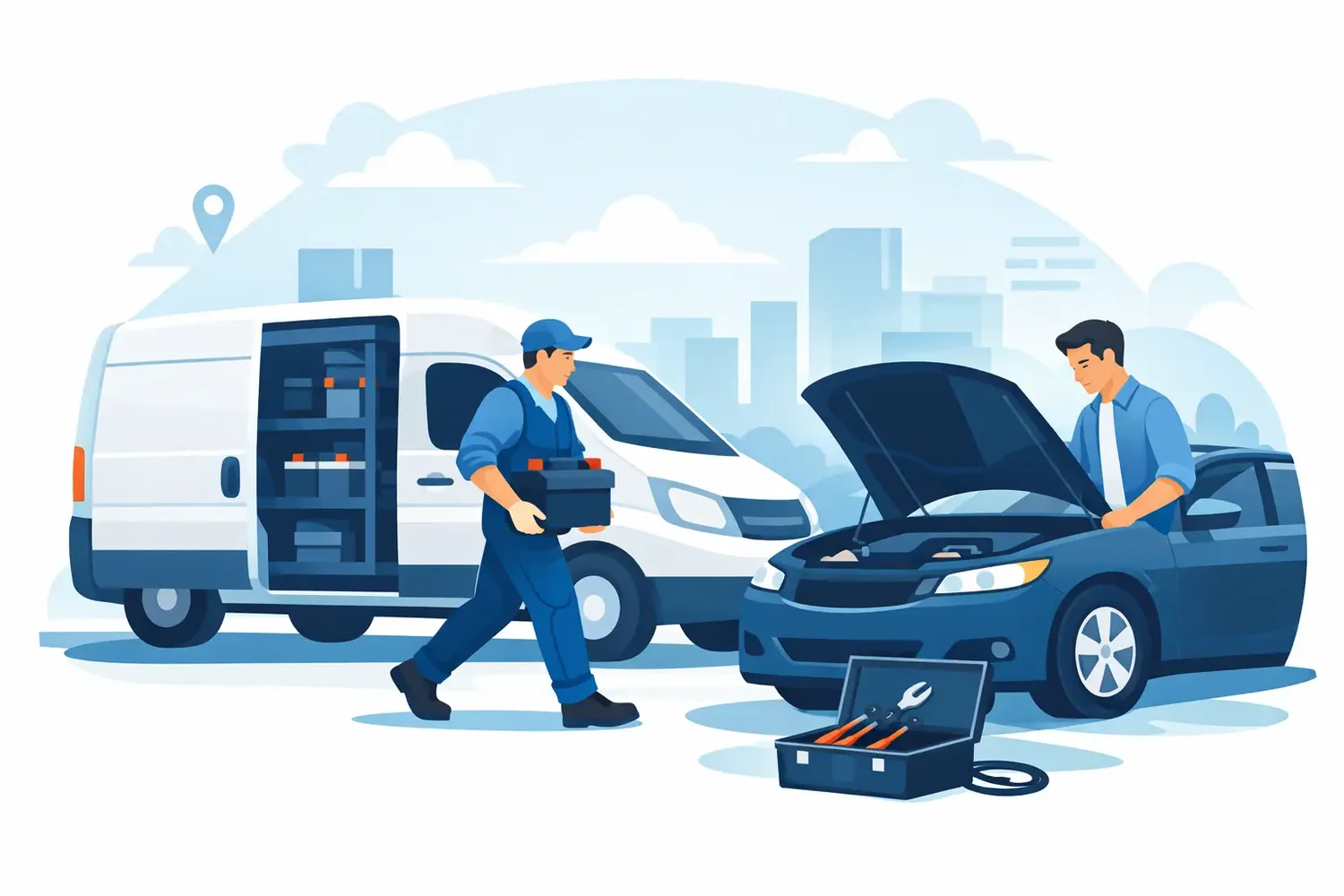
You turn the key, the dashboard flickers, and then nothing. No engine turnover, no second chance, just a car that will not start when you need it most. That is exactly when mobile car battery replacement stops being a convenience and becomes the quickest, safest way to get moving again without waiting around for a garage slot or risking a failed jumpstart.
For most drivers, a flat or failed battery arrives with very little warning. It might happen before work, on the school run, outside the supermarket or late at night in poor weather. In those moments, you do not need a lecture on vehicle electrics. You need a clear answer on whether the battery can be tested, whether it can be replaced on the spot, and how fast help can reach you.
What mobile car battery replacement actually means
Mobile car battery replacement is a roadside service where a technician comes to your location, tests the battery and charging condition, fits a suitable replacement if needed, and gets the vehicle started again. The aim is simple - solve the problem where the car is, rather than forcing you to arrange recovery to a garage for something that can often be handled there and then.
That matters because not every non-starting car needs towing. If the battery is the fault and the rest of the system is behaving as it should, an on-site replacement is usually the faster option. It also removes the stress of finding transport, waiting for workshop availability and dealing with a stranded car in a car park, at home, or by the roadside.
There is a trade-off, though. A mobile service is built around speed and urgent support. If your car has a wider electrical fault, a damaged alternator, or a parasitic drain that keeps flattening batteries, fitting a new battery may only be part of the answer. A good roadside technician will tell you that plainly rather than forcing a battery sale where it does not make sense.
When you need mobile car battery replacement instead of a jumpstart
A jumpstart is useful when a healthy battery has been drained by something temporary, such as lights being left on or a vehicle sitting unused for too long. But if the battery is old, internally damaged or no longer holding charge, a jumpstart may only get you going once. You stop the engine, and the same problem comes straight back.
That is why roadside testing matters. Voltage alone does not tell the full story. A battery can show some life and still collapse under load. If the car repeatedly struggles to start, clicks rapidly, resets the clock, flashes warning lights or loses power in cold weather, replacement is often the practical fix.
For families, commuters and anyone travelling on a tight schedule, this is where mobile support makes the biggest difference. Instead of gambling on a temporary boost, you get an assessment at the scene and a proper replacement if that is what the vehicle needs.
How roadside battery replacement works
The process should be straightforward. You call, give your location and vehicle details, and the service dispatches help. A proper emergency roadside provider keeps communication clear, with an ETA and updates so you are not left wondering where the technician is or whether anyone is still coming.
Once on site, the technician will normally confirm the symptoms, test the battery and check for obvious charging issues. If the battery has failed and a suitable replacement is available, the old unit is removed and the new one is fitted. The system is then checked again and the car is started to make sure the issue has been resolved.
Some vehicles are simple. Others are not. Modern cars can have battery management systems, stop-start functions or restricted battery access. In those cases, the job can still often be completed roadside, but it depends on the make, model and battery position. The right approach is always the safe one. If a car needs workshop-level programming or deeper electrical diagnosis, that should be explained clearly.
Mobile car battery replacement for modern vehicles
Battery replacement is no longer as basic as swapping one box for another. Many newer vehicles rely heavily on electronics, and fitting the wrong battery type can cause poor performance or fault messages. Cars with stop-start systems, for example, often need AGM or EFB batteries rather than a standard unit.
This is one reason mobile replacement is best handled by someone who deals with roadside faults every day. The vehicle needs a battery that matches its requirements, not just one that physically fits the tray. Saving a few pounds on the wrong specification can lead to repeat breakdowns, charging issues or shortened battery life.
There is also the issue of access. Some batteries are under the bonnet, some are in the boot, and some are buried under trims or covers. A proper mobile service arrives prepared for that reality. The job should be done carefully, with attention to vehicle settings and safe disposal of the old battery.
Why batteries fail when it is cold, wet or inconvenient
Most drivers notice battery trouble when the weather turns colder. That is no coincidence. Low temperatures reduce a battery's efficiency, while the engine needs more effort to start. Add short journeys, heaters, lights, heated screens and phone charging into the mix, and the strain increases.
But cold weather is not the only cause. Age is a major factor. Many batteries weaken gradually over three to five years, depending on use and vehicle type. Repeated short trips can stop the battery fully recharging. Long periods without driving can flatten it. A faulty alternator or hidden electrical drain can wear even a newer battery down.
The practical point is this: if your car has started hesitating, do not wait for a total failure in a supermarket car park or on your driveway before work. Early signs usually get worse, not better.
Choosing a roadside battery service when time matters
If you are stranded, speed matters, but so does clarity. The best roadside battery service is not just the one that answers the phone first. It is the one that tells you what happens next, gives you a realistic arrival time, explains the likely cost, and treats the situation with proper urgency.
That is especially important if you are on a busy road, travelling with children, parked somewhere unfamiliar or stuck late at night. Calm communication makes a real difference when you are already under pressure. So does a service that can handle more than one outcome. If the battery can be replaced, great. If the fault turns out to be something else, you need a team that can pivot to recovery or further roadside assistance without wasting time.
This is where an emergency motoring service such as Car Recovery 24 fits naturally. The job is not just replacing parts. It is getting people out of a stressful situation quickly, safely and with clear updates from first call to arrival.
What to do while waiting for battery help
If your car will not start, your priority is safety. If you are in a dangerous location, move yourself and any passengers somewhere safe if you can do so without risk. Switch on your hazard lights if the vehicle still has enough power. Avoid repeated start attempts, as that can drain the battery further.
If you are at home or in a car park, have your registration, location and vehicle model ready when you call. That helps speed up dispatch and improves the chances of the correct battery being brought out first time. If you have noticed warning signs before the breakdown, mention them. Small details can help distinguish a dead battery from a charging fault.
The real value of mobile battery replacement
The biggest advantage of roadside replacement is not just convenience. It is the time saved and the uncertainty removed. You are not arranging a tow for a fault that may be fixable on the spot. You are not waiting days for a garage appointment. You are not standing in the cold wondering whether the car will start again after a temporary boost.
That said, honest service matters more than speed alone. Sometimes the battery is the whole problem. Sometimes it is the first visible symptom of something else. A reliable provider tells you the difference and acts accordingly.
When your car refuses to start, the right response is usually the simplest one - get it tested where it stands, replace the battery if needed, and get back on the road with confidence. If there is a better or safer next step, you should hear that clearly too. In a breakdown, peace of mind comes from knowing someone has turned up ready to solve the problem, not just inspect it.