Jump Start Versus Battery Replacement: Which?
7 August 2026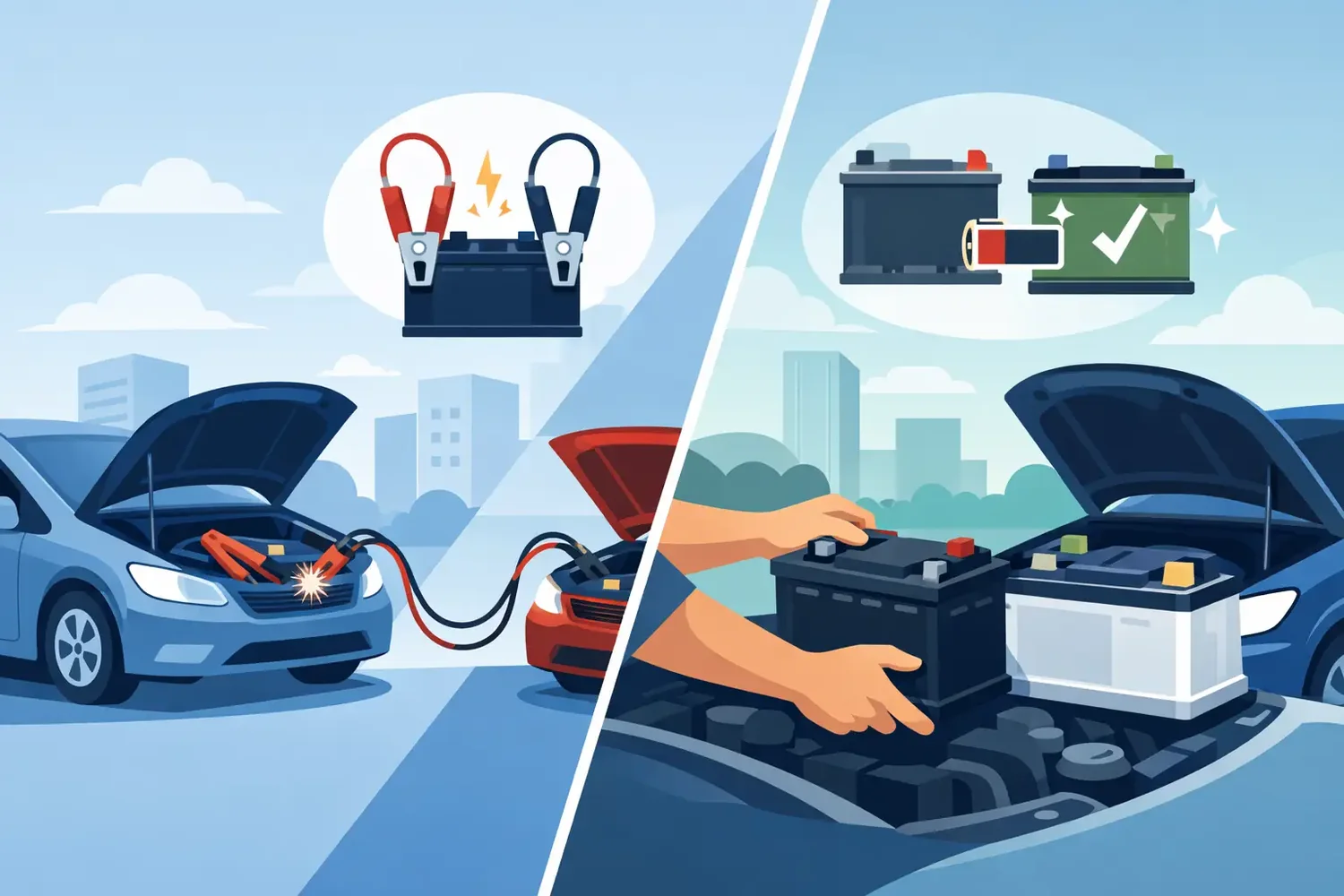
You are ready to leave, turn the key or press the start button, and get a click, a slow crank or nothing at all. At that point, jump start versus battery replacement is not just a technical question. It determines whether you can get safely back on the road now and whether you are likely to break down again later.
A jump start can be the right fast fix when the battery has simply run low. But if the battery is old, damaged or no longer holding charge, a replacement is the safer answer. The key is not guessing. A quick roadside check can identify the likely cause and help you avoid being stranded again at work, on the school run or miles from home.
Jump Start Versus Battery Replacement: The Main Difference
A jump start gives a weak or discharged battery enough power from another vehicle or a jump pack to start the engine. Once the engine is running, the alternator should recharge the battery as you drive. It is useful when a battery has gone flat for a clear, one-off reason, such as leaving lights on, an interior light staying on, or a car being left unused for several weeks.
Battery replacement means fitting a new battery because the existing one cannot reliably store enough power. This is usually needed when a battery has reached the end of its service life, has an internal fault, or repeatedly goes flat despite being charged and used properly.
The practical difference is simple. A jump start gets you moving temporarily. A replacement is intended to restore dependable starting power. Neither option should be chosen purely because it is cheaper or quicker at the roadside. The condition of the battery, the age of the vehicle and the reason it went flat all matter.
When a Jump Start Is Likely to Be Enough
A jump start is often sensible when the car was starting normally before a specific event drained the battery. Perhaps you left the headlights on while parked, used accessories with the engine off, or have returned from a holiday to find the vehicle will not start.
After a successful jump start, drive the vehicle for a meaningful period rather than switching the engine off after a few minutes. A short trip around the corner may not replace the energy used to start the engine. If possible, take a longer drive and avoid running unnecessary electrical items until the battery has recovered.
However, do not treat a successful start as proof that the battery is healthy. A failing battery can accept enough charge to start once, then lose it again overnight. If the warning signs return, arrange a proper test rather than relying on repeated jump starts.
Signs the Battery May Only Be Flat
You may only need a jump start if the battery issue follows an obvious drain and the vehicle had no previous starting trouble. The dashboard may light up normally but the engine turns slowly, or you may hear a rapid clicking sound when trying to start.
Cold weather can also reduce battery performance. This is especially common during Scottish winters, when a battery that was already borderline can struggle on a frosty morning. In that situation, a jump start may get the car going, but it is still worth checking how old the battery is and whether it has been weakening for some time.
When Battery Replacement Is the Better Call
Most car batteries last roughly three to five years, though this varies with driving habits, weather, vehicle type and electrical demand. Lots of short journeys can be hard on a battery because the alternator may not have enough time to fully recharge it after each start.
Replacement is usually the better choice if the car repeatedly needs help to start, particularly when there is no obvious reason for the battery to be flat. It is also sensible if the battery is several years old, the engine cranks slowly after a decent drive, or the vehicle starts one day and is completely dead the next.
Look out for corrosion around the terminals, a swollen or misshapen battery case, a strong sulphur or rotten-egg smell, or leaking fluid. These can point to a damaged battery. Do not attempt to jump start a visibly damaged or leaking battery. Keep clear, avoid naked flames or sparks, and call for professional roadside assistance.
Modern vehicles may need the correct battery specification and, in some cases, battery registration or coding after fitting. Stop-start systems in particular often require EFB or AGM batteries rather than a standard unit. Fitting the wrong type may lead to warning lights, poor performance or a reduced battery life. A professional replacement helps ensure the new battery is suitable for your vehicle.
A Flat Battery Is Not Always the Battery's Fault
This is where a quick diagnosis matters. If a good battery keeps going flat, replacing it alone may not solve the problem.
The alternator could be failing to charge the battery while the engine runs. Signs can include a battery warning light, dimming headlights, electrical faults while driving, or a vehicle that stops after being jump started. A loose or worn auxiliary belt can also affect charging on some vehicles.
There may also be a parasitic drain. This means something is using power while the car is parked, such as a faulty module, an accessory, a dash camera wired incorrectly or a light that does not switch off. In those cases, a new battery may only mask the issue for a short time.
A poor terminal connection can create similar symptoms. Corrosion or loose clamps can stop power flowing properly even where the battery itself still has charge. The roadside priority is to get you safe and assess the obvious cause, but an ongoing charging or electrical fault may need garage diagnostics afterwards.
Is It Safe to Jump Start Your Own Car?
It can be, provided you know the correct procedure, use suitable jump leads or a quality jump pack, and your vehicle handbook does not give different instructions. Yet many drivers are rightly cautious. Connecting leads in the wrong order can cause sparks, damage sensitive electronics or create a risk around a faulty battery.
Do not jump start a battery that is cracked, leaking, swollen or frozen. Do not use damaged leads. Make sure both vehicles are in park or neutral with their handbrakes on, keep metal objects away from the battery area, and follow the vehicle manufacturer’s connection points. Some cars have dedicated terminals under the bonnet rather than an easily accessible battery.
If you are on a busy road, in poor weather, with children in the car or unsure what has caused the fault, calling for assistance is usually the sensible option. Your safety comes before getting the engine started quickly.
What to Do While You Wait for Help
Move to a safe place if you can do so without risk. If the vehicle is already parked safely, switch off unnecessary electrical equipment and do not keep trying the ignition repeatedly. Each attempt uses more of the remaining battery charge.
If you have stopped at the roadside, turn on your hazard warning lights where appropriate and leave the vehicle only when it is safe. On a motorway, follow motorway safety guidance and never try to repair the vehicle in a live lane. Have your location, registration number, vehicle make and model ready when you call. These details help the recovery operator send the right support.
CarRecovery24.uk provides 24-hour roadside assistance for motorists who need a jump start, battery support or recovery when the fault cannot be safely resolved at the roadside. Clear updates and a realistic ETA can make a stressful wait far more manageable.
Avoid the Repeat Breakdown
Once the car is running again, do not ignore the pattern. Note whether the battery had been drained by lights, whether the car has mostly done short trips, and whether warning lights appeared while driving. If the issue happens again within days, treat it as a reliability problem rather than bad luck.
A jump start is valuable when it gets you out of an immediate problem. Battery replacement is valuable when it stops that problem returning. The right choice is the one that gets you home safely today without leaving you worrying whether the car will start tomorrow morning.