How to Share Breakdown Location With Recovery
31 August 2026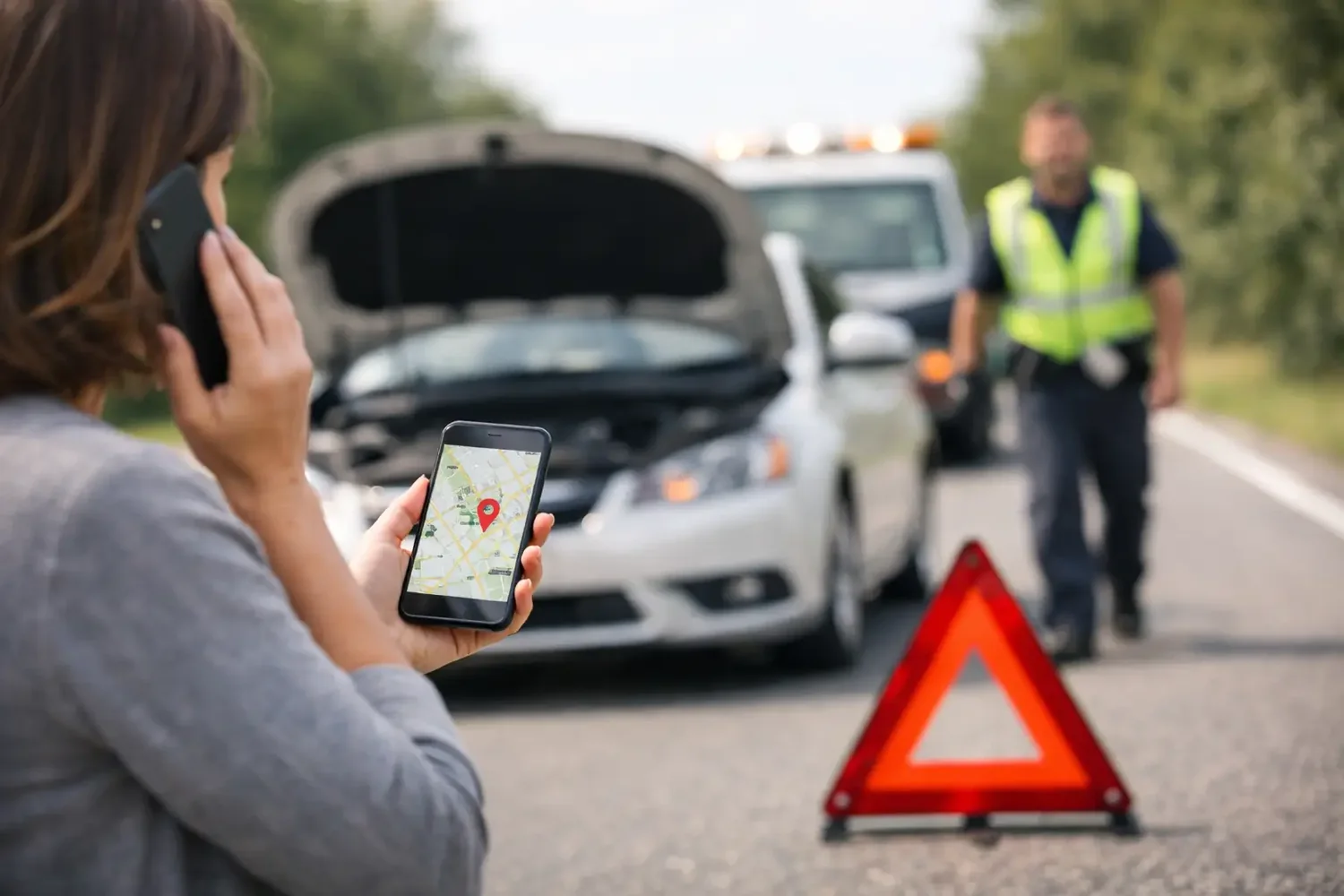
A recovery driver can only reach you as quickly as they can find you. Knowing how to share breakdown location properly prevents the frustrating call where you can see a landmark but cannot name the road, junction or direction of travel. A precise location also helps the recovery team choose the safest approach, especially on motorways, rural roads and busy routes around Manchester, Liverpool or Glasgow.
Before opening your phone, make the roadside safe. Put on your hazard warning lights, move away from live traffic where it is safe to do so, and keep passengers behind a barrier or well away from the carriageway. On a motorway, do not try to repair the vehicle yourself. Your location matters, but your safety comes first.
How to share breakdown location accurately
The best method depends on where you are and who is arranging assistance. A live phone location is usually quickest when you are using WhatsApp or speaking to a recovery provider directly. If your battery is low, or you have poor signal, motorway marker posts and road signs can be more reliable than relying on an app alone.
Give the recovery operator more than one way to identify you. Start with the road name or number, then add the direction you were travelling, the nearest junction, landmark, postcode, marker post or live location pin. For example, “I am on the M60 clockwise, just after junction 12, on the hard shoulder” is far more useful than “near Trafford Park”.
If you are in a car park, outside a shop or on a housing estate, say which entrance you used and describe the vehicle’s position. Large retail parks, service stations and hospital grounds often have several access roads. A pin may show the right site but still leave the driver searching for the correct entrance.
Share a live location on WhatsApp
WhatsApp is one of the simplest ways to show a recovery driver exactly where you are. Open the chat with the recovery provider, tap the attachment or plus symbol, select Location, then choose either your current location or Share live location. Live location is often better if you are moved to a safer spot, such as a service area, while waiting.
Check the map before sending it. Phone location can occasionally place you on the wrong carriageway, the opposite side of a dual carriageway or a nearby side road. Add a short message confirming your direction of travel, vehicle registration, make, model and colour. If you are not with the vehicle, say so clearly.
Live location is useful, but it is not a substitute for a verbal description on fast roads. A recovery operator may need to know whether you are northbound or southbound, before or after an exit, and whether the vehicle is accessible from the lane where it stopped.
Use Google Maps or Apple Maps
On most phones, you can press and hold your position on the map to drop a pin, then select Share or Copy location. Send the location through a message or read the coordinates to the operator if requested. This works well on local roads, country lanes and unfamiliar areas where there are few obvious landmarks.
Again, verify the pin. GPS can drift in multistorey car parks, under bridges, near tall buildings and in remote valleys. If the map shows a nearby road rather than your actual roadside position, tell the recovery team what you can physically see: a pub name, farm entrance, bridge number, fuel station or road sign.
Find your location on a motorway
Motorway breakdowns need extra care because stopping in the wrong place can be dangerous and locating the vehicle can take longer. Look for the small blue marker posts at the side of the road. They show the motorway or major A-road number, carriageway direction and a distance reference. Read out every number and letter on the marker if possible.
Also tell the operator whether you are on a hard shoulder, emergency refuge area, slip road or live lane. If you have stopped in a live lane and cannot leave the vehicle safely, contact the emergency services. Use the emergency phone if one is available and it is safe to reach, as it gives the road authority your exact position.
Do not cross a motorway to reach the other side, even if you think help will arrive faster there. Stay behind the barrier where possible and follow instructions from the emergency services or road authority.
What to tell recovery when you share your location
Location is only one part of a useful breakdown report. The more accurate the first message, the less time is lost in follow-up calls. Include these details when booking urgent assistance:
- Your exact or live location, plus the road, direction and nearest junction where relevant.
- Your vehicle registration, make, model and colour.
- The problem you can see or hear, such as a flat tyre, warning light, flat battery, overheating or no-start.
- Whether the vehicle is in a safe, accessible place and whether any passengers, children or pets are with you.
- A contact number that will stay switched on while you wait.
You do not need to diagnose the fault perfectly. Saying “the engine temperature warning came on and there is steam from the bonnet” is enough to help the team prepare. Do not remove a hot radiator cap or attempt a coolant top-up while the engine is hot. Likewise, if a tyre has failed on a busy road, it may be safer to wait for roadside assistance rather than changing it yourself.
When your phone signal or battery is poor
A precise pin is helpful, but it is not always available. If signal is weak, send one short message with the key details rather than several messages that fail to deliver. A road number, nearby village, junction number and travel direction can give a recovery driver enough to start heading towards you.
Save battery by reducing screen brightness, closing unused apps and avoiding long calls once your booking is confirmed. Keep your phone available for ETA updates or a call from the driver. If you have a passenger, ask them to handle communication while you focus on getting everyone into the safest available position.
On rural roads, note the last village you passed and any distinctive feature nearby. “Half a mile past the B-road turn for X village, beside a stone bridge” can be more useful than an uncertain postcode. In city centres, give the street name and the nearest cross street, as one-way systems may affect the route the recovery vehicle needs to take.
Common location-sharing mistakes that delay help
The biggest mistake is sending a postcode without checking it. A postcode can cover a long stretch of road, a business park or several buildings. It may also take the driver to a rear entrance or the wrong side of a divided road. Pair it with a pin, road name or landmark.
Another common issue is describing where you were going rather than where you stopped. “I was heading to Liverpool” does not identify your location. Say which route you took, which direction you were travelling and the last sign you saw.
Avoid leaving your phone on silent or ignoring calls from an unfamiliar number after requesting help. The recovery driver may be nearby but need to confirm which side of the road you are on. If your location changes, update the provider straight away rather than assuming the original pin remains correct.
There is also a privacy balance. Share your location only with the recovery provider or person coordinating help, and stop live sharing once the job is complete. A temporary live location is usually enough for a breakdown and gives you control over who can see it.
If you feel unsafe while waiting
Tell the operator immediately if you are stranded in an unsafe area, have young children with you, are on a live carriageway, or feel threatened. These facts can affect the advice you receive and the urgency of the response. If there is immediate danger, a collision, injury, fire or a vehicle obstructing traffic, call 999.
For ordinary breakdowns, stay visible where it is safe, keep doors locked if you remain in the vehicle in a safe location, and be cautious about accepting help from strangers. A professional recovery service should be able to confirm the driver’s arrival and keep you updated.
A clear location message turns a stressful stop into a job that can be dispatched properly. Take ten seconds to check the pin, add the road direction and keep your phone close. That small bit of information gives the recovery team the best chance of reaching you without delay.