How to Restart a Dead Car Battery Safely
22 July 2026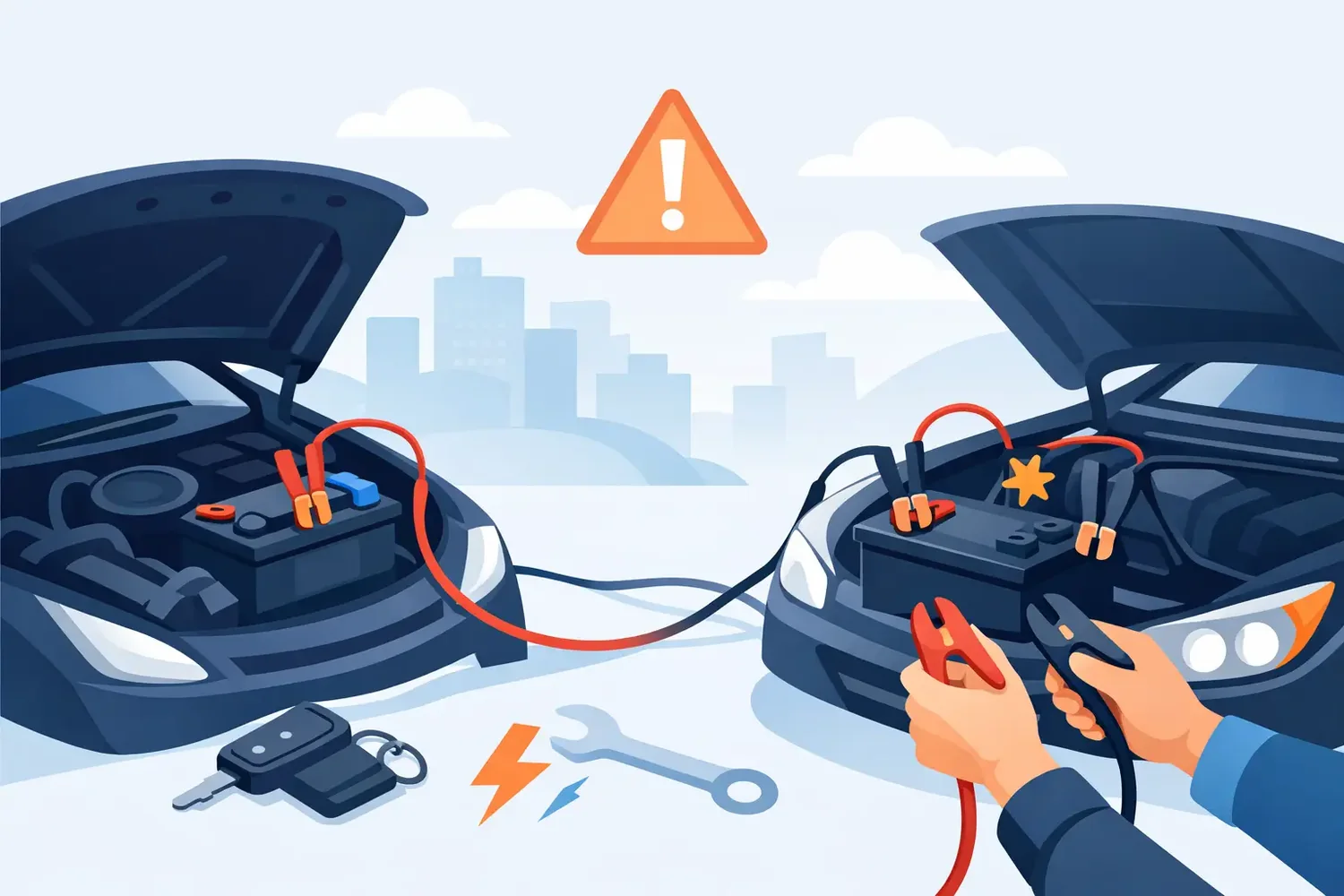
A car that will not start can turn a normal commute, school run or journey home into a stressful wait. If you are searching for how to restart dead car battery problems safely, the first priority is to protect yourself, your vehicle and anyone helping you. A flat 12-volt battery can often be restarted with jump leads or a jump starter pack, but only when the battery and surrounding area are safe to handle.
Before connecting anything, move the vehicle away from moving traffic if possible, switch on your hazard warning lights and apply the handbrake. If you are on a motorway, a live lane or an unsafe roadside, do not attempt a repair. Get yourself to a safer place and arrange roadside assistance.
First, make sure it really is the battery
A dead battery usually gives a few clear signs. The dashboard may light up but the engine only clicks, turns over slowly, or does nothing at all. Interior lights may be dim, and central locking can seem weak or unresponsive.
That said, a non-start is not always a battery fault. A starter motor issue, immobiliser problem, faulty key fob, fuel problem or alternator fault can produce similar symptoms. If the battery warning light came on while driving, the alternator may not be charging the battery. A jump start may get the engine running briefly, but it will not fix the underlying issue.
Check the simple causes before trying to jump-start. Make sure the car is in park or neutral, the handbrake is on, and the clutch is fully pressed in on a manual vehicle. Turn off headlights, heaters, radio, phone chargers and any other electrical equipment. If you have left a light on overnight, a recharge may be all that is needed. If the battery has gone flat without an obvious reason, it needs checking soon.
When you should not try to restart a dead car battery
Do not use jump leads if the battery case is cracked, swollen, leaking, badly corroded or frozen. A damaged battery can release flammable gas or acid, and trying to charge it can be dangerous. Keep flames, cigarettes and sparks well away from the battery area.
Also stop if you smell burning, see smoke, or notice damaged wiring. These can point to an electrical fault rather than a simple flat battery.
Hybrid and electric cars need extra care. They still have a 12-volt battery, but the high-voltage system must never be touched. Many hybrids can be jump-started only through the specified 12-volt points, while some electric vehicles have particular instructions. Check the owner’s handbook, or call a trained recovery technician if you are unsure. Never attempt to jump-start another vehicle from the high-voltage system.
How to restart a dead car battery with jump leads
You need a set of good-quality jump leads and a second vehicle with a healthy battery. Both vehicles should use compatible 12-volt systems. Do not use a lorry or other 24-volt vehicle as the donor vehicle for a standard car.
Park the vehicles close enough for the leads to reach, but do not let them touch. Switch both engines off, remove the keys or keep keyless fobs well away from the ignition area, and turn off all electrical accessories. Identify the positive terminal, marked with a plus sign (+), and the negative terminal, marked with a minus sign (-). Some modern vehicles have dedicated jump-starting points under the bonnet, so use these if the handbook specifies them.
Connect the leads in this order:
- Attach the red lead to the positive terminal of the flat battery.
- Attach the other red clamp to the positive terminal of the donor battery.
- Attach the black lead to the negative terminal of the donor battery.
- Attach the final black clamp to a clean, unpainted metal earth point on the disabled vehicle, away from the battery and fuel lines.
Make sure the clamps are secure and that the leads are clear of belts, fans and other moving engine parts. Start the donor vehicle and let it idle for a few minutes. Then try starting the car with the flat battery. Do not keep cranking for long periods. Try for a few seconds, wait a minute, then try again. Repeated attempts can overheat the starter motor and drain both batteries.
Once the vehicle starts, leave both engines running for a short time before disconnecting the leads in the reverse order: black clamp from the restarted vehicle, black clamp from the donor vehicle, red clamp from the donor vehicle, then red clamp from the restarted vehicle. Keep clamps from touching each other or any metal surface while they are connected.
Using a portable jump starter pack
A jump starter pack is often safer and more convenient than relying on another driver. It is particularly useful in a car park, at home or when you are travelling alone. Choose a pack designed for your engine size and keep it charged according to the manufacturer’s instructions.
With the vehicle switched off, connect the red clamp to positive and the black clamp to the recommended earth point or negative terminal, following the jump pack instructions. Switch on the pack if required, start the vehicle, then remove the clamps as directed. Many modern packs include reverse-polarity protection, but do not rely on that as a reason to rush. Connecting the clamps incorrectly can damage vehicle electronics.
A jump pack gets you moving, but it does not tell you why the battery went flat. If the vehicle starts and then quickly loses power again, arrange assistance rather than continuing a journey that may end at the roadside.
What to do after the engine starts
Do not switch the engine straight off. Drive the vehicle for at least 20 to 30 minutes where it is safe to do so, preferably without unnecessary electrical load. A steady drive helps the alternator put some charge back into the battery better than idling on the driveway.
However, a deeply discharged or ageing battery may not recover properly from one drive. If the car struggles to start again later that day or the next morning, the battery may need testing and replacing. Most car batteries last around three to five years, though cold weather, short journeys and frequent use of electrical accessories can shorten that life.
Pay attention to warning lights. If the battery warning light stays on while the engine is running, stop somewhere safe and get help. That warning usually means the charging system is not working correctly, so the engine may cut out once the remaining battery power is used.
When to call roadside assistance instead
A flat battery is frustrating, but it does not need to become a bigger breakdown. Call for professional help if you do not have safe equipment, are parked in a dangerous location, have tried a jump start without success, or suspect a battery or charging fault. It is also the sensible choice if you are with children, travelling late, or simply do not feel confident working under the bonnet.
A roadside technician can test the battery, inspect the charging system and provide a jump-start or replacement where appropriate. Car Recovery 24 provides 24-hour roadside support for motorists who need a fast, clear response, including battery jump-starts and recovery when restarting the vehicle is not the safe answer.
Keep a jump pack, warm clothing and a charged phone in the car during colder months, but never feel pressured to take risks at the roadside. The quickest solution is only worthwhile when it gets you moving safely.