How to Check Engine Oil Before It Becomes a Breakdown
2 September 2026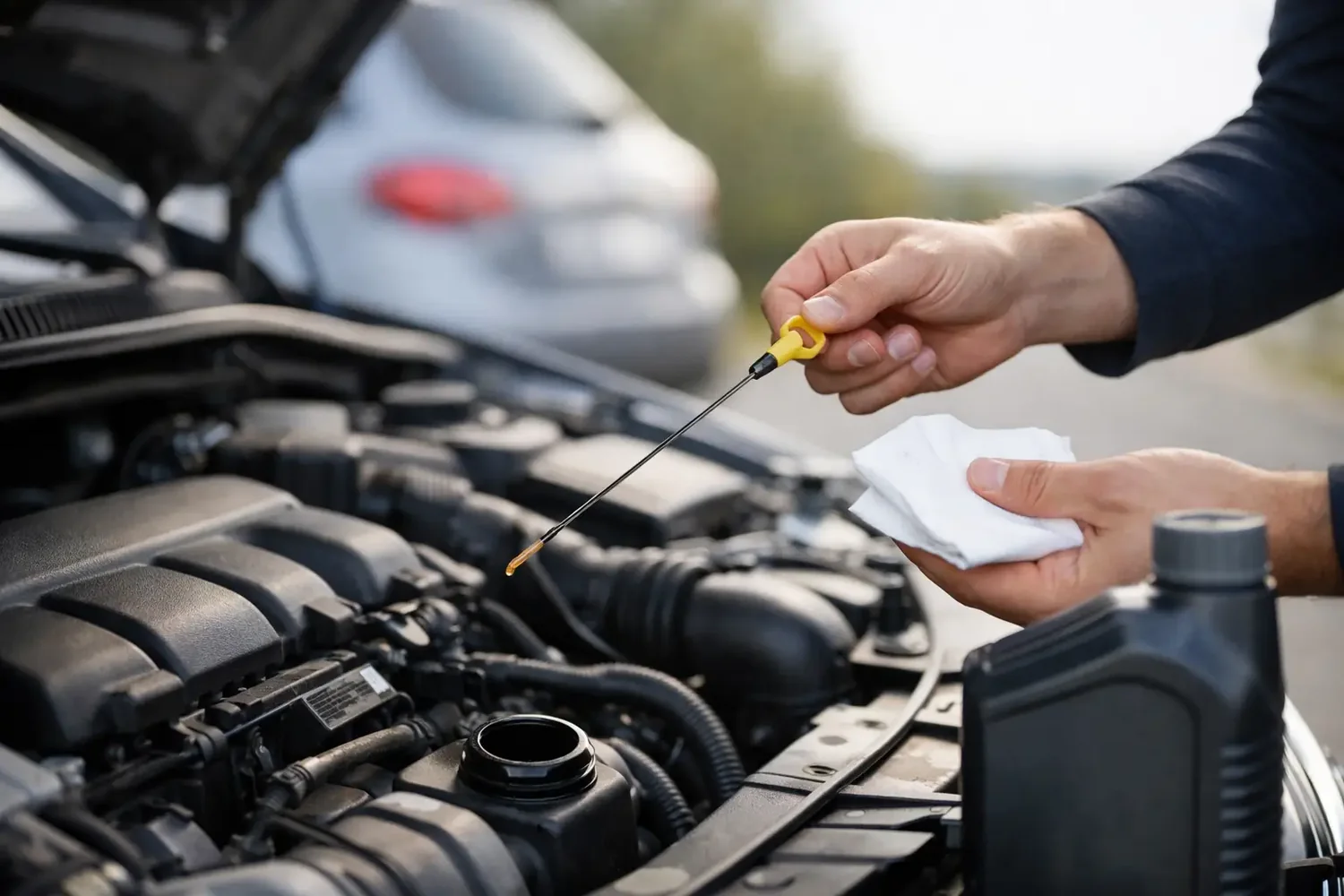
A low oil level can turn an ordinary journey into an expensive breakdown with very little warning. Knowing how to check engine oil takes only a few minutes, yet it gives you a chance to act before friction, heat and engine damage leave you stuck at the roadside.
Most cars make the job straightforward, but the details matter. Checking on a slope, topping up with the wrong oil, or overfilling the engine can give you a false reading or create another problem. Use the steps below to check it properly and know when it is safer to call for help.
When should you check your engine oil?
For most vehicles, check the oil every few weeks, before a long journey and whenever a warning light appears. If your car is older, has high mileage, regularly carries heavy loads or has recently used oil, check it more often.
A good routine is to check when the engine is cold, ideally before starting the car in the morning. This lets the oil drain back into the sump and gives the clearest dipstick reading. You can also check after driving, but park on level ground, switch off the engine and wait at least five to ten minutes first.
Do not rely on the oil warning light as a reminder for routine checks. A red oil can symbol often means oil pressure has dropped, not simply that the level is a little low. Stop somewhere safe as soon as possible, switch off the engine and do not continue driving until the cause is checked.
What you need before checking the oil
You will usually need very little: a clean cloth or kitchen roll to wipe the dipstick, the correct engine oil if a top-up is required, and your vehicle handbook. The handbook is the safest place to confirm the required oil grade and specification.
Avoid assuming that any bottle labelled as engine oil will do. Modern petrol, diesel, hybrid and turbocharged engines can require very specific oils. Using an unsuitable oil may affect engine protection, servicing requirements or warranty cover.
Park on firm, level ground with the handbrake on. If you have just driven the car, take care around the bonnet area as components may still be hot.
How to check engine oil with a dipstick
Many cars have a traditional dipstick - usually a bright yellow, orange or red looped handle in the engine bay. On some vehicles it is less obvious, so check the handbook rather than pulling at unfamiliar parts.
Open the bonnet and secure it with its stay if fitted. Find the dipstick, pull it out slowly and wipe all oil from the lower end with your cloth. The first pull is not normally an accurate level reading because oil can smear up the tube while the engine is running or settling.
Push the dipstick fully back into its tube, wait a moment, then remove it again and hold it horizontally. Look at the oil mark near the end. There will be two marks, holes, lines or a cross-hatched section showing the minimum and maximum levels.
The oil level should sit between these marks. A level around the middle is generally fine. If it is close to the minimum mark, plan to top it up soon. If it is below the minimum mark, add the correct oil before making a normal journey, unless there is evidence of a leak or a warning light is on.
The gap between minimum and maximum is commonly around one litre, but this varies by car. That is why adding a full litre at once is a bad idea. Add a small amount at a time, wait for it to settle, then repeat the dipstick check.
What should the oil look like?
Fresh oil is often amber or golden, while used oil becomes darker. Dark oil alone does not mean it needs replacing - engine oil naturally changes colour as it collects contaminants and does its job.
Pay attention if the oil looks milky, creamy or frothy. This can suggest water or coolant contamination and needs professional attention. A strong fuel smell may also point to a mechanical issue. If the oil level repeatedly falls quickly, or you see fresh oil on the ground where you park, do not just keep topping it up. The engine may be leaking or burning oil.
Checking oil on cars without a dipstick
Some newer vehicles use an electronic oil-level display instead of a manual dipstick. The reading may appear in the driver information menu, often after the engine has warmed up and the car has been parked level for a set period.
The process varies. Some cars require the ignition to be on without starting the engine, while others only provide a reading after a drive. Follow the instructions in the handbook exactly, particularly the required engine temperature and waiting time. An electronic reading taken under the wrong conditions can be unavailable or misleading.
Even with electronic monitoring, never ignore a red oil-pressure warning. Pull over safely and switch off. Continuing to drive with low oil pressure can damage the engine in minutes.
How to top up engine oil safely
The oil filler cap is on top of the engine and normally displays an oil-can symbol. Remove it carefully, place it somewhere clean and use a funnel if you have one. Add a small amount of the correct oil - around 200 ml is a sensible starting point when the level is only slightly low.
Refit the cap, wait a few minutes, then check the level again. Continue slowly until it sits safely between the minimum and maximum marks. Do not fill above the maximum line. Too much oil can foam, increase pressure inside the engine and potentially damage seals, emissions components or the catalytic converter.
If you spill oil, wipe it away before starting the engine. Keep the bottle upright, secure the filler cap properly and never pour used oil down a drain. Used engine oil must be disposed of through an approved recycling point.
When low engine oil means you should not drive
A small top-up is often enough when the level is only slightly low and there are no other warning signs. But it depends on why the level has dropped. Stop and arrange assistance rather than driving on if you notice any of the following:
- a red oil-pressure warning light that stays on after stopping safely;
- loud tapping, knocking or grinding from the engine;
- a major oil puddle or active leak beneath the car;
- smoke from the engine bay or a burning-oil smell;
- a dipstick that is dry, even after checking correctly.
Do not try to nurse the vehicle home in these situations. Low oil pressure and a dry sump can cause severe engine damage far faster than many drivers expect. If you are in Manchester, Liverpool, Preston, Coventry or Glasgow and are unsure whether the car is safe to move, Car Recovery 24 can provide practical roadside support and recovery when needed.
Why oil level is only part of the picture
Checking the level helps protect the engine, but it does not replace routine servicing. Oil degrades over time, and the filter gradually collects debris. A car can have the correct amount of oil but still need an oil and filter change because the oil is old or the service interval has passed.
Follow the manufacturer’s time and mileage schedule, especially if you mainly make short trips. Short journeys may prevent the engine from fully warming up, allowing moisture and fuel residue to build up in the oil. Conversely, motorway drivers may cover high mileage quickly and reach the service limit sooner.
Make checking the dipstick part of preparing for a long drive, alongside tyre condition, coolant and fuel. That small habit gives you a clear answer before a warning light, strange noise or roadside stop forces the issue.