How to Check Engine Coolant Safely
10 July 2026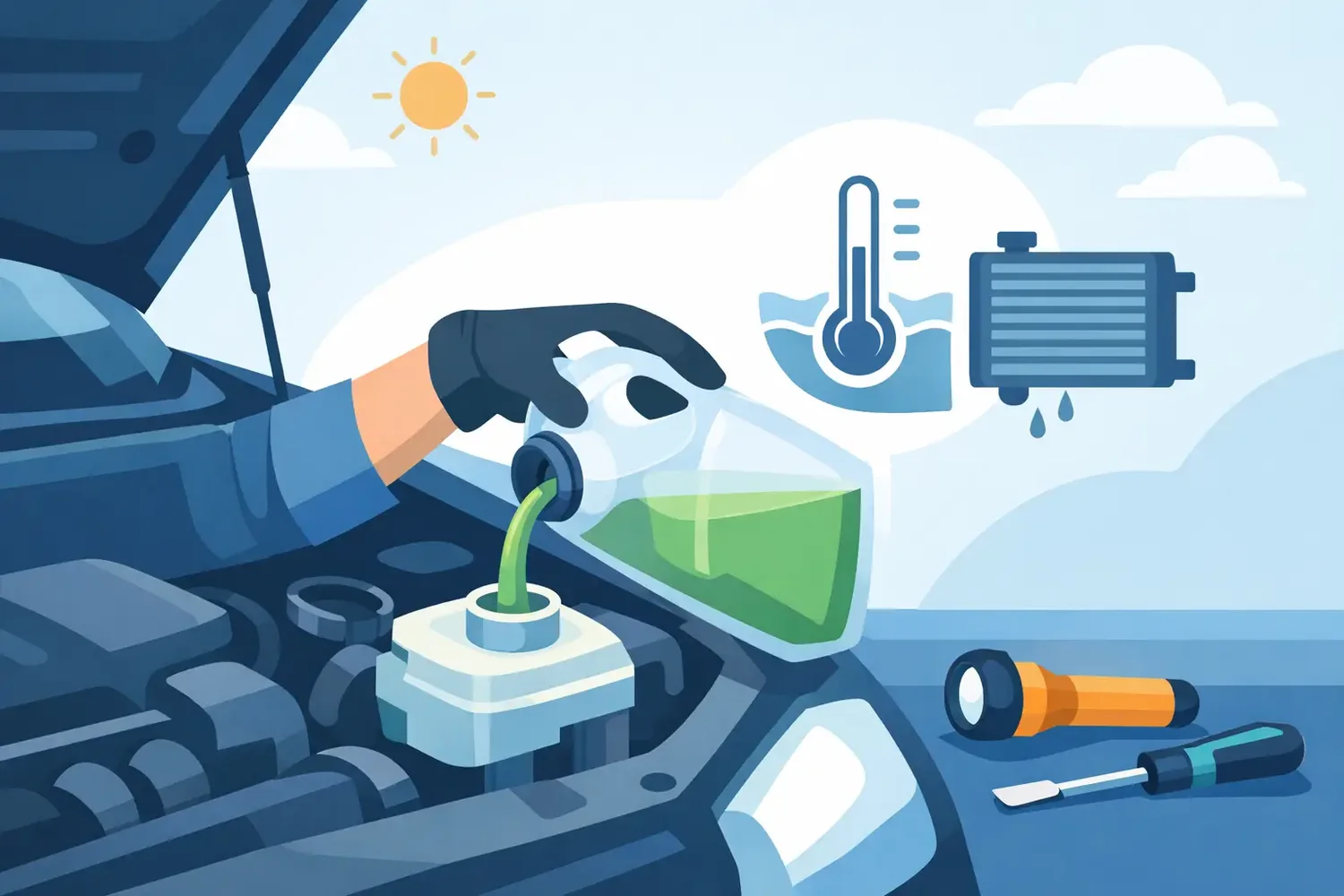
A warning light on the dash or steam from under the bonnet can turn a normal trip into a stressful stop very quickly. Knowing how to check the engine coolant gives you a simple way to spot trouble early, avoid overheating, and make a safer decision about whether to keep driving or pull over.
Why engine coolant matters
Coolant does more than stop the engine from getting too hot. It helps regulate temperature in both hot and cold weather, protects against freezing, and reduces corrosion inside the cooling system. If the level drops too low, the engine can overheat fast, and that can lead to serious damage.
For most drivers, the main issue is not understanding the chemistry. It is knowing when a low coolant level is minor and when it points to a leak, a failed hose, or a more serious fault. A small top-up may get you moving again, but repeated loss of coolant is a warning sign you should not ignore.
How to check the engine coolant the right way
The safest way to check coolant is when the engine is completely cold. If you have just parked after driving, wait until the engine has cooled down properly. Opening any part of the cooling system while it is hot can be dangerous because the system is pressurised.
Start by parking on level ground and switching the engine off. Open the bonnet and locate the coolant reservoir. In most cars, this is a translucent plastic tank with minimum and maximum markings on the side. The cap often has a warning symbol or text telling you not to open it while hot.
Look at the level through the side of the reservoir. If the coolant sits between the MIN and MAX marks, the level is usually fine. If it is close to or below the minimum line, the car may need a top-up. You do not normally need to remove the cap just to check the level.
The coolant itself should usually appear brightly coloured, often pink, orange, green, or blue, depending on the type used in the vehicle. Colour alone does not tell you whether it is the correct coolant, but murky fluid, rust-coloured fluid, or oily contamination can suggest a problem that needs proper inspection.
If your car does not have a clear reservoir
Some older vehicles make coolant checks less straightforward. If you cannot clearly see the level or the reservoir is not easy to identify, check the handbook for the exact location and the correct checking method. Guessing is not worth the risk, especially with hot engine parts nearby.
If you are stranded roadside and cannot confidently identify the coolant tank, it is better to get assistance than open the wrong cap.
Never check coolant on a hot engine
This is the part that matters most. If the engine is hot, do not remove the coolant cap. Hot coolant can spray out under pressure and cause serious burns. Even if the temperature gauge has dropped, parts of the system may still be dangerously hot.
If your car has overheated, pull over somewhere safe, switch the engine off, and let it cool. Do not keep driving in the hope that it will settle down. A short journey with an overheating engine can become an expensive repair very quickly.
What to do if the coolant is low
If the engine is cold and the reservoir level is below the minimum mark, a top-up may be needed. The key point is to use the correct coolant type for your vehicle. Mixing the wrong coolant can reduce protection and sometimes create longer-term issues in the system.
Many motorists carry ready-mixed coolant, while others use coolant concentrate that must be mixed with water at the right ratio. If you are not sure which type your car needs, the handbook is the safest guide. As a temporary measure in an emergency, some drivers use water, but that is not ideal except in a genuine roadside situation when the correct coolant is not available.
Add the fluid slowly to the reservoir until it reaches the proper level, but do not overfill it. Then refit the cap securely if you removed it. After that, keep an eye on the level over the next few journeys. If it drops again, there is likely a leak or another cooling system fault.
When a top-up is not enough
A low coolant level is sometimes just poor maintenance. In other cases, it points to something more serious such as a leaking radiator, a split hose, a faulty water pump, or a head gasket issue. If the level keeps falling, if the engine overheats, or if you can see fluid under the car, do not treat it as a one-off.
That is where quick roadside support matters. If you are stopped in Glasgow or elsewhere in Scotland with a coolant issue and you are not sure it is safe to continue, getting proper help is the safer option than risking engine damage.
Signs your car may have a coolant problem
Sometimes the coolant reservoir tells the story. Sometimes the warning signs show up first while you are driving. If you notice the temperature gauge rising above normal, a coolant warning light, steam from the bonnet, weak cabin heating, or a sweet smell from the engine bay, the cooling system needs attention.
Puddles under the front of the car can also point to a leak, though you need to be careful not to confuse coolant with plain condensation from the air conditioning. Coolant often has a noticeable colour and a slightly slippery feel.
A single symptom does not always mean major failure. Even so, overheating is not something to gamble on. Modern engines can be damaged faster than many drivers realise.
How often should you check the engine coolant?
A quick visual check every few weeks is sensible, especially before a longer journey, during hot weather, or in colder months when the cooling system is working hard. It also makes sense to check if you have noticed any recent warning lights, changes in engine temperature, or signs of leaking fluid.
For many drivers, the easiest routine is to look at the coolant level whenever checking oil, screen wash, or tyre condition. It only takes a minute when the engine is cold.
If your car rarely needs coolant and suddenly starts losing it, that change matters. Patterns are often more useful than one isolated reading.
Common mistakes to avoid
The biggest mistake is opening the coolant cap while the engine is hot. The second is topping up without checking whether there may be an active leak. A third common issue is using the wrong coolant type because it was simply what was available in the garage or boot.
Another mistake is assuming the warning light can wait until later. If the temperature is climbing or the car is overheating, continuing to drive can turn a manageable issue into a recovery job and a costly repair.
There is also a practical trade-off here. A cautious driver may stop early and call for help, while another may try to limp home. From a roadside assistance point of view, the safer choice is usually to stop before the engine suffers damage.
When to stop driving and get help
If the temperature gauge is in the red, steam is coming from the bonnet, or the car is warning you about coolant temperature, stop as soon as it is safe. Do not keep driving to the next town if the engine is actively overheating.
If the coolant level is only slightly low and the engine temperature is normal, a careful top-up may be enough to get you moving. But if the car loses coolant again, runs hot, or shows obvious signs of a leak, it needs more than a quick fix.
This is exactly the kind of problem that can leave drivers stuck at the roadside with children in the car, on the way to work, or late at night in poor weather. In that situation, clear advice and a fast response matter more than trying to diagnose every possible cause yourself.
A simple check that can save a major repair
Learning how to check the engine coolant is one of the most useful basic checks any driver can do. It is quick, it requires very little equipment, and it can give you early warning before a minor issue becomes an overheated engine.
If you are ever in doubt, treat coolant problems seriously. A careful stop and the right help at the right time can save your engine, your journey, and a lot of stress.