How to Call Vehicle Recovery When You Need Help
14 July 2026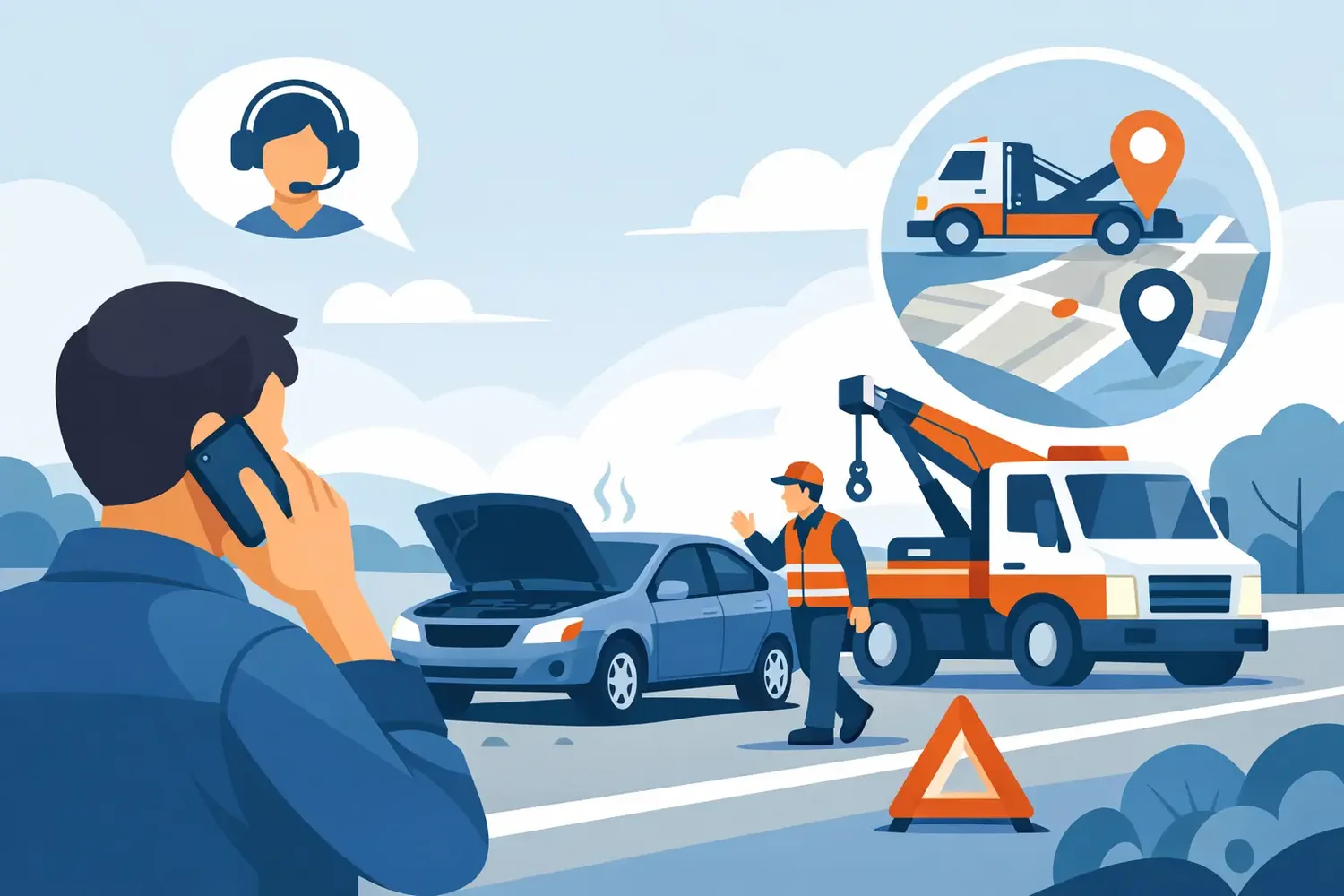
A breakdown rarely happens at a convenient time. You may be on the school run, late for work, travelling with children or stopped on an unfamiliar road after dark. Knowing how to call vehicle recovery before stress takes over helps you stay safe, explain the problem clearly and get the right help moving quickly.
The first priority is not the vehicle. It is getting yourself and any passengers out of danger. Once everyone is safe, a direct call to a recovery provider can establish what has happened, where you are and whether the vehicle can be repaired at the roadside or needs transporting.
Make the situation safe before you call
If your car is still moving, do not brake sharply unless you must. Indicate, slow down and aim for a safe place away from live traffic, such as a lay-by, car park or quiet side road. Put on your hazard warning lights as soon as you need to warn other road users.
On a motorway or high-speed road, stop as far left as possible if you can reach a safe place. Leave the vehicle by the left-hand doors where it is safe to do so, move behind the barrier and keep passengers well away from traffic. Never stand between your vehicle and moving traffic, and do not attempt a roadside repair on the hard shoulder.
Call 999 first if there is an immediate risk to life, a collision with injuries, fire, dangerous debris in the carriageway, or your vehicle is creating a serious hazard. Vehicle recovery is for getting the car sorted. Emergency services are for urgent danger.
If it is safe, switch off the engine, apply the handbrake and take your keys and phone with you. At night, keep warm and visible, but do not remain in the vehicle if its position puts you at risk.
How to call vehicle recovery and what to say
When you call, speak slowly and give the clearest location possible. Recovery operators deal with urgent situations every day, so you do not need to diagnose the fault perfectly. Honest, simple information is more useful than guessing.
Start with your location. Give the road name, direction of travel, nearby junction, postcode, landmark or service station. If you are on a motorway, tell the operator the motorway number, carriageway direction and the nearest marker post details. A mobile phone location can help, but it should support rather than replace clear location information.
Then explain the vehicle and problem. The operator will normally need your registration, make and model, vehicle colour, whether it is a car, van or larger vehicle, and whether it can roll and steer. Tell them if you have a flat tyre, flat battery, warning light, overheating engine, damaged wheel, lost keys, accident damage or an engine that will not start.
Also say how many people are with you, particularly if children, older passengers, a disabled passenger or pets are present. This can affect the recovery plan and whether transport is needed for everyone as well as the vehicle.
A clear call might sound like this: “I am on the M8 eastbound near Junction 19. I am in a blue Ford Focus, registration AB12 CDE. The engine has overheated and I have pulled into a safe place. There are two adults and a child with me. The car starts but I do not think it is safe to drive.”
That gives the recovery team what they need to assess the job without delaying dispatch.
Ask the questions that prevent surprises
Urgent does not have to mean unclear. Before confirming the booking, ask for a quote or an explanation of the likely charge, what the call-out covers and whether mileage or specialist recovery may affect the final price. A professional provider should explain the next step in plain English.
It is also sensible to ask for an estimated arrival time and whether you will receive updates. Real-time ETA messages or WhatsApp communication are particularly useful when you are waiting somewhere unfamiliar, because you know who is coming and when to expect them.
Tell the operator where you want the vehicle taken if recovery is required. That might be your home, a trusted garage, your workplace or another safe destination. Some faults can be dealt with where you are, while others need the vehicle moved to prevent further damage.
Do not agree to be towed informally by another motorist using a rope. It can be unsafe, may not be suitable for your vehicle and can make an already stressful situation worse. Proper recovery equipment, trained handling and insured transport protect both you and the car.
Roadside repair or vehicle transport?
The right service depends on the fault, the location and the condition of the vehicle. A flat battery may only need a jumpstart or replacement battery. A puncture may be resolved with a tyre change if you have a usable spare and the location is safe. Low coolant or another fluid issue may be manageable with a careful top-up, but only after the cause has been considered.
Some warning lights need more caution. If the engine is overheating, there is smoke, a strong fuel smell, serious fluid loss, steering trouble, brake problems or visible damage after an impact, do not keep driving to “see if it improves”. Continuing can turn a repairable fault into major engine or safety damage.
Recovery is usually the safer choice when the car cannot be driven legally, safely or reliably. It is also appropriate after a collision, when a wheel is damaged, when keys are lost, or when you are stranded somewhere unsafe. A good operator will not push a tow when a simple roadside repair is genuinely suitable, but they should not encourage you to drive a vehicle that is clearly unsafe either.
While you wait for recovery
Keep your phone charged if possible and stay available for calls or messages from the driver. If you are in a safe location, gather the vehicle documents you may need and remove essential belongings, such as medication, wallets, house keys and child seats if the vehicle is being transported to a garage.
Do not repeatedly try to start a car with an unknown fault. This can flatten the battery, flood the engine in some older vehicles or worsen damage. Likewise, do not open a hot radiator cap or pour cold water onto an overheated engine. Wait for trained assistance.
If somebody offers help, be polite but cautious. You do not need to share personal details or accept a lift from a stranger. Let the recovery provider know if your position changes or if the police, highways officers or emergency services instruct you to move.
When the recovery driver arrives, check that they have the correct vehicle details before handing over keys. Explain anything you noticed: dashboard messages, noises, smoke, leaks, the point at which the fault began and any attempted repairs. These details can help the technician decide whether a roadside fix is sensible or whether secure transport is the best option.
Choose a recovery service built for urgent calls
The best recovery service is not simply the nearest name you find in a panic. Look for clear communication, insured operation, realistic arrival updates and a team that asks practical questions about your safety and vehicle. Reviews can also give useful reassurance about punctuality, care and how people are treated under pressure.
For drivers across the UK, and especially in Glasgow and throughout Scotland, Car Recovery 24 provides 24-hour roadside assistance and vehicle recovery with direct-call booking, ETA updates and practical help for common faults. Whether the issue is a battery, tyre, fluid level or a vehicle that needs transporting, the aim should always be the same: get you safe first, then get your vehicle handled properly.
Keep a recovery number saved in your phone before your next long journey. If trouble does happen, take a breath, secure the scene, give an accurate location and ask for the help your vehicle actually needs. A calm call can turn a difficult roadside moment into a straightforward plan.