A Guide to the Vehicle Recovery Process in the UK
18 July 2026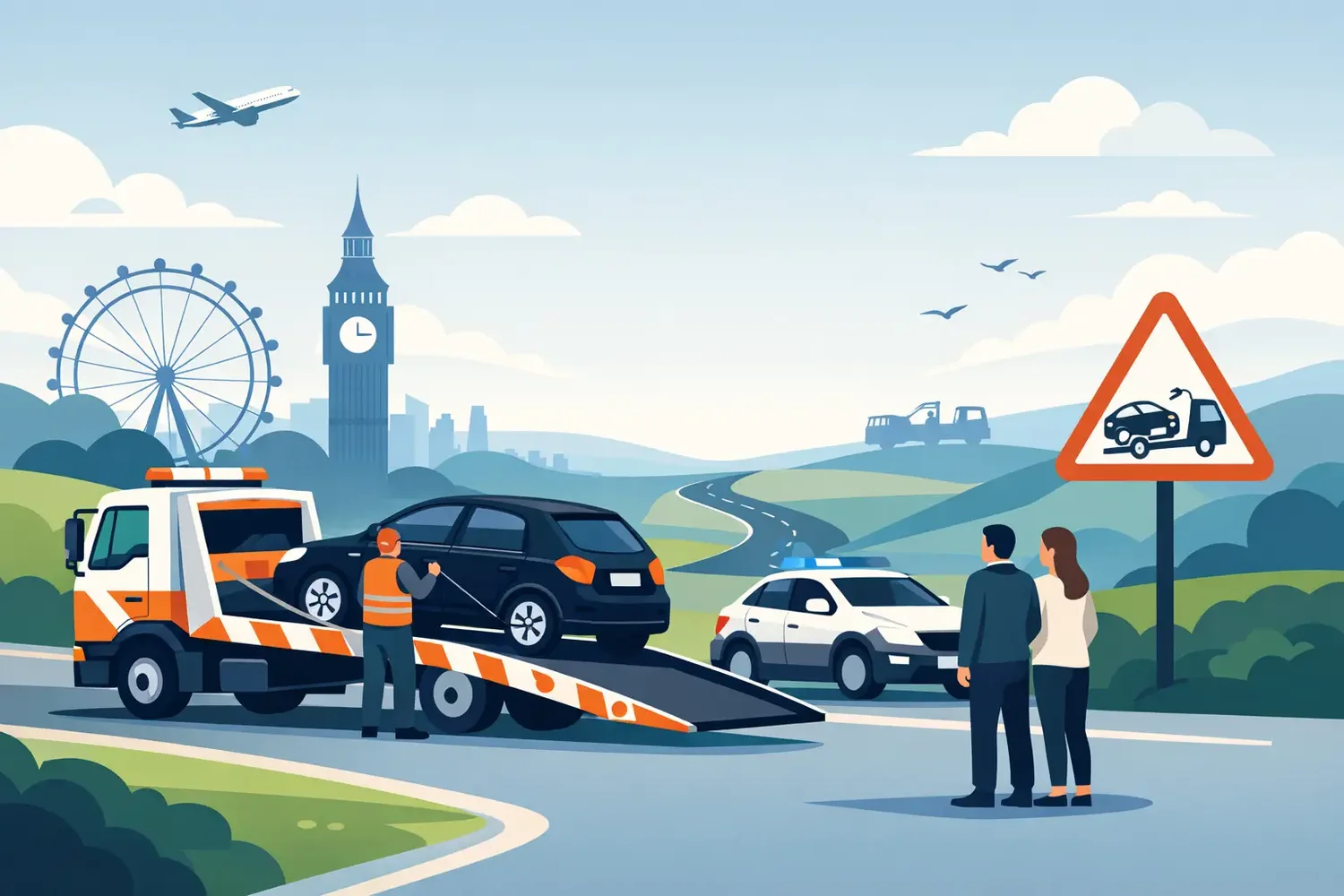
A vehicle that will not start on a rainy Glasgow morning, a warning light on the motorway, or a puncture late at night can turn a normal journey into a stressful situation quickly. This guide to the vehicle recovery process explains what happens from the moment you stop safely to the point your vehicle reaches a garage, home or another agreed location.
The priority is not diagnosing every fault at the roadside. It is keeping you, your passengers and other road users safe, then getting the right help to you without delay.
Start with safety before arranging recovery
If your vehicle develops a fault while moving, reduce speed gradually, use your indicators and pull over somewhere safe as soon as possible. Avoid stopping on bends, near junctions, at the crest of a hill or in a live traffic lane unless the vehicle cannot be moved.
Put your hazard warning lights on. If it is dark, wet or visibility is poor, keep lights on where it is safe to do so. On an ordinary road, get passengers out of the vehicle only if there is a safe place away from passing traffic. Keep children close and do not stand between your car and the road.
A motorway or smart motorway breakdown needs extra care. If you can reach a motorway service area, leave at the next exit or use an emergency refuge area, do so. If you cannot, move as far left as possible, switch on hazards and leave the vehicle from the left-hand side when it is safe. Stand behind a barrier where one is available. Call 999 if you are in immediate danger, stopped in a live lane, or cannot get to a safe position.
Do not attempt repairs beside fast-moving traffic. A tyre change, jumpstart or fluid top-up may be straightforward in a safe car park, but it is not worth the risk on a busy road.
What to tell the recovery operator
A clear first call helps the recovery team send the right vehicle and equipment. Give your exact location first. A postcode, road name, nearby landmark, motorway direction of travel, junction number or what3words reference can all help. On a motorway, use the marker posts if you can see them.
You will also be asked for the vehicle registration, make and model, the fault or warning message, and whether the car is in a safe and accessible place. Mention anything that affects recovery, such as a locked wheel, flat tyre, steering fault, low ground clearance, a key that is unavailable, or a vehicle stuck in mud or snow.
Tell the operator how many people are with you, especially if you have young children, an older passenger, pets or someone with a medical need. Recovery is planned around the vehicle, but the people waiting beside it matter just as much.
A professional provider should give you a clear quote or explain how charges are calculated before work begins where circumstances allow. Ask whether the price covers roadside assistance, loading, mileage, drop-off, tolls or any additional extraction work. Clear information at the start prevents an unwelcome surprise later.
Roadside repair or vehicle recovery?
Not every breakdown requires a tow. Once the technician arrives, they will assess whether the problem can be fixed safely at the roadside. Common issues such as a flat battery, an empty fuel tank, a puncture, low coolant or an incorrect warning caused by a minor issue may be resolved without transporting the vehicle.
A jumpstart can get a car moving, for example, but it does not always solve the underlying battery or charging problem. If the battery is old, the alternator is faulty, or the car repeatedly fails to start, a replacement battery or garage inspection may be the safer choice.
Recovery becomes the right option when driving could cause more damage or create a safety risk. Examples include overheating, major oil loss, engine management faults with poor running, gearbox problems, collision damage, failed steering or brakes, and a vehicle that will not start after basic checks. The recovery driver should not pressure you to continue a journey in a car that is clearly unsafe.
The vehicle recovery process at the roadside
After arrival, the driver will confirm the vehicle details, assess access and decide how to load it. A standard car may be winched onto a recovery vehicle, while a van, 4x4, low sports car or severely damaged vehicle can require different equipment or loading methods.
Before loading, remove valuables, medicines, work equipment and anything you will need during the journey. Take photographs of the vehicle if it has accident damage or you are concerned about its condition. Make sure the driver has the keys and knows about any immobiliser, electronic handbrake or special starting procedure.
The vehicle is then secured using approved straps and wheel restraints. You should not remain inside the car while it is being loaded or transported unless the recovery operator specifically confirms otherwise. In most cases, passengers travel in the recovery cab if there are suitable seats and it is safe to do so. If there are more passengers than available seats, alternative arrangements may be needed.
For electric and hybrid vehicles, tell the operator before they arrive. These vehicles need correct handling, particularly after a collision, underbody damage or a battery warning. They should not be treated as a standard petrol or diesel recovery without checking the manufacturer guidance and the condition of the high-voltage system.
Choosing the right drop-off point
You usually have three practical options: a trusted garage, your home address, or a safe location where the vehicle can be inspected later. The best choice depends on the time, the fault and whether the garage can accept the vehicle.
A garage is often the quickest route back to a repair, but check that it is open and can receive the car. Arriving at a locked forecourt late at night may leave the vehicle inaccessible until morning. Home can be useful if you need time to decide on repairs, although it may not be suitable if the car blocks access or cannot be parked safely.
For accident-damaged vehicles, an insurer may require delivery to an approved repairer. If you are arranging independent recovery, keep any recovery receipt, photographs and fault details for your records. If you have roadside cover through a bank account, manufacturer warranty or insurance policy, check whether authorisation is needed before paying privately.
Payment, paperwork and handover
Before departure, confirm the destination, total price and method of payment. A reputable recovery service will explain what you are paying for in plain language. Costs can vary according to distance, vehicle size, time of day, location, access difficulties and whether roadside repair is attempted before recovery.
At drop-off, check that the vehicle has been placed where agreed and that keys are handed over correctly. If a garage is closed, ask how the keys will be secured and whether the workshop has been notified. Keep the invoice and any job reference number. These details are useful for insurance claims, warranty queries or follow-up repairs.
When to call for urgent help
Call for professional assistance rather than trying to drive on if you smell fuel, see smoke, have a red temperature or oil warning light, notice brake or steering failure, or have been involved in a collision. The same applies if your vehicle is stranded in an unsafe place or you are unsure whether it can be moved.
Car Recovery 24 provides 24-hour support for drivers who need practical roadside help or safe vehicle transport, with direct communication and ETA updates so you are not left guessing what happens next.
A breakdown rarely arrives at a convenient time. Stay visible, stay somewhere safe, give accurate location details and let a properly equipped recovery team handle the vehicle. That calm sequence can turn a difficult roadside stop into a manageable delay.