Guide to Motorway Breakdown Rules in the UK
19 August 2026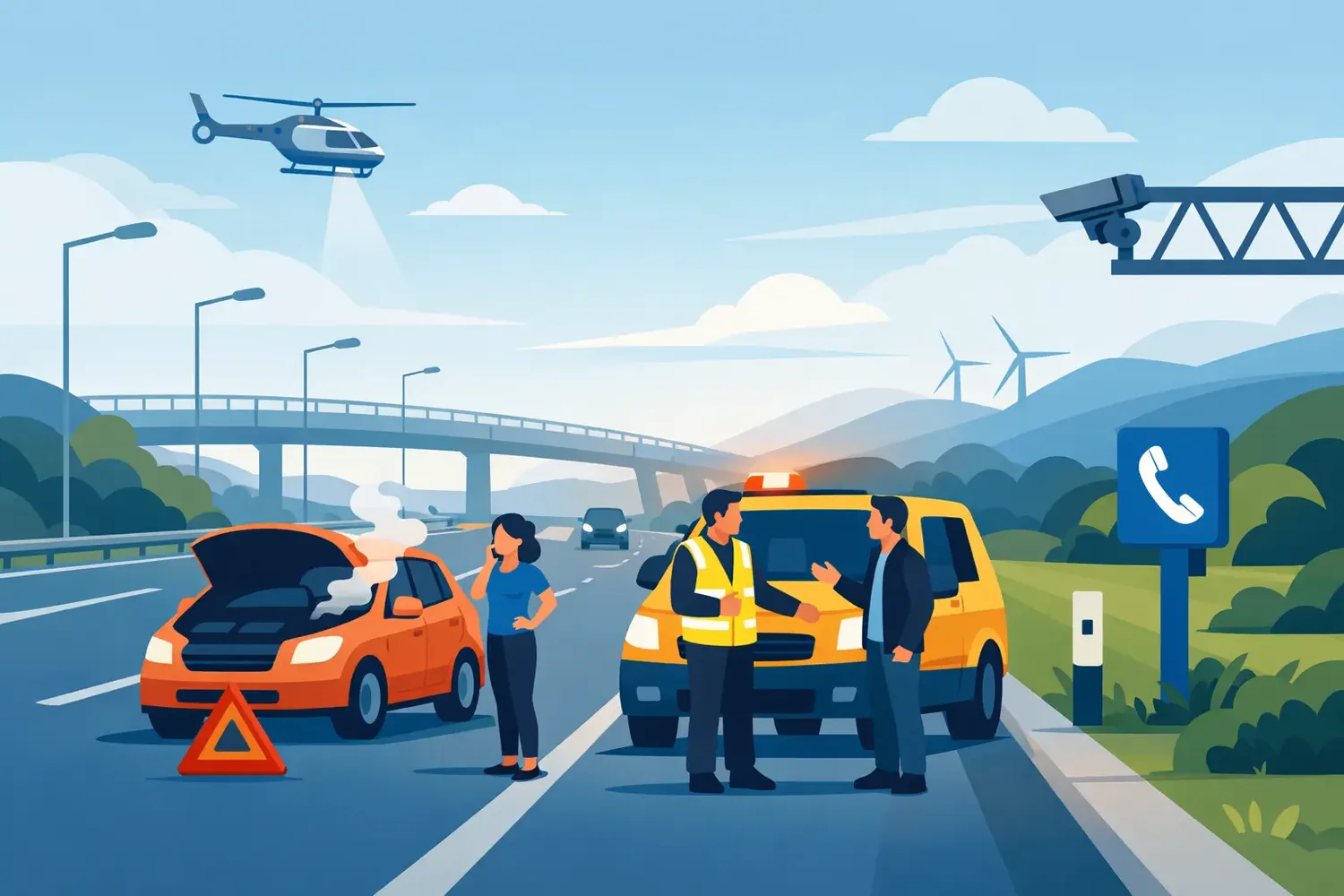
A warning light, a sudden loss of power or a tyre problem feels very different at 70mph. On a motorway, the first decision matters more than diagnosing the fault. This guide to motorway breakdown rules explains the safest actions to take, whether you can reach a refuge area, stop on a hard shoulder or find yourself stranded in a live lane.
Put safety ahead of the vehicle
Your car can be repaired or recovered. Your priority is getting yourself and your passengers out of immediate danger. If the vehicle is still moving, stay calm, keep a firm grip on the wheel and avoid sharp braking or sudden lane changes. Put on your hazard warning lights as soon as you know there is a problem.
Aim to leave the motorway at the next exit if the car can safely continue. If that is not possible, use an emergency area where one is available. On a motorway with a hard shoulder, move as far left as possible onto it. Do not stop in a live traffic lane unless there is no alternative.
An emergency area is the safest place to stop on many smart motorways. Pull fully into the area, switch on your hazard lights and use the emergency telephone if there is one. It gives the road operator your precise location and allows them to manage traffic around you. If you have a mobile phone, you can also call for recovery once everyone is safe.
If you stop on a hard shoulder
Bring the vehicle to a halt as far left as you can, with the wheels turned left if practical. Turn on hazard warning lights. If it is dark or visibility is poor, use sidelights as well.
Only leave the vehicle when it is safe to do so. Exit by the left-hand passenger door, not the driver's door, and move behind the safety barrier. Take passengers with you, especially children, and stand well away from moving traffic. If there is no barrier, move up the embankment or as far from the carriageway as you safely can.
Do not attempt a roadside repair on the hard shoulder. A tyre change, battery check or look under the bonnet can wait until the vehicle has been recovered to a safer location. You must not place a warning triangle on a motorway - walking back along the carriageway creates another serious risk.
If you stop in a live lane
A stationary vehicle in a live lane is an emergency. If you cannot reach the hard shoulder, an emergency area or an exit, stop as far left as possible, switch on hazard warning lights and keep your seatbelt fastened.
Call 999 immediately. Tell the operator that you are stopped in a live lane on a motorway, give your location and explain whether anyone is injured or vulnerable. If you can safely use an emergency phone without entering traffic, use it. Otherwise, remain in the vehicle unless emergency services tell you to leave or there is an immediate danger such as fire.
Do not try to push the car, direct traffic or walk to find help. Even if the vehicle appears to be just beyond a lane closure sign or close to a refuge area, fast-moving traffic can make the situation unsafe in seconds.
Motorway breakdown rules: who to call and when
Call 999 first when you are in a live lane, there has been a collision, anyone is injured, the vehicle is creating a danger, or you feel unsafe where you have stopped. Police and motorway control teams can take action to protect the scene. Your recovery provider can then arrange the vehicle's removal when it is safe to do so.
If you are safely in an emergency area, at a services, on a hard shoulder behind a barrier, or off the motorway, contact a recovery company directly. Give clear details from the start: your vehicle registration, make and model, the nature of the fault, whether the car can roll or steer, and how many people are with you. This helps the recovery operator send the right vehicle and equipment rather than losing time after arrival.
Location is equally important. Tell the operator the motorway number, the direction you are travelling, the nearest junction and any location marker details you can see. Small blue motorway marker signs can show the route, carriageway direction and distance reference. A photograph of the sign is useful if it can be taken from a safe place.
If you have stopped at a service area, name the services and confirm where in the car park you are waiting. If a recovery driver has to search a large site in the dark, a vague location can delay help.
Waiting for recovery without creating more risk
Once help is on its way, stay in the safest available place. Keep your phone charged where possible, but do not sit with the engine running in an enclosed area or attempt repeated restarts if there is smoke, a strong fuel smell or an overheating warning.
If you are behind a barrier, remain behind it. Do not return to the car to collect bags, chargers or coats unless it is clearly safe. A coat, water and essential medication are worth thinking about before long journeys, particularly in winter or when travelling with children, but no item is worth stepping into traffic for.
Keep children close and explain that they must not run towards the vehicle. Pets should be kept under control. On a hard shoulder, an excited dog or a child moving suddenly towards the road can turn a manageable breakdown into a dangerous situation.
A professional recovery operator may ask whether the car is on the hard shoulder, in a refuge area or in a live lane before dispatching. Be honest and specific. At Car Recovery 24, clear location details and a direct phone call allow the team to assess urgency, provide an ETA and send suitable assistance without unnecessary delay.
Do not rely on a quick fix at motorway speeds
Some faults seem minor at first. A low tyre pressure warning, intermittent battery light or rising engine temperature may tempt you to continue until the next town. Sometimes you can safely make it to the next exit. Sometimes continuing causes a loss of control, engine damage or a complete failure in a more dangerous location.
Use your judgement, but do not gamble with a clear warning sign. If steering feels loose, the engine is overheating, smoke is visible, a tyre is damaged, or the vehicle is losing power, reduce speed and look for the nearest safe stopping place. Do not drive against a red warning light simply because you are close to home.
Equally, do not accept help from an unknown person who asks for payment at the roadside or pressures you to use a particular garage. Confirm the recovery company you have called, check the vehicle arriving matches the details you were given, and keep the recovery booking information on your phone.
A short check before you join the motorway
Breakdowns cannot all be prevented, but a two-minute check can reduce the chance of being stopped in a high-risk place. Check fuel or charge level, tyre condition and pressures, coolant level when the engine is cold, and any dashboard warnings before setting off. Make sure your phone has charge and that you have suitable clothing for the weather.
For longer journeys through Scotland, where weather and distance between services can change quickly, do not leave with a known battery, tyre or cooling issue. Arrange the repair before travel where possible. If the fault happens on the road, stop safely, call for help early and give an accurate location. That is the quickest route from a motorway breakdown to being safely on your way again.