Engine Overheating Help When You Need It
12 September 2026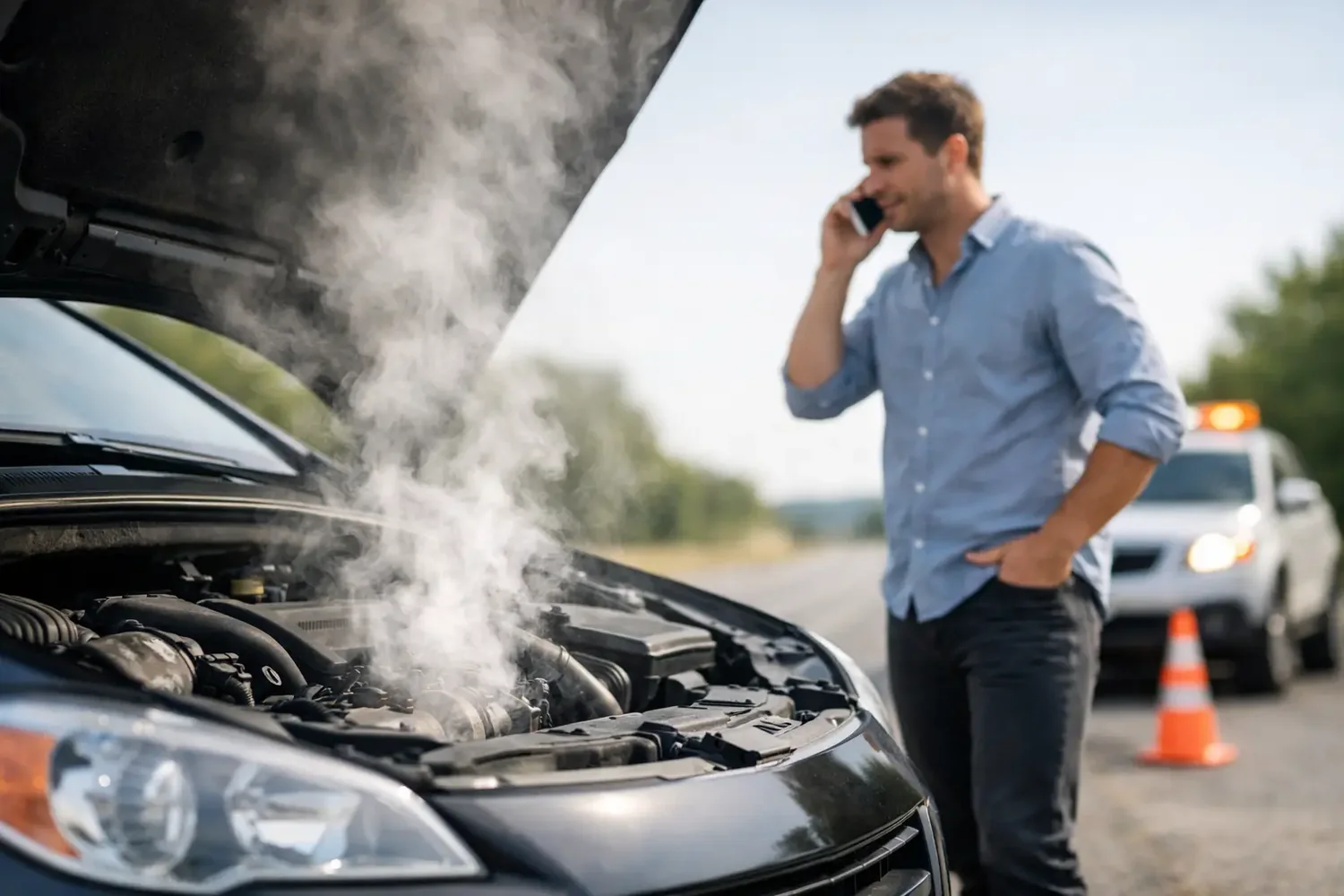
A temperature warning light, steam from the bonnet or a gauge climbing into the red can turn an ordinary journey into an urgent problem. If you need engine overheating help, the priority is simple: protect yourself first, then protect the engine from further damage. Carrying on for even a short distance can turn a cooling-system fault into a costly engine repair.
What to do when your engine overheats
As soon as you notice the temperature rising, reduce the load on the engine. Switch off the air conditioning and, if you can do so safely while finding somewhere to stop, turn the cabin heater up. This may draw a little heat away from the engine, but it is only a short-term measure. It is not a reason to continue driving.
Pull over at the first safe location. Choose a lay-by, car park, service area or quiet side road where possible. If you are on a motorway, leave at the next exit or use an emergency area if the vehicle is still moving safely. Do not stop on the hard shoulder unless it is an emergency and there is no safer option. Put your hazard warning lights on and move everyone away from traffic if it is safe to do so.
Once stopped, switch the engine off. Do not keep restarting it to see whether the warning light disappears. An overheating engine needs time to cool, and running it further can cause serious damage to the cylinder head, head gasket or cooling system.
Never open the coolant cap while the engine is hot
This is the most important safety point. The cooling system is pressurised when hot. Removing the radiator cap or coolant reservoir cap can release boiling coolant and steam without warning, causing severe burns.
Keep the bonnet closed for a few minutes if steam is escaping heavily. When the steam has reduced, you can release the bonnet catch and raise it carefully to help heat escape, provided you can do so without putting yourself at risk. Do not lean over the engine bay or touch any hoses, caps or metal components.
Wait until the engine is fully cool before checking anything. Depending on the vehicle and weather, this can take 30 minutes or longer. If you are unsure, wait longer and arrange roadside assistance rather than taking chances.
Common reasons a car overheats
An engine does not usually overheat without a reason. Sometimes the cause is straightforward, such as low coolant after a small leak. Other faults need proper diagnosis before the car can be driven again.
Low coolant is a frequent cause. Coolant can escape through a split hose, loose connection, leaking radiator, failed water pump or damaged expansion tank. You may notice a sweet smell, a puddle beneath the car, damp patches in the engine bay or white, pink, green or blue staining around hoses, depending on the coolant used.
A radiator fan fault can also make the temperature rise, especially in traffic or while stationary. If the car runs normally at speed but heats up in queues, the cooling fan, fan switch or electrical connection may be the issue. A stuck thermostat can prevent coolant circulating properly, while a blocked radiator can reduce its ability to release heat.
More serious causes include a failing water pump or a head gasket fault. Warning signs can include repeated overheating, thick white smoke from the exhaust, creamy residue beneath the oil filler cap, coolant loss with no visible leak, or rough running. These symptoms need professional attention. Adding coolant and hoping for the best may make the situation worse.
Can you add coolant after an overheating warning?
Only check or top up coolant after the engine has completely cooled. Look at the coolant expansion tank and check whether the level sits below the minimum mark. Use the coolant type specified for your vehicle where possible. Mixing incompatible coolant types can reduce protection and create further problems.
If you are stranded and have no correct coolant, clean water can sometimes be used as a temporary emergency top-up after the engine is cold. This is not a permanent fix, particularly in cold weather, because coolant also provides corrosion protection and helps prevent freezing. The system should be checked, repaired if necessary, and refilled with the correct mixture as soon as possible.
Do not top up and immediately drive away if there is an obvious leak, steam continues to appear, or the temperature gauge previously reached the red. The new fluid may simply escape, leaving you in a more dangerous position a few miles later.
When it is not safe to drive on
It may be tempting to continue if the temperature drops after a break, particularly if you are close to home. That decision depends on the cause, and the risk is rarely worth it. A vehicle that has overheated once can quickly do so again under load, in traffic or on an uphill stretch.
Arrange recovery rather than driving if you see steam, a warning message remains on the dashboard, coolant is leaking, the engine is running poorly, or the gauge rises again after restarting. The same applies if you cannot identify the correct coolant or safely check the level.
If a warning light appears but there is no steam and the gauge remains normal, consult the vehicle handbook when safe to do so. Some cars have separate coolant-level warnings, while others provide a specific high-temperature warning. Either way, do not ignore it. A quick inspection at the roadside can prevent a far more expensive repair later.
Engine overheating help at the roadside
A trained recovery operative can help assess whether a simple, safe remedy is possible or whether the vehicle should be transported to a garage. This removes the uncertainty of trying to diagnose a hot engine beside a busy road.
For drivers in Glasgow, Manchester, Liverpool, Preston or Coventry, Car Recovery 24 can provide 24-hour roadside assistance and vehicle recovery when an overheating issue leaves you unable to continue. Clear updates and a realistic arrival time matter when you are stranded, especially if you are travelling with children, in poor weather or outside normal garage hours.
The right response may be a coolant check and top-up once the car is cold, but it may also be recovery to avoid engine damage. It depends on the condition of the vehicle, the warning signs present and whether a leak or mechanical fault is visible.
How to reduce the chance of overheating again
Regular checks make a real difference. Check coolant levels only when the engine is cold, particularly before a long journey, after a service, or if you have noticed the heater performing poorly. Keep an eye on the temperature gauge rather than waiting for a dashboard warning.
If you have needed to top up coolant more than once, book an inspection. Coolant does not normally disappear without a reason. A small leak is usually cheaper to repair early than after it has caused repeated overheating.
Make sure servicing is kept up to date, including coolant changes at the interval recommended by the manufacturer. Old coolant can lose its protective qualities, while neglected belts, pumps and hoses are more likely to fail when the engine is working hard.
An overheating warning is not a test of how far the car can make it. Stop safely, let the engine cool, avoid opening the coolant cap, and get practical help before a manageable fault becomes major engine damage.