Emergency Tyre Change Service: What to Expect
6 July 2026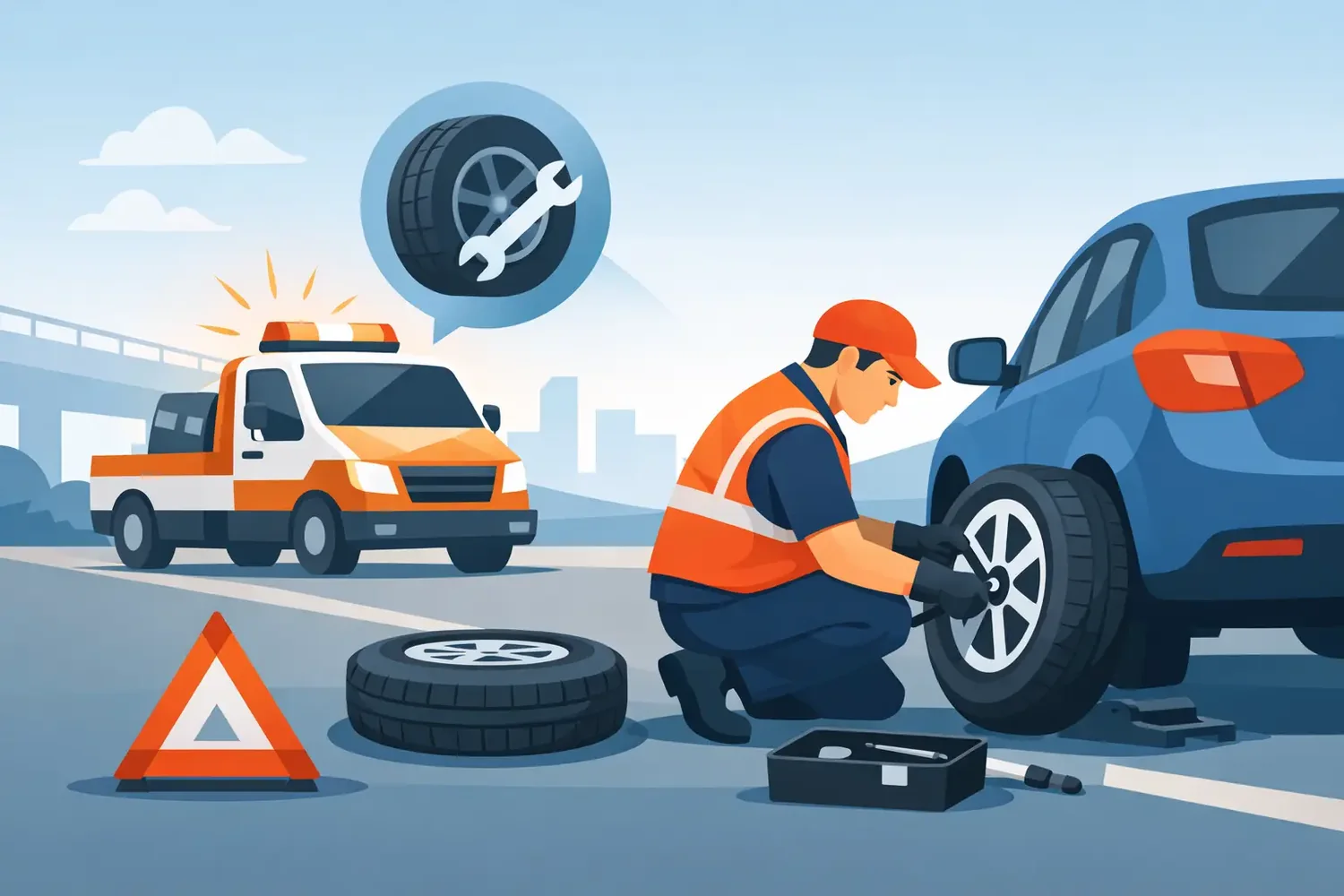
A flat tyre rarely happens at a good time. It happens on the school run, in the dark after work, on a wet hard shoulder, or halfway through a long trip when you are already running late. That is exactly when an emergency tyre change service matters - not as a convenience, but as a fast, safe way to get help when stopping at the roadside feels stressful or risky.
Most drivers know, in theory, that a wheel can be changed at the roadside. In practice, it is not always simple. You may not have the right tools. The locking wheel nut may be missing. The spare may be flat as well. Or the location itself may make a DIY change a bad idea. When you are stuck on a busy road, in poor weather, or travelling with children, speed and safety matter more than proving you can do it yourself.
When an emergency tyre change service is the right call
Some tyre problems are obvious. You hear the blowout, feel the pull in the steering, or see the tyre sitting flat against the road. Others build more gradually. A slow puncture, damaged sidewall, split valve, or impact from a pothole can leave your car unsafe to drive even if the tyre still looks partly inflated.
An emergency tyre change service is usually the right option when the vehicle cannot be driven safely, when you are in a vulnerable location, or when you do not have the equipment or confidence to change the wheel yourself. It is also the sensible choice if the wheel nuts are seized, the car is loaded heavily, or the puncture happened somewhere with poor visibility or little space to work.
There is a difference between inconvenience and danger. A tyre issue on your driveway is one thing. The same issue on a motorway shoulder, country road bend, or city centre lane at night is another. In those situations, getting professional roadside help is often the safest decision.
Why roadside tyre changes are not always straightforward
A lot of people assume a tyre change takes ten minutes and a jack. Sometimes it does. Sometimes it turns into a much bigger problem.
Modern vehicles can make roadside work awkward. Locking wheel nuts are common, but the key is often missing. Space-saver spares are useful, but only if they are present and properly inflated. Some cars do not carry a spare wheel at all and instead rely on inflation kits, which are not suitable for every puncture. If the tyre has torn, the sidewall is damaged, or the wheel itself is bent, a sealant kit will not solve it.
Then there is the simple fact that roadside conditions are unpredictable. Rain, poor lighting, traffic, uneven ground, and passing vehicles all increase the risk. Even if you know what to do, kneeling at the edge of a live road is not always reasonable. That is why many motorists now prefer to call for help rather than take chances.
What to expect from an emergency tyre change service
Good emergency support should reduce stress straight away. The first thing you need is a clear response, not vague promises. When you call, you should be asked where you are, what vehicle you are driving, and whether you are in a safe place. If the tyre can be changed at the roadside, the aim is to dispatch help quickly and keep you updated.
On arrival, the technician should first assess safety. That includes the position of the vehicle, the condition of the wheel, and whether a roadside change is actually possible. If you have a usable spare, the job may be completed there and then. If there is no spare, or if the wheel damage is more serious, recovery to a safer location or tyre fitting point may be the better option.
That practical judgement matters. The best service is not the one that forces a tyre change at all costs. It is the one that chooses the safest and fastest route to get you moving again.
Emergency tyre change service or full recovery?
This is where things depend on the situation. If the problem is a simple puncture and you have a roadworthy spare, a roadside wheel change is usually the quickest fix. You get back on the road with minimal delay.
If there is no spare, multiple tyres are damaged, the locking key is missing, or the wheel has suffered impact damage, recovery may be necessary. The same applies if the car is stuck somewhere unsafe to work or the puncture happened in a location where roadside repair is not realistic.
For drivers, this can be frustrating because you want one simple answer. But honest roadside assistance means telling you when a quick change is possible and when it is not. A proper emergency service should explain that clearly, not leave you guessing.
What you should do while waiting for help
Your priority is safety, not the wheel. If you suspect a puncture, slow down gently and avoid harsh braking or sudden steering. Pull over somewhere as safe as possible, away from traffic if you can. Switch on your hazard lights.
If you are on a motorway or another fast road, do not stand near moving traffic. If it is safe to leave the vehicle, move behind the barrier with passengers. If you are in a more sheltered location, stay visible and keep your phone close. Have your registration, vehicle model, and exact location ready when you call.
It also helps to mention anything that may affect access or safety, such as children in the car, poor weather, limited signal, or if you are stopped in a car park, narrow lane, or underground space. Clear information helps roadside teams reach you faster and arrive prepared.
Common reasons drivers need urgent tyre help
Tyre failures are not always caused by nails or sharp objects. Pothole damage is one of the biggest causes, especially after periods of bad weather. A hard impact can split the tyre or buckle the wheel without much warning. Underinflated tyres are another issue because they overheat more easily and are more vulnerable to damage.
Kerb strikes, worn tread, and overloaded vehicles also increase the risk. Long-distance driving can make a weak tyre fail at the worst moment, particularly on busy routes where stopping safely is harder. In Scotland and around places such as Glasgow, Edinburgh, Falkirk, and Stirling, wet roads and mixed urban-motorway driving add another layer of pressure when something goes wrong unexpectedly.
Why fast communication matters as much as the tyre change
When you are stranded, silence is part of the problem. Waiting without updates makes a bad situation feel worse. That is why a dependable roadside service should not only arrive quickly, but communicate clearly from the start.
Real-time ETA updates, direct call handling, and straightforward messages make a real difference. You know help is coming, you know roughly when to expect it, and you are not left chasing for answers. For families, lone drivers, and anyone stuck in an unfamiliar area, that reassurance matters almost as much as the practical fix.
This is where services such as Car Recovery 24 stand out. Fast dispatch, clear updates, and practical roadside support are exactly what drivers need when a tyre problem leaves them exposed and under pressure.
Can you prevent every roadside tyre emergency?
No, and that is the honest answer. Some punctures are simply bad luck. Road debris, hidden potholes, and sudden impact damage can catch out even careful drivers.
What you can do is reduce the chances. Check tyre pressure regularly, not just before long journeys. Keep an eye on tread depth and sidewall condition. Make sure your spare, if you have one, is inflated and usable. Confirm that the locking wheel nut key is in the car. Small checks save a lot of time when something goes wrong.
Still, preparation only goes so far. When the tyre fails at the wrong time and in the wrong place, what matters is having access to fast, professional help that treats the situation with the urgency it deserves.
A tyre problem can turn an ordinary journey into a stressful stop in minutes. The right response is simple: stay safe, call for help, and let trained roadside support deal with it properly so you can get moving again with confidence.