Emergency Towing Service When You Need Help
3 August 2026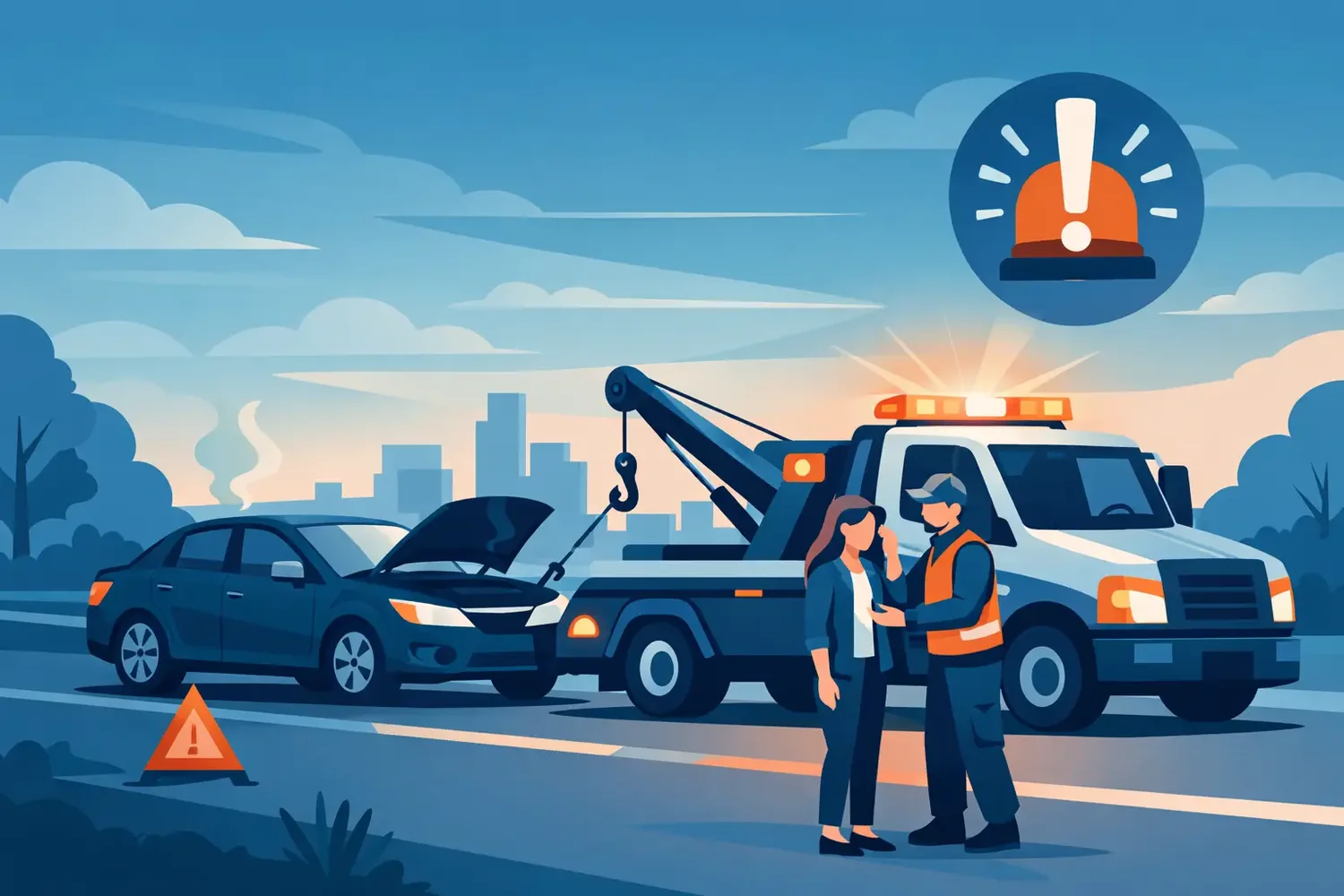
A breakdown rarely waits for a convenient moment. It can happen in rush-hour traffic, outside your home before work, on a dark country road, or halfway through a family journey. When the vehicle is unsafe to drive or will not start at all, an emergency towing service gives you a clear next step: get yourself to safety, arrange professional help and have the vehicle handled properly.
The priority is not guessing what has failed. It is keeping you, your passengers and other road users safe while a recovery vehicle is on the way. Fast dispatch, a realistic arrival estimate and direct communication can make a difficult roadside situation far more manageable.
When to call an emergency towing service
Call for recovery when driving on could cause damage, create a hazard or leave you stranded again a few miles down the road. A warning light alone does not always mean you need towing, but warning lights combined with smoke, overheating, a loss of power, unusual noises or leaking fluid should be treated seriously.
An emergency towing service is also the right choice after a collision, a tyre blowout without a usable spare, a flat battery that cannot be safely jumpstarted, or a mechanical failure that stops the car moving. If the steering, brakes, wheels or suspension appear damaged, do not attempt to drive the vehicle to a garage. A short journey can turn a repairable fault into a much bigger bill.
In Glasgow and across Scotland, weather and road conditions can add pressure. Heavy rain, ice, poor visibility and busy routes around the city can make even a minor breakdown feel unsafe. Calling early is usually better than waiting until the situation becomes more difficult.
Make the roadside safe before help arrives
If you can, pull into a safe place away from moving traffic. Use your hazard warning lights and switch on sidelights if visibility is poor. On a motorway, move as far left as possible, leave the vehicle from the passenger side when it is safe to do so, and wait behind a barrier where available.
Do not stand between your vehicle and traffic, and do not attempt repairs at the roadside if you are exposed to passing vehicles. Keep children and passengers away from the carriageway. If the car has broken down in a live motorway lane and cannot be moved, call 999 first if there is immediate danger.
Once you are safe, gather the details a recovery operator needs: your exact location, the vehicle registration, make and model, the fault if known, and whether anyone is vulnerable or travelling with you. A nearby landmark, road number, motorway junction, postcode or dropped map pin can help the driver find you without delay.
What happens after you book recovery
A professional recovery service should make the process straightforward. You explain the problem and location, receive a quote or clear pricing information, and get an estimated arrival time. Real-time updates through a call or WhatsApp are particularly useful when you are parked somewhere unfamiliar or need to make arrangements for children, work or onward travel.
On arrival, the recovery operator will assess the vehicle and the safest way to move it. Some faults can be resolved where you are. A battery may only need a jumpstart or replacement; a low coolant level or minor tyre issue may be dealt with on site. That can save the time and cost of a tow.
Other problems require transport. The vehicle may be loaded onto a recovery lorry or moved using the correct equipment for its condition. This matters for automatic cars, electric vehicles, vehicles with wheel damage and cars that cannot be put into neutral. The wrong towing method can damage the transmission, drivetrain or bodywork, so it is worth choosing an insured, properly equipped operator rather than accepting informal help.
Choosing where your vehicle goes
You do not always have to send the car to the nearest garage. Depending on the fault, time of day and your circumstances, you may choose a trusted local garage, a main dealer, your home address or another safe destination. If a garage is closed, recovery to your home may be the sensible option so you can decide on repairs the following morning.
There are trade-offs. A nearby garage may get the vehicle inspected sooner, while a specialist may be better for a complex electrical, hybrid or manufacturer-specific issue. If you have broken down far from home, ask about the recovery distance and confirm the destination before loading begins. Clear communication at this point avoids surprises later.
What affects emergency towing costs
No two recoveries are identical. Price can depend on your location, the distance to the destination, the vehicle type, whether the car can roll freely, access conditions and the time of day. A vehicle in a tight underground car park, on a difficult rural road or with severe wheel damage may need additional equipment or a different recovery method.
The best approach is to explain the situation honestly when you call. Mention if the car is lowered, electric, automatic, locked, badly damaged or carrying passengers. Ask what is included in the quote and whether there are likely to be extra charges for mileage, tolls, storage or specialist handling. A clear quote is more useful than an unrealistically cheap starting price that changes once the operator arrives.
Why speed matters, but safe handling matters more
When you are stranded, a fast arrival time matters. You need to know that someone is coming and when to expect them. But speed should not mean rushed or careless recovery. The operator must assess traffic, vehicle condition and loading points before moving the car.
A reliable service combines both: prompt dispatch, honest ETA updates and careful vehicle handling. That is especially important if your car has been involved in an accident or has faults that are not immediately visible. Taking a few extra minutes to secure the vehicle properly is preferable to risking further damage during transport.
Roadside help can prevent an unnecessary tow
Not every call ends with recovery. If the problem is straightforward and it is safe to fix at the roadside, practical assistance can get you moving again. Common examples include a flat battery, a puncture where you have a usable spare, low engine oil, low coolant, or a simple starting issue.
That said, do not assume a quick fix is always the right answer. A battery that repeatedly goes flat could point to an alternator fault. Coolant that has suddenly dropped may signal a leak. A tyre with sidewall damage should not be repaired with a temporary inflation kit. A responsible operator will tell you when the vehicle is safe to drive and when it needs transport instead.
What to keep in your car for a breakdown
A few basic items can make waiting for help safer and more comfortable, particularly during winter or longer journeys. Keep a charged phone and charging cable, high-visibility clothing, a torch, drinking water, warm layers and any essential medication. A warning triangle is not suitable for motorway use, but may be useful in certain safe, non-motorway locations if it can be placed without risk.
It is also sensible to keep your locking wheel nut key, towing eye and vehicle handbook where you can find them. You may never need them, but they can save time if a wheel change or recovery assessment is required.
Calm support when plans change
An unexpected breakdown can feel overwhelming, particularly when you are alone, travelling with children or trying to reach work. Focus on the next safe action rather than the whole disruption. Get clear of danger, share your location, keep your phone available and let a professional handle the vehicle.
Car Recovery 24 provides 24-hour roadside assistance and vehicle recovery with direct booking, clear updates and insured handling for drivers who need help without delay. Whether the answer is a jumpstart, tyre assistance or transport to a safe destination, the aim is simple: reduce the uncertainty and get you safely moving towards the next step.