Emergency Oil Top Up Service When You Need It
8 July 2026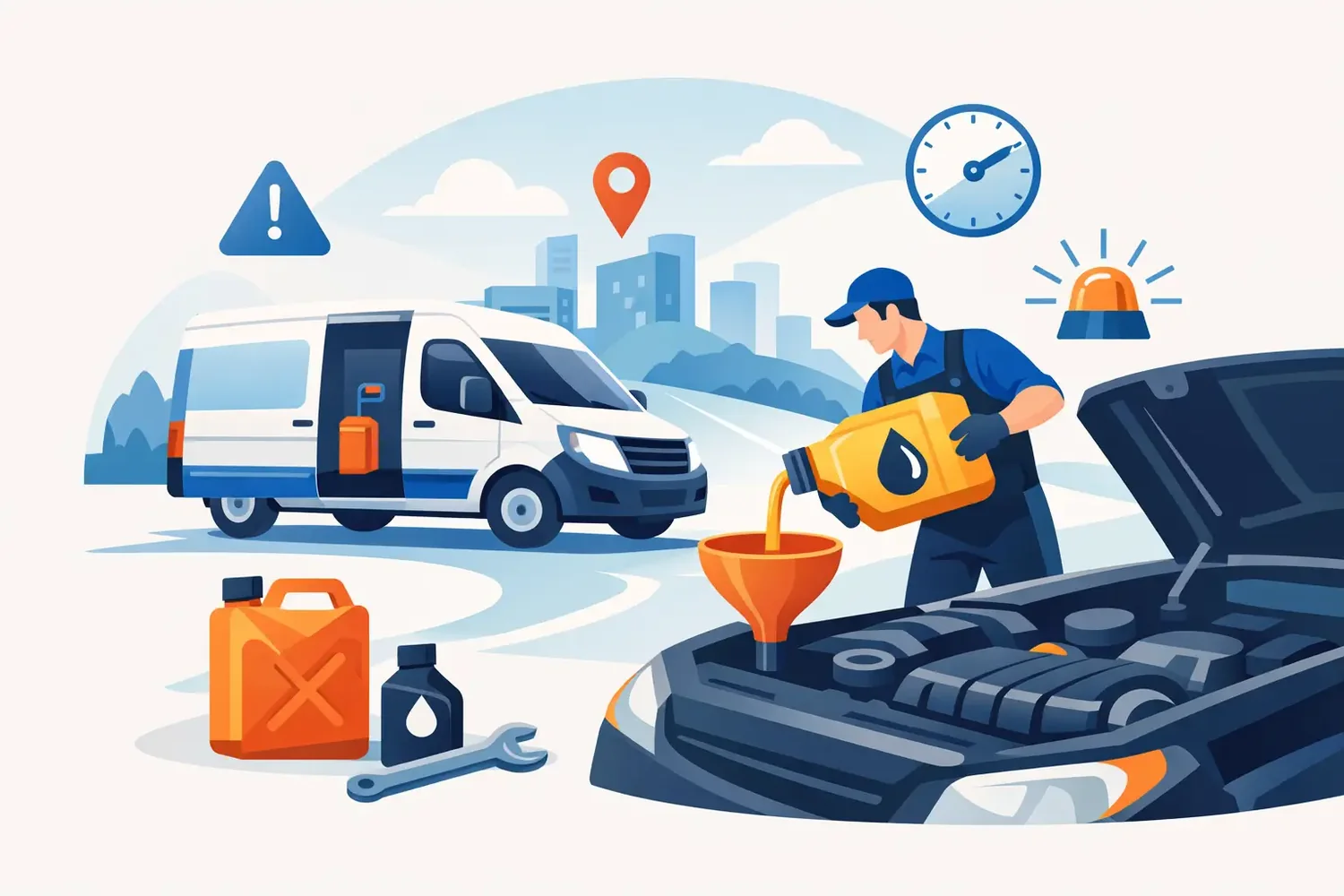
You notice the oil warning light halfway through a school run, on the M8 after work, or parked outside the supermarket with no clue how long it has been low. That is exactly when an emergency oil top up service matters. It is not about routine maintenance or a booked garage visit. It is about getting urgent help at the roadside before low engine oil turns into engine damage.
For most drivers, the real problem is not just the warning light. It is the uncertainty. Can you still drive? Is it safe to restart the engine? Do you need a top-up, a proper repair, or full recovery? In that moment, clear advice and a fast response matter more than technical talk.
What an emergency oil top up service is for
An emergency oil top up service is designed for drivers who need immediate roadside assistance because engine oil is low, the warning light has appeared, or the vehicle is showing signs that oil levels may be unsafe. The aim is simple - assess the situation, top up the oil if appropriate, and help you avoid making the problem worse.
This kind of call-out is useful when you do not have oil with you, do not know which grade your car needs, or are stranded somewhere inconvenient or unsafe. It also helps when the issue has happened suddenly during a journey and you need a practical answer quickly.
What it is not for is replacing proper servicing. If a car is repeatedly losing oil, smoking, leaking heavily, or making serious engine noise, a top-up may only be a short-term measure. In those cases, roadside support can still help, but the next step may be recovery rather than simply adding oil and sending you on your way.
When you should stop driving immediately
There is a big difference between low oil and no oil pressure. If you see a red oil pressure warning light, hear knocking from the engine, smell burning oil, or notice heavy smoke, keep driving only at your own risk. The safest move is usually to pull over as soon as it is safe, switch the engine off, and call for help.
Driving with low or incorrect oil can damage internal engine parts very quickly. Modern engines do not give much margin for error. A cheap top-up can prevent a very expensive failure, but only if it happens early enough.
If the vehicle still seems to run normally and there are no obvious signs of a major fault, you may still need to stop and check before deciding anything. Many motorists are tempted to "just get home" or "just make it to work". Sometimes that works. Sometimes it turns a manageable issue into a seized engine. That is why roadside assessment is so valuable.
Signs you may need roadside oil help
The warning light is the obvious one, but it is not the only clue. Some vehicles show a message about oil level. Others may feel rougher than usual, sound tappety, or smell hot after a short drive. You might also spot fresh oil under the car, especially after parking.
Another common situation is after a long journey. A car that was already overdue a service or using oil gradually can suddenly drop below a safe level after motorway driving. Families travelling with children, commuters on tight schedules, and drivers heading home late at night often need help in exactly this situation. They do not need a lecture. They need someone to attend, check the vehicle properly, and tell them the safest next step.
What happens during an emergency oil top up service
A proper roadside response starts with the basics. The vehicle is checked for signs of a leak, the oil level is assessed, and the technician looks at whether a simple top-up is likely to be enough. If the engine has been run low, there may also be questions about recent warning lights, smoke, rough running, or whether the problem has happened before.
If the issue is straightforward, the correct type of oil can be added to bring the level back into a safe range. The key word there is correct. Not every engine uses the same oil, and using the wrong one is not ideal, especially on modern cars. That is why many drivers prefer to call rather than guess.
If there are signs of a bigger fault, you should be told plainly. A top-up may still be possible to protect the engine while loading or moving the vehicle, but you may also need recovery to a garage or another safe location. That honest call matters. The right roadside provider does not pretend every warning light has an easy fix.
Emergency oil top up service or full recovery?
It depends on what caused the oil to drop.
If the oil is simply low because the vehicle has not been checked for a while, a top-up can be enough to get you going again safely. If there is a small issue such as normal oil consumption between services, roadside help may solve the immediate problem with no further drama.
If there is a visible leak, fresh oil pouring under the car, strong smoke, or the engine has already been making harsh mechanical noises, recovery is often the better option. In those cases, adding more oil may only buy a little time, or none at all.
This is where practical, no-nonsense support matters. You need someone who can assess it quickly and advise based on the vehicle in front of them, not a scripted answer over the phone.
Why drivers call for this service instead of doing it themselves
Some drivers are confident enough to top up oil on their own. Plenty are not, and that is perfectly reasonable. On many newer vehicles, even locating the right oil specification can be confusing. Add poor weather, darkness, motorway hard shoulders, or children in the back seat, and a simple job stops feeling simple.
There is also the risk of overfilling, choosing the wrong oil, or missing the real issue. If the car has dumped oil because of a leak, topping it up without checking the cause may leave you broken down again a few miles later. Roadside assistance gives you more than the oil itself. It gives you a safer decision.
For drivers around Glasgow and across Scotland, that speed can make a real difference. Waiting around on a wet roadside is stressful enough without guessing whether your engine is about to fail.
What to do while waiting for help
If the oil warning light has appeared, pull over somewhere safe as soon as you can. Turn the engine off unless you have been clearly advised otherwise. Put your hazard lights on if needed, and stay in a safe place away from moving traffic.
Have your location ready. If you are on a major road, look for signs, junction numbers, landmarks, or nearby services. If you can, be ready to share your registration and what warning light or message you have seen. That helps the roadside team arrive prepared.
If you are not sure whether you should restart the car, do not guess. Ask when you call. A quick conversation can prevent costly damage.
Choosing the right emergency oil top up service
When you need help urgently, response time matters, but so does communication. You want clear updates, a realistic ETA, and a provider who can tell you honestly whether your car needs a top-up or a tow.
Look for a service that is used to real roadside incidents, not just routine workshop jobs. Emergency support is about reaching you quickly, working safely at the roadside, and handling stressed drivers calmly. It also helps if the company can offer recovery if the problem turns out to be more serious than expected. That saves time and avoids another round of calls.
A direct-call service is often best in these situations because it gets you to an answer faster. If you are stranded, you do not want forms, delays, or vague promises. You want to speak to someone, explain the problem, and know help is on the way.
Car Recovery 24 is one of the services drivers turn to for this kind of urgent roadside support because the focus is simple: fast dispatch, clear updates, and practical help that gets the situation under control.
The real value of fast oil assistance
An emergency oil top up service is not just about adding fluid. It is about protecting your engine, reducing roadside stress, and making a safe call under pressure. Sometimes the fix is quick and you are back on the road. Sometimes the right answer is recovery before the damage gets worse.
Either way, the best outcome starts with acting early. If your car is warning you about oil, treat it seriously. A short phone call and a fast roadside check can spare you a much bigger problem later that day.