Dashboard Warning Lights: What to Do Next
17 August 2026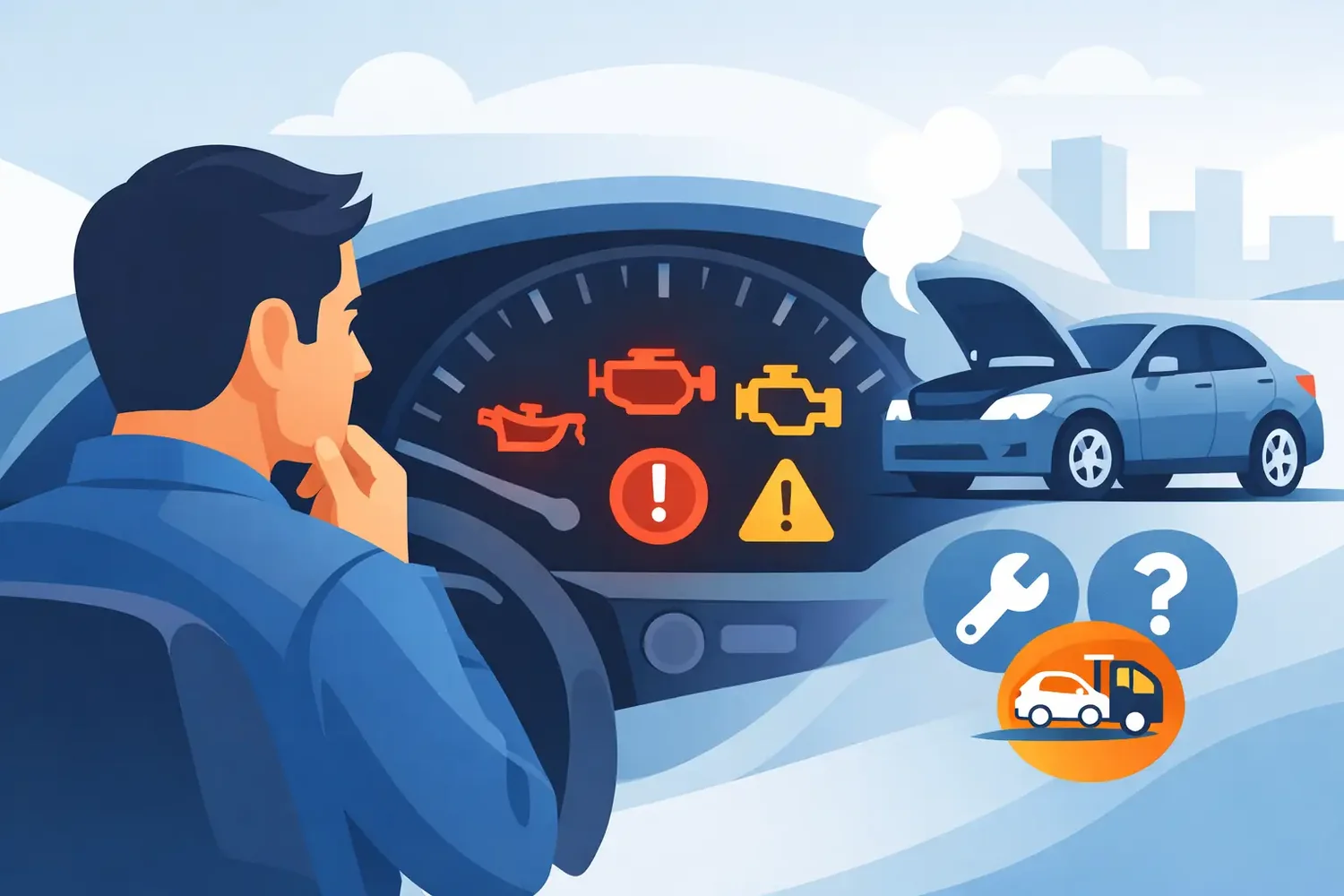
A warning light appears just as you join the motorway, collect the children from school or head home after a late shift. Dashboard warning lights are designed to get your attention quickly, but not every symbol means the same thing. Knowing when you can drive carefully, when you should pull over, and when you need recovery can protect both you and your vehicle.
Dashboard warning lights: red, amber and green
The colour is your first clue. Most cars use a simple traffic-light system, although symbols and wording vary between manufacturers. If you are unsure, check the vehicle handbook when it is safe to do so.
A red warning light usually means stop as soon as it is safe. It can indicate a fault that may cause serious damage or make the car unsafe to drive. Do not assume it will clear on its own because the engine still seems to be running normally.
An amber or yellow warning light normally means the car needs attention soon. You may be able to continue for a short distance, but drive gently, avoid high speeds and arrange a check without delay. Some amber warnings become more urgent if the vehicle loses power, makes unusual noises or starts overheating.
A green, blue or white light generally shows that a system is operating, such as dipped headlights, main beam or cruise control. These are not usually faults. The exception is when a flashing symbol or a message on the display tells you otherwise.
Red lights that mean stop safely
A red light is not a reason to brake sharply in live traffic. Stay calm, indicate, reduce speed and pull into a safe location. On a motorway, aim for a motorway service area or a safe exit if the car is still driving normally. If you must stop on the hard shoulder, move as far left as possible, leave the vehicle by the left-hand door where safe, and wait behind the barrier if there is one.
Engine oil pressure warning
The red oil can symbol is one of the most serious dashboard warning lights. It usually means the engine may not have enough oil pressure to lubricate its moving parts. Continuing to drive can cause expensive engine damage in minutes.
Stop safely and switch off the engine. After allowing the engine to cool and settling on level ground, check the oil level if you know how and have the correct oil available. A low level may explain the warning, but topping it up does not always solve the cause. A leak, failed oil pump or sensor fault may still be present. If the light remains on after a correct top-up, do not drive on.
Engine temperature or coolant warning
A red thermometer symbol, temperature gauge in the red zone, steam from the bonnet or a hot smell all point to overheating. Stop immediately when safe and turn the engine off. Never open the coolant cap while the engine is hot. The cooling system is pressurised, and hot coolant can cause severe burns.
Wait for the engine to cool fully before checking the coolant level. A low level may be caused by a leak, so a top-up is not a guarantee that the journey can continue. If there is steam, a puddle of coolant, or the temperature rises again, recovery is the sensible option.
Brake system warning
A red brake warning light may mean the handbrake is still applied. Check that it is fully released first. If it remains on, or the brake pedal feels soft, low or unusual, do not continue driving. It could indicate low brake fluid or a problem with the braking system.
The red warning is different from the amber ABS light. Your normal brakes may still work with an ABS fault, but anti-lock assistance may not be available during heavy braking. Either way, allow more stopping distance and get the car checked promptly.
Battery charging warning
The red battery symbol does not always mean the battery itself is flat. It often means the charging system is not working, perhaps because of an alternator fault, damaged belt or wiring issue. The car may run for a short time using stored battery power, then lose electrical systems and stop.
Switch off non-essential electrical items such as heated screens, charging cables and the radio. Pull over safely as soon as possible. Do not rely on a jumpstart alone if the charging warning remains on, as the underlying fault will still be there.
Amber warnings: drive carefully, then deal with them
Amber lights are less likely to require an immediate stop, but they should never be ignored for days. Pay attention to how the car feels and whether the warning is steady or flashing.
Engine management light
The engine management light can cover a wide range of issues, from a loose fuel cap to an emissions or ignition fault. If the light is steady and the car drives normally, reduce hard acceleration, avoid towing, and book a diagnostic check soon.
If it is flashing, the engine is shaking, there is a strong fuel smell, or power drops sharply, pull over and stop. Continuing could damage the catalytic converter or leave you stranded in an unsafe place.
Tyre pressure warning
The tyre pressure monitoring system light often appears as a tyre-shaped symbol with an exclamation mark. Check all tyres at the next safe opportunity, including for visible cuts, bulges or a screw in the tread. A tyre can look acceptable while being dangerously underinflated.
Do not continue if a tyre is flat, badly damaged or losing pressure quickly. Fit the spare only if you can do so safely and confidently, and remember that many temporary spare wheels have a lower speed limit. If you have no spare, a damaged tyre, or an unsafe roadside location, arrange assistance.
ABS, traction control and stability control
An amber ABS, traction control or skidding-car symbol often means a safety aid has been switched off or has detected a fault. The vehicle may still be driveable, but it will have less support in wet, icy or loose conditions.
Drive more gently, leave a larger gap and avoid sudden steering or braking. In Scotland especially, changing weather can make this warning more significant than it first appears. A short local journey in dry conditions is not the same as a long motorway trip in heavy rain.
What to do before calling for help
Once you are in a safe place, take a clear photo of the dashboard symbol and any message shown. Note whether the light is red, amber or flashing, plus any symptoms such as smoke, noises, loss of power, a burning smell or fluid underneath the car. This helps roadside assistance identify what may be needed before arrival.
Have your location ready. A postcode, road name, motorway junction, nearby landmark or what3words location can all help dispatch the right support quickly. If you are on a motorway, use the nearest emergency marker post details where possible. Do not stand near moving traffic to inspect the vehicle.
If you have stopped because of oil pressure, overheating, brakes, steering or a serious electrical fault, do not keep restarting the engine to see if the light disappears. Repeated attempts can make damage worse and can turn a repairable fault into a larger bill.
When recovery is the safer choice
It depends on the warning, the condition of the car and where you are. A steady engine management light on a car that feels normal may allow a cautious trip to a garage. A red oil, coolant or brake warning is different. So is any warning accompanied by smoke, overheating, severe vibration, steering problems or a loss of braking performance.
Recovery is also the safer choice when you are stranded on a busy road, travelling with children, have a puncture without a usable spare, or simply do not feel confident checking the problem. There is no benefit in risking a dangerous roadside repair or driving further with a fault you cannot assess.
For drivers in Glasgow and across Scotland, Car Recovery 24 can provide practical roadside support, including jumpstarts, tyre assistance, fluid top-ups where appropriate and vehicle recovery when it is not safe to continue. The right next step is not always a tow, but it should always put your safety first.
A dashboard light is a warning, not a challenge to ignore. Pull over safely when the situation calls for it, trust the colour and symptoms in front of you, and get help before a small alert becomes a breakdown.