Car Won’t Start Help When You Need It Fast
20 July 2026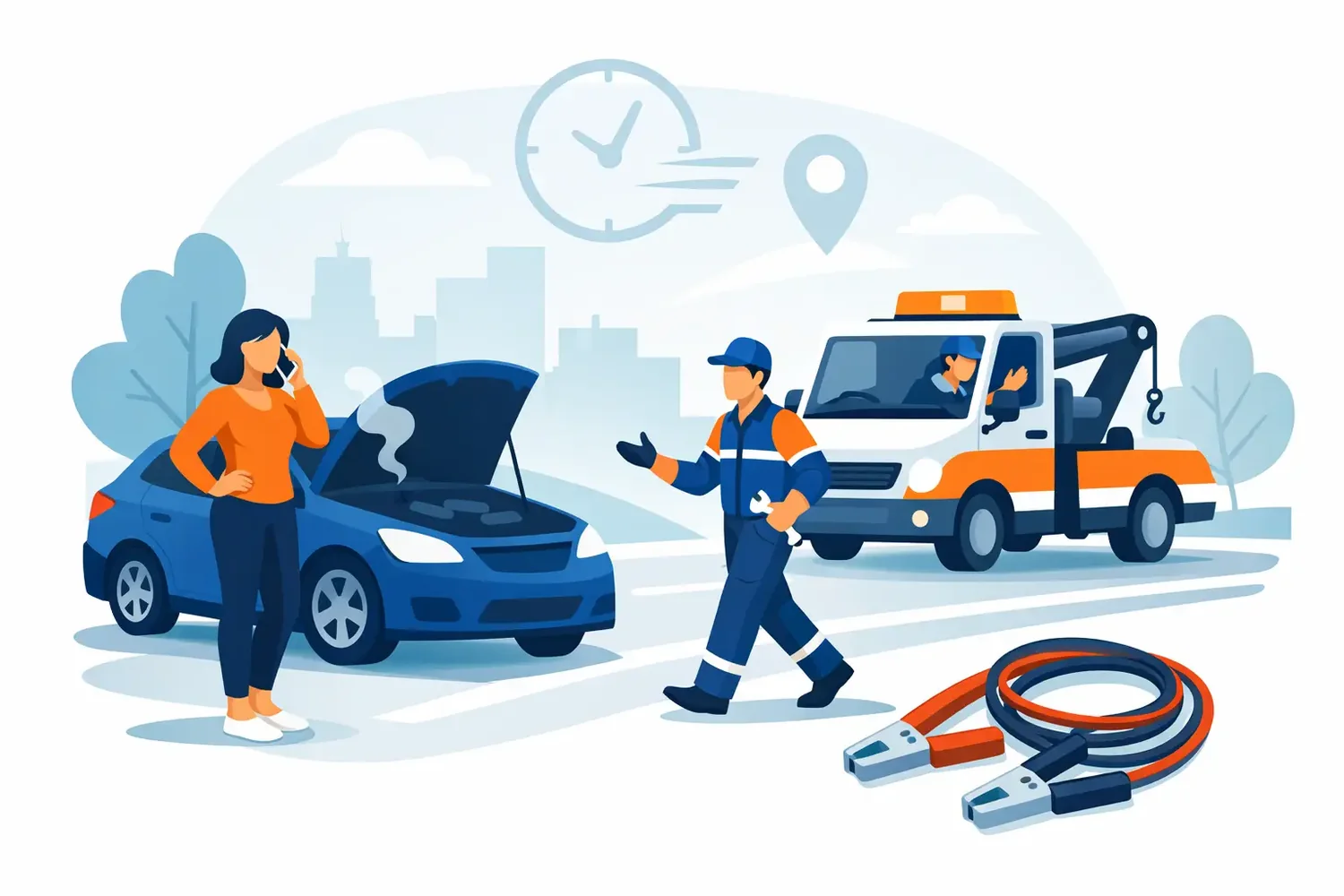
Your car was fine yesterday. Now you turn the key or press the start button and nothing happens, just a click, a slow crank, warning lights or complete silence. If you need car won't start help, start by keeping yourself and everyone with you safe. The quickest fix is not always the right fix if you are stopped in a live lane, on a blind bend or at the side of a motorway.
Take a breath, switch on your hazard warning lights and move away from traffic where it is safe to do so. Then focus on the symptoms. The sound your car makes, the dashboard lights and where you are parked can all point to the likely problem and help a roadside technician arrive prepared.
Car Won't Start Help: Make the Scene Safe First
If the vehicle has stopped in a dangerous position, do not keep attempting to start it while traffic passes close by. Put the handbrake on, select park or neutral as appropriate, and keep passengers on the safest side of the vehicle. On a motorway, get behind a safety barrier if you can do so safely. Never stand in front of or directly behind your car while someone tries to jumpstart it.
If you smell fuel, see smoke, notice leaking fluid, or the engine bay looks damaged, stop trying to start the car. Move a safe distance away and call for urgent assistance. A flat battery is common, but it is not worth guessing when there are signs of a more serious fault.
Your location matters too. A breakdown service will need your road name, nearby landmark, postcode if available, direction of travel and vehicle registration. On motorways, use the nearest driver location sign or marker post to identify your precise position. Clear details reduce delays and make it easier to send the right support.
What Happens When Your Car Will Not Start?
A non-starting car usually falls into a few familiar categories. Knowing the difference can save time, but you do not need to diagnose the fault yourself before calling for help.
The engine clicks or cranks slowly
A repeated clicking sound, dim dashboard lights or an engine that turns over very slowly often suggests a weak or flat battery. This can happen after leaving lights on, taking several short journeys, cold weather, or because the battery is nearing the end of its life.
A jumpstart may get you moving, but it is not always a permanent solution. If the battery is old, fails again soon after being jumped, or a warning light remains on, it may need replacing. There could also be an alternator issue preventing the battery from charging while you drive. A roadside technician can test the battery and charging system before advising whether a jumpstart, replacement or recovery is the sensible next step.
The dashboard lights come on but the engine will not turn
For manual cars, check that the clutch pedal is fully pressed down. For automatics, make sure the gear selector is firmly in Park or Neutral and try starting again. Some vehicles will not start unless these conditions are met.
If the steering wheel feels locked, gently move it left and right while turning the key or pressing start. Do not force it. A steering lock can feel alarming but may be a straightforward issue. If the car still will not respond, professional roadside help is safer than repeatedly forcing the ignition or controls.
The engine turns over but will not fire
When the engine cranks normally but does not start, the issue may involve fuel, ignition, a sensor, immobiliser or another engine-management fault. Check the fuel gauge, but do not assume it is accurate if it has been behaving oddly. Running out of fuel, especially on a diesel, can require more than simply adding a small amount from a fuel can.
Look for an immobiliser or key warning light. If you have a spare key, it may be worth trying it once. A flat key-fob battery can also prevent keyless cars from recognising the key, although many vehicles have a backup starting position explained in the handbook. If you are unsure, avoid random resets or online tricks that could create a further problem.
Nothing happens at all
No lights, no click and no response can indicate a completely flat battery, loose battery connection, blown fuse or electrical fault. Do not touch damaged wiring or attempt repairs at the roadside. Electrical faults can be unpredictable, particularly after heavy rain, a collision or rodent damage.
Checks You Can Make Without Tools
A few calm checks are useful, provided you are parked safely. First, turn off heaters, lights, the radio and phone chargers, then try starting once more. Check that the fuel level is not critically low and that the vehicle is in the correct gear position. If you have a manual key, make sure it turns smoothly rather than being forced.
For a keyless car, hold the key fob close to the start button if your handbook recommends it. A weak fob battery can sometimes be the reason the vehicle does not recognise the key. If the vehicle has been unused for days or weeks, a flat main battery becomes more likely.
Avoid repeated long start attempts. They can flatten the battery further, overheat the starter motor and make a simple problem harder to assess. Two or three sensible attempts are enough. After that, call for assistance and describe exactly what happened.
When a Jumpstart Is the Right Answer
A jumpstart can be a quick solution when the battery is flat and there are no warning signs of another fault. It is especially common after lights have been left on or during cold Scottish mornings, when older batteries can struggle.
However, modern cars are full of sensitive electronics. Connecting jump leads incorrectly can damage electrical systems, and some hybrid and electric vehicles have specific procedures. If you do not know where the approved jump points are, it is better not to guess. A trained roadside operative can connect equipment correctly, test the battery and help you understand whether it is safe to continue your journey.
Even after a successful jumpstart, avoid treating the problem as solved without thought. If the car starts but the battery warning light stays on, if it cuts out again, or if it has needed several jumpstarts recently, arrange a battery check or vehicle recovery. Continuing to drive could leave you stranded again, possibly in a less safe place.
When to Call for Roadside Assistance or Recovery
Call for professional help straight away if you are in an unsafe location, have passengers who need support, cannot identify the problem, or do not have the right equipment. It is also the right choice when the car has warning lights, smoke, fuel smells, fluid leaks, a damaged tyre, a locked steering system or signs of overheating.
A good roadside service should ask the practical questions first: where you are, what vehicle you drive, what symptoms you can see or hear, and whether you are in a safe place. That information helps them decide whether to send a jumpstart, battery replacement, tyre assistance, fluid top-up or recovery vehicle.
For drivers in Glasgow, across Scotland and elsewhere in the UK, Car Recovery 24 provides 24-hour support for common non-start issues and vehicle recovery when a roadside repair is not appropriate. Fast dispatch, direct communication and live ETA updates can make a difficult wait feel far more manageable.
What to Tell the Recovery Team
Before you call, have your registration number, make and model, location and a short description of the fault ready. Mention whether the car clicks, cranks, has no power, shows warning lights, has a flat tyre, or is blocking access. Let the team know if you have children, vulnerable passengers or are in a location that feels unsafe.
Be honest about any recent problems. Perhaps the battery has been weak for a week, the car overheated earlier, you filled up with the wrong fuel, or an engine warning light appeared before it stopped. These details are not there to judge you. They help the operative bring the correct equipment and avoid wasting time at the roadside.
A car that will not start is frustrating, but you do not need to turn a stressful moment into a risky repair job. Get somewhere safe, give clear information and let the right help get you moving again or recover the vehicle properly.