Car Fluid Leaks: What to Do Before You Drive
22 September 2026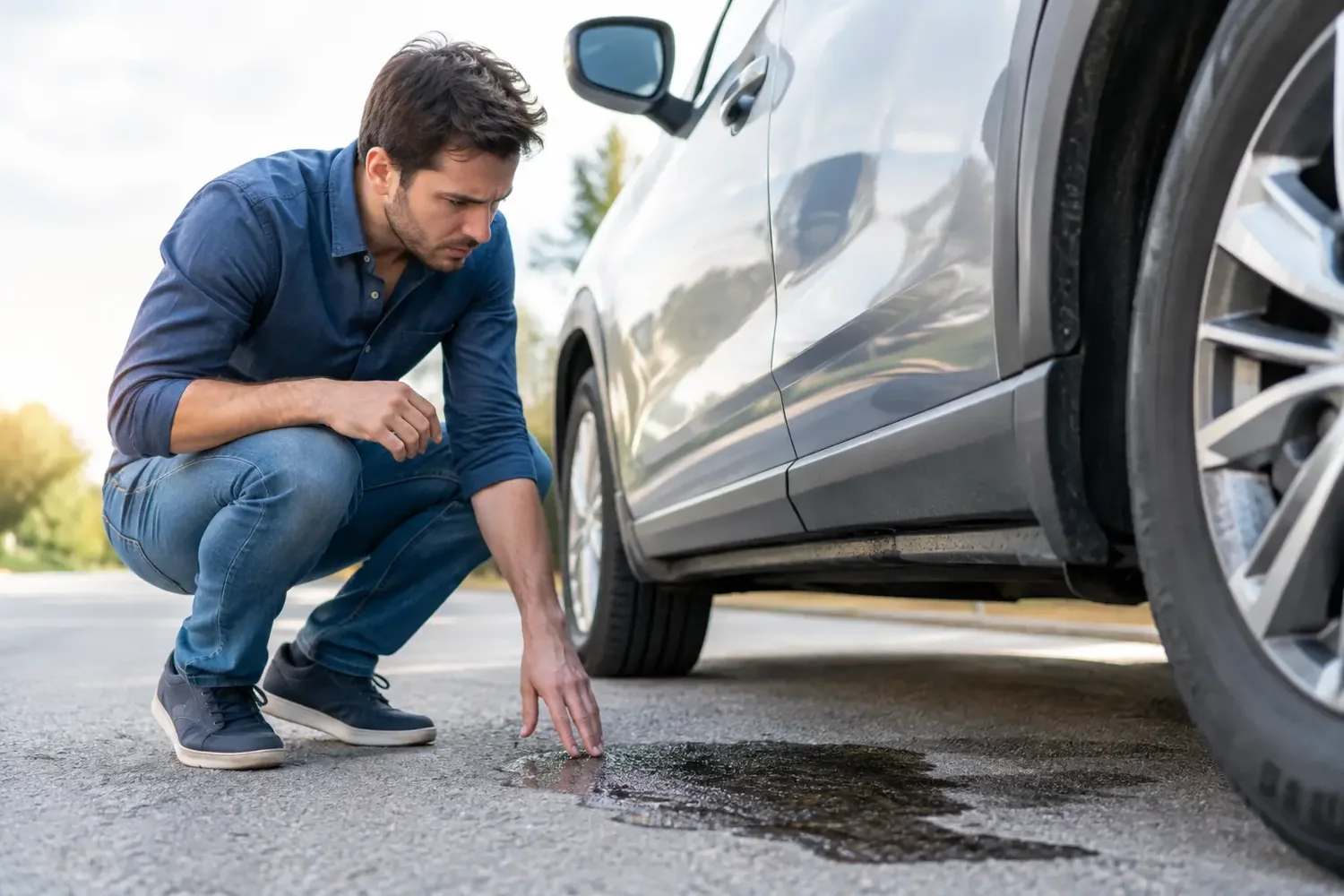
A fresh puddle beneath your car can change a normal journey very quickly. Car fluid leaks are not always an emergency, but guessing wrong can lead to an overheated engine, loss of braking performance or expensive damage. If you spot liquid under the vehicle before setting off, pause first. A few calm checks can help you decide whether it is safe to drive, needs roadside assistance, or needs recovery.
First, make the area safe
Do not kneel under a car parked on a live road, hard shoulder or busy car park. Pull over somewhere safe if you can, switch on your hazard lights and keep passengers away from traffic. If steam is coming from the bonnet, there is a strong fuel smell, or a warning light is on, turn the engine off and do not restart it until you know what is wrong.
Avoid touching any fluid. Engine oil and coolant may be hot, brake fluid can damage paintwork, and fuel is highly flammable. Never open a hot coolant expansion-tank cap. The pressure inside can force boiling coolant out without warning.
If the leak is small and you are safely parked, place a piece of clean cardboard under the car. This makes the colour and position of the drip easier to see. Take a photo too. It can be useful for a roadside technician or garage, especially if the leak stops before they arrive.
How to identify common car fluid leaks
The colour, feel, smell and location of a puddle offer useful clues, but they are not a diagnosis on their own. Modern fluids can become dirty as they circulate, while rainwater can spread a small leak across a much larger area.
Engine oil
Engine oil is usually brown, dark brown or black, and feels slippery. It may appear around the middle or front of the car, depending on the engine layout. A small oil seep does not always mean immediate failure, but a growing puddle, low oil level or red oil-pressure warning light is serious.
Do not drive with a red oil warning light showing. It can mean the engine is not receiving the lubrication it needs. Continuing even for a short distance may cause severe engine damage. Check the oil level only once the car is on level ground and the engine has had time to settle. If it is below the minimum mark, or the leak is active, arrange help rather than relying on a top-up alone.
Coolant or antifreeze
Coolant is often pink, red, blue, green or yellow, although its colour varies by vehicle and product. It can have a sweet smell and may leave a chalky residue once dry. Coolant leaks commonly come from hoses, the radiator, water pump or expansion tank.
An overheating warning, rising temperature gauge or steam from the bonnet means stop as soon as it is safe. Driving an overheated car risks warping the cylinder head or damaging the head gasket. Let the engine cool fully before checking the coolant level. Adding plain water may help only as a very short-term measure in an emergency, but it does not repair the fault or provide the correct antifreeze protection.
Brake fluid
Brake fluid is usually clear to amber and has a thin, oily feel. A leak may appear near a wheel, around the master cylinder under the bonnet, or along brake lines beneath the vehicle. The brake pedal may feel soft, sink further than usual, or require more pressure.
Treat suspected brake-fluid loss as urgent. Do not drive if the brake warning light is on, the pedal feels different, or the reservoir level is low. Brakes are not a system to monitor on the move. Call for roadside assistance or recovery and have the fault inspected properly.
Transmission fluid and power-steering fluid
Automatic transmission fluid is often red or reddish brown, though age can make it darker. It may leak around the centre of the car or near the gearbox. You may notice delayed gear changes, slipping or a burning smell. Manual gearbox oil is usually darker and can have a strong sulphur smell.
Some older or hydraulic power-steering systems use red, amber or clear fluid. A steering fluid leak can make the wheel feel heavy or produce a whining noise when turning. If steering becomes difficult, do not force the car onwards. Loss of control is a greater risk than the inconvenience of waiting for help.
Screenwash and air-conditioning water
Blue or brightly coloured fluid near the front of the car is often screenwash. It is normally less urgent than other leaks, although you should not ignore a damaged reservoir or hose. On wet, muddy or winter roads, working washers are a safety issue.
Clear water dripping beneath the front passenger area on a warm day is often condensation from the air-conditioning system. This is normal and should have no smell or oily feel. Clear water after rain could also be drainage from bodywork channels. If you are unsure, check for warning lights and monitor whether any fluid level is dropping.
Fuel
Petrol or diesel leaks need immediate attention. Fuel has a distinctive smell, may leave a rainbow sheen, and can appear anywhere along the fuel system. Do not start the car, smoke, use a naked flame or park near a source of ignition. Move people away from the vehicle where safe to do so and arrange recovery.
When a leak means you must not drive
A small drip does not automatically require a recovery vehicle. It depends on the fluid, how quickly it is leaking, your warning lights and how the car feels. However, there are clear situations where driving is not worth the risk.
Do not continue if there is a fuel smell or visible fuel, steam, an overheating engine, a red oil-pressure light, a brake warning light, poor brake response, heavy steering, smoke, or a rapidly growing puddle. The same applies if you have already topped up a fluid and it has disappeared again. A top-up can get you out of immediate trouble in limited circumstances, but it cannot seal a split hose, worn gasket or damaged pipe.
If you are on a motorway, do not attempt repairs beside the carriageway. Get behind a safety barrier when it is safe, stay well away from moving traffic and contact professional assistance. On a smart motorway, follow the signs and instructions provided, using an emergency area if you can reach one safely.
What roadside help can do
A trained roadside technician can inspect the visible source of a leak, check fluid levels, look for damaged hoses and assess whether a safe temporary measure is possible. For example, a low screenwash level or minor coolant top-up may be straightforward once the engine has cooled. A brake-fluid, fuel, major oil or active coolant leak usually needs a garage repair and, often, recovery.
The right decision is not always the cheapest-looking one at the roadside. Driving a few extra miles with low coolant can turn a hose repair into engine work. Continuing with a brake issue can put you, your passengers and other road users at risk. A proper assessment provides clarity when the symptoms are unclear.
For drivers in Manchester, Liverpool, Preston, Coventry and Glasgow, Car Recovery 24 can provide practical roadside support and recovery when a fluid leak makes it unsafe to continue. Clear information helps speed things up: tell the operator where the puddle is, its colour if known, any dashboard warnings and whether the car is still driveable.
Reduce the chance of future leaks
Most leaks begin as a small issue rather than a sudden puddle. Check oil, coolant and screenwash levels regularly, particularly before a long journey. Pay attention to new smells, a temperature gauge that runs higher than usual, fresh stains on your driveway and fluid levels that need repeated topping up.
Use the fluid specification stated in your vehicle handbook. Mixing the wrong coolant or using unsuitable oil can create further problems, even if the level looks correct. Keep up with servicing too, as hoses, seals and clips can be checked before they fail completely.
A puddle under your car is your cue to slow down, not push your luck. Protect the engine, keep clear of traffic and get the vehicle checked before a manageable leak becomes a breakdown.