12 Best Items for Your UK Car Breakdown Kit
4 September 2026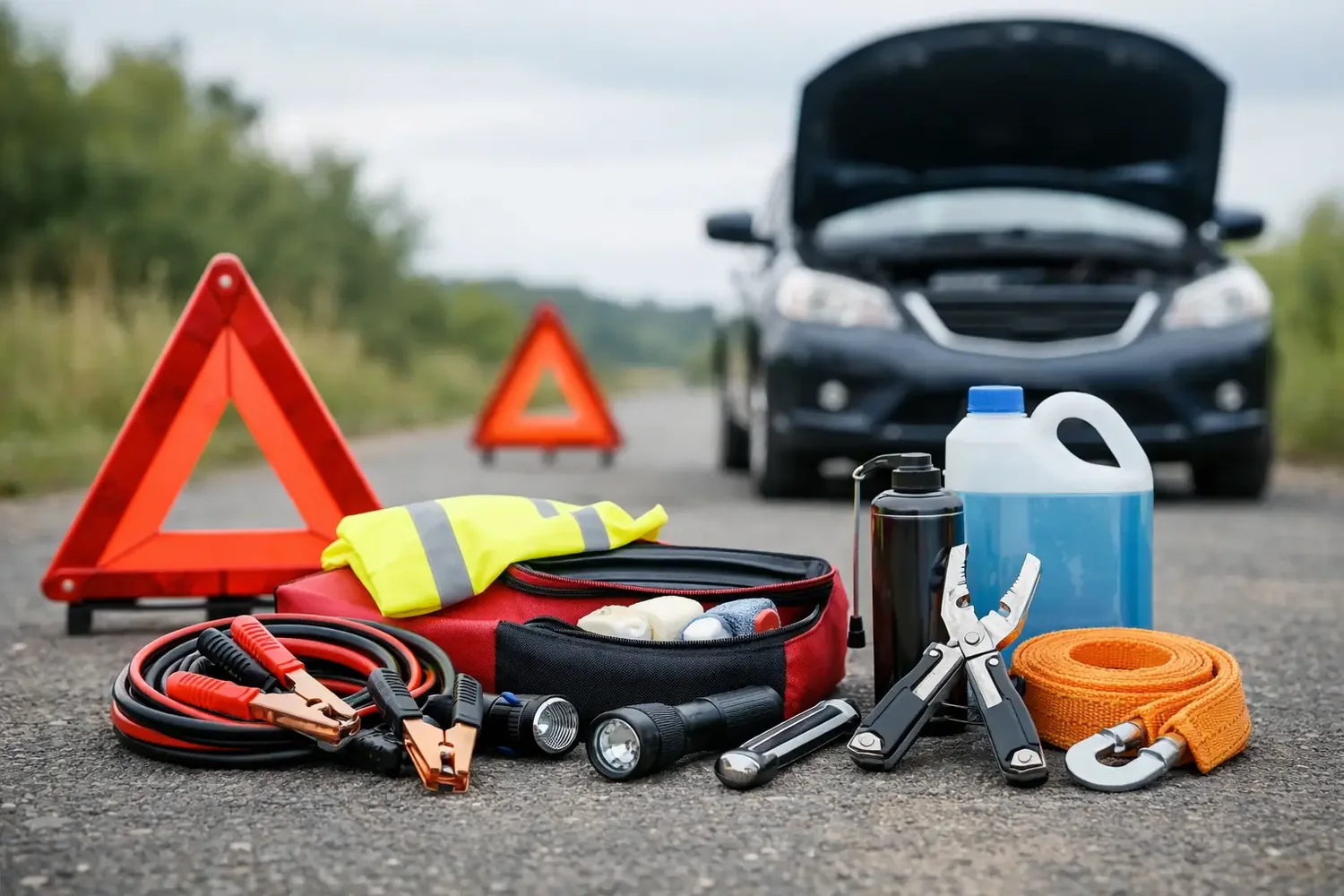
A flat battery in a supermarket car park is frustrating. The same problem on a wet, dark roadside with children in the back is a safety issue. The best items for a breakdown kit are not about turning you into a mechanic. They help you stay visible, warm, informed and prepared while you deal with a simple problem or wait for professional roadside assistance.
A good kit should fit in one small bag or plastic box in the boot. Keep it easy to reach, rather than buried under luggage, and check it before a long journey. What you carry will depend on your vehicle, where you drive and who travels with you, but the essentials below cover the situations recovery teams see every day.
Put safety ahead of repairs
If your vehicle loses power, develops a warning light or suffers a puncture, get as far from moving traffic as you safely can. Switch on your hazard lights, apply the handbrake and make sure everyone exits on the side away from traffic where possible. On a motorway, get behind the barrier if it is safe to do so. Do not attempt roadside repairs on the hard shoulder.
Your breakdown kit is there to reduce risk and make a delay more manageable. It should never encourage you to take chances around fast-moving traffic, in poor visibility or near a hot engine. If you feel unsafe, cannot identify the problem, or your car is in a dangerous position, call for help straight away.
12 best items for a breakdown kit
1. High-visibility jackets
Keep a high-vis jacket for every regular passenger, not just the driver. A bright jacket makes you easier for other road users and recovery staff to spot in rain, fog or darkness. Store them inside the passenger area if you can, because an inaccessible jacket in a packed boot is no help when you need to leave the car quickly.
2. A charged torch or head torch
Your mobile phone's torch is useful, but it drains the battery and leaves you with one hand occupied. A compact LED torch with spare batteries is a better option. A head torch is particularly useful for checking a tyre, finding vehicle documents or speaking to a technician after dark.
Check it every few months. A torch that has sat through two winters with flat batteries is one of the most common weak points in a kit.
3. Warning triangle, used with care
A warning triangle can help alert approaching traffic on quieter roads where it is safe to place. It is not suitable for motorways or any fast road where walking behind your vehicle would put you at risk. Never use it if you would have to enter live traffic or cross a carriageway.
Think of it as an optional visibility aid, not a reason to leave a safe place. Hazard lights and your own safety come first.
4. A properly inflated spare wheel or tyre repair kit
Before buying extra equipment, find out what your car already has. Some vehicles have a full-size spare, others a space-saver wheel, while many newer cars only come with a sealant and compressor kit. Make sure the spare is correctly inflated and that you have the locking wheel nut key if your wheels use one.
A repair kit may only work on a small puncture in the tyre tread. It will not safely fix damage to the sidewall, a split tyre or a badly damaged wheel. In those cases, roadside recovery or a replacement wheel is the sensible option.
5. A tyre inflator and pressure gauge
A 12V tyre inflator can save a call-out when a tyre is simply low on pressure, and it is useful after using a temporary sealant kit. Choose one with a clear gauge and follow the pressure shown on the driver's door frame, fuel flap or handbook.
Do not keep reinflating a tyre that is losing pressure. A screw, nail or damaged valve can turn a manageable issue into a blowout if ignored. Inflate it only enough to reach a safe inspection point or arrange help.
6. Jump leads or a jump starter pack
A flat battery is one of the most frequent reasons drivers need help, especially after cold weather, short journeys or lights being left on. Heavy-duty jump leads are useful, but only if you know the correct connection procedure and can safely access another suitable vehicle.
A lithium jump starter is often simpler because it does not require a second car. Keep it charged and check its instructions before you need it. If the battery repeatedly goes flat, the cause may be an ageing battery, charging fault or electrical drain. A jumpstart gets you moving, but it may not solve the underlying problem.
7. Screenwash and a small bottle of water
UK roads can coat a windscreen with spray, salt and grime within minutes. Carrying ready-mixed screenwash helps you maintain clear vision in poor weather. Plain water can be useful for washing dirty hands, rinsing a windscreen or taking medication, but do not pour cold water onto an overheating engine.
Keep a separate drinking water bottle for passengers, particularly when travelling with children or through remote areas. In very cold weather, choose screenwash with suitable frost protection.
8. Gloves, wipes and a small cloth
Nitrile or work gloves protect your hands if you need to inspect a wheel, add washer fluid or handle a dirty fuel cap. Wet wipes and a microfibre cloth are equally practical. They deal with muddy hands, fogged glass and minor spills without taking up much room.
Avoid loose clothing and keep hands clear of belts, fans and other moving engine parts. Even after the ignition is switched off, some components may remain hot.
9. A basic first-aid kit
A compact first-aid kit should cover minor cuts, blisters and headaches while you wait. Include plasters, sterile dressings, antiseptic wipes, gloves and any personal medication your family may need. Review expiry dates at least once a year.
For a serious injury or an immediate danger, call 999. A first-aid kit is for immediate basic care, not a substitute for emergency medical support.
10. Warm layers and a waterproof blanket
A breakdown can last longer than expected, particularly in winter, during heavy rain or in a rural location. A foil survival blanket takes almost no space, while an old fleece or waterproof blanket is more comfortable if you are waiting with children or an older passenger.
In summer, a light rain poncho and sun protection can be just as useful. Your kit should suit the conditions you are most likely to drive in, not only the weather outside when you pack it.
11. Mobile phone charger and power bank
Your mobile is your direct line to roadside assistance, family and emergency services. Keep a charging cable that fits your mobile phone, plus a charged power bank for situations where the car battery is flat or you need to wait away from the vehicle.
Save key contacts before a journey and make a note of your location. A postcode, road number, motorway marker post, nearby junction or recognisable landmark allows a recovery operator to reach you faster. If you are able to use WhatsApp, sharing your location can also remove uncertainty.
12. Vehicle documents and a notepad
You do not need to carry every vehicle document, but keep useful details available: registration number, insurer, breakdown cover information, locking wheel nut location and any relevant medical or accessibility needs. A pen and small notepad are handy if your phone battery is low or you need to record instructions.
When you call for recovery, be ready to explain the vehicle make and model, the fault, whether the car is safe to move, and exactly where you are. Clear information helps the right vehicle and equipment get dispatched first time.
Items that need checking, not just packing
A breakdown kit is only useful if it works. Every three to six months, test the torch, recharge the jump pack and power bank, inspect the first-aid kit, and check the spare wheel pressure. Replace leaking screenwash bottles and make sure the tyre inflator still has its hose and adaptor.
Also check your car itself before longer trips. Tyre condition, oil level, coolant level, lights and battery health matter more than any item in the boot. If a warning light has appeared, a tyre keeps losing air, or the engine temperature is rising, do not wait for a more convenient time to investigate it.
Know when to call for roadside help
Some faults are not sensible roadside jobs. Call for assistance if the engine overheats, you smell fuel or burning, the car will not restart after a jumpstart, a tyre is damaged beyond a simple repair, or a warning light is red. The same applies if you are stranded in a vulnerable location, travelling with children, or simply do not feel confident working near the road.
Drivers in Glasgow, Manchester, Liverpool, Preston and Coventry can get practical support for common problems such as flat batteries, punctures, fluid top-ups and vehicle recovery. CarRecovery24.uk can provide clear updates and professional help when a kit cannot get you safely back on the road.
Pack for the delay you hope never happens, then keep the bag where you can reach it. That small bit of preparation gives you more control in a stressful moment and lets you make the safest next call.