24 Hour Roadside Recovery When You Need It
26 June 2026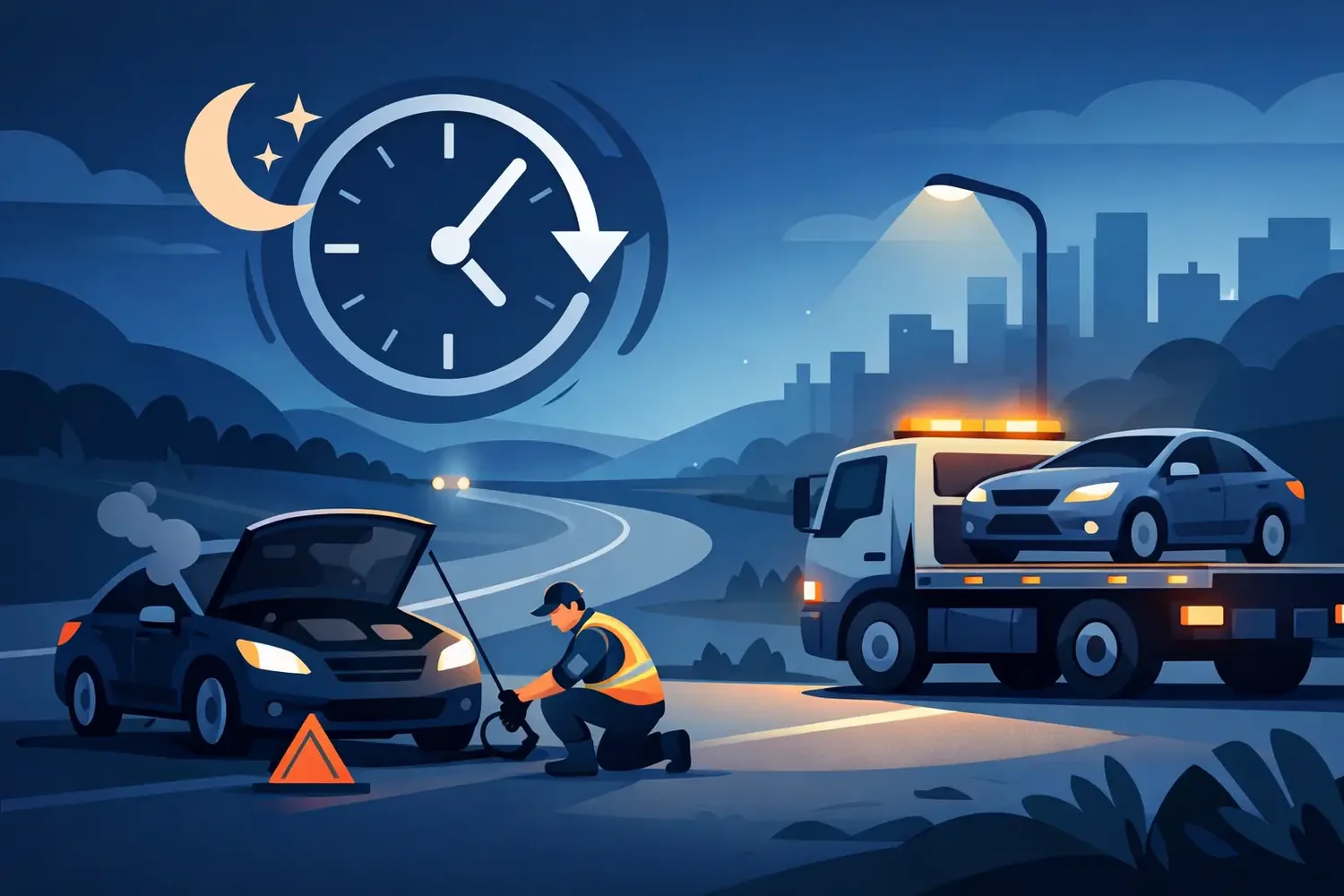
A breakdown rarely happens at a convenient time. It is usually dark, raining, you are already late, or you have children in the back asking how much longer. That is exactly when 24 hour roadside recovery matters most. It is not just about moving a broken-down car. It is about getting help quickly, staying safe at the roadside, and knowing someone is taking control of the situation.
For most drivers, the real problem is not only the vehicle fault. It is the uncertainty that follows. You need to know whether the issue can be fixed there and then, how long help will take, what the next step is, and whether your car will be handled properly. In that moment, clear communication and quick dispatch matter as much as the recovery itself.
What 24 hour roadside recovery actually includes
A lot of people hear the term and think it only means a tow lorry. In practice, 24 hour roadside recovery can cover several types of urgent support depending on the fault, your location, and the condition of the vehicle.
If your battery is flat, the quickest solution may be a jumpstart or battery replacement at the roadside. If you have a puncture, a tyre change might get you moving again without needing full recovery. If the engine has overheated, a coolant top-up or a basic roadside check may be enough to prevent further damage and help assess whether it is safe to continue. When the issue is more serious, such as engine failure, accident damage, electrical faults or a vehicle that will not start at all, recovery to a garage, home or another safe destination is usually the right option.
That is why a proper roadside recovery service should not treat every call the same way. Some jobs need fast roadside assistance. Others need secure vehicle transport. The best service is the one that can make that judgement quickly and act on it without adding more stress.
Why speed matters in 24 hour roadside recovery
When your car stops on a busy road, in a car park late at night, or on an unfamiliar route, every extra minute feels longer than it is. Speed matters for obvious reasons, but not only because you want to get on with your day.
A stranded vehicle can become a safety issue very quickly. That is especially true on dual carriageways, country roads with poor visibility, or city streets where traffic is heavy. Families with young children, older drivers, and anyone travelling alone often feel the pressure even more. Fast response reduces the time you are exposed to those risks.
There is also the issue of damage control. Continuing to drive a vehicle with the wrong warning light, overheating problems or a tyre issue can turn a manageable repair into a much larger bill. A prompt recovery service helps protect the vehicle as well as the driver.
Speed, however, should not mean guesswork. A quick arrival is useful, but only if the operator also gives realistic ETAs, answers the phone promptly, and keeps you updated. Drivers do not want vague promises. They want to know help is actually on the way.
The difference between roadside assistance and full recovery
This is where many drivers are unsure, especially if they have never needed help before. Roadside assistance focuses on fixing minor issues where the car is. Full recovery is for situations where the vehicle cannot be made roadworthy at the scene.
If you have left your lights on and drained the battery, roadside assistance is often enough. The same applies to some flat tyres, minor fluid issues, or simple starting problems. If the clutch has failed, the gearbox has gone, the vehicle has been involved in a collision, or the fault cannot be diagnosed safely on the roadside, recovery is the safer route.
There are grey areas. A car may start after a jumpstart, but if the battery or alternator is failing, it may stop again a few miles later. A temporary tyre change can help, but only if the spare is usable and the rest of the vehicle is safe. This is why experienced recovery operators matter. They know when a quick fix is appropriate and when it would only delay the real problem.
What to expect when you call for help
In an emergency, people do not want a complicated process. They want a direct answer and a clear next step. A reliable service should ask for your location, vehicle details, the fault if known, and whether you are in a safe place. From there, the priority is dispatch.
Good communication makes a major difference. Real-time ETA updates, phone confirmation, and even WhatsApp messaging can take a lot of pressure off the driver. Instead of standing by the roadside wondering whether anyone is coming, you know who is attending, when they are due, and what will happen next.
That kind of contact is not a luxury. It is part of good breakdown support. If you are stuck in Glasgow city traffic, on a quieter road near Stirling, or travelling between Edinburgh and Falkirk, the situation is stressful enough. You should not also have to chase the recovery company for basic information.
When local coverage gives you an advantage
National coverage sounds reassuring, and for some drivers it will be the right fit. But when you need urgent help, local response often has a practical advantage. A recovery team with strong knowledge of the area can usually route faster, judge traffic conditions better, and reach you without the delays that come from distant dispatch systems.
This matters in places where roads change character quickly, as they do across much of Scotland. A breakdown in central Glasgow is very different from one on a quieter route outside the city or on the way to a smaller town. Local knowledge helps with timing, access and choosing the safest collection point.
For a company like carrecovery24.uk, that mix of UK-wide support and strong visibility in Scotland is useful because it speaks to what drivers actually need - help that is available around the clock, but with the responsiveness of a service that understands the roads it covers.
How to stay safe while waiting for recovery
Your first priority is not the car. It is you and anyone with you. If the vehicle can be moved safely off the road, do so. If not, switch on your hazard lights and follow current road safety guidance for your location and circumstances. If you are on a motorway or a high-speed road, the safest action may be to move away from the vehicle and contact emergency support and recovery from a secure place.
If you are in a car park or on a quieter street, stay visible, keep your phone charged if possible, and avoid accepting help from unverified strangers if you already have professional assistance on the way. If you are travelling with children, keeping them calm and inside a safe area is often as important as anything happening with the vehicle.
A good recovery service should support this stage too. Calm instructions, quick answers and accurate arrival information can make the wait feel more controlled.
Choosing the right 24 hour roadside recovery service
Not every provider offers the same level of help, even if they use similar wording. Some only transport vehicles. Others provide roadside fixes as well. Some operate with clear insured handling and live updates. Others leave customers waiting with limited information.
The right service is usually the one that combines four things: quick response, practical roadside capability, proper vehicle handling, and clear communication. Price matters, but in an urgent breakdown, transparency matters more than simply finding the cheapest quote. A low price means little if the wait is excessive or the service cannot actually solve the problem.
It is also worth looking for visible trust signals. Reviews, insured operation, licensed drivers, and evidence of regular recovery work all help. During a stressful situation, reassurance is not a small detail. It is part of the service.
Why drivers remember the experience, not just the repair
Most people will not remember the exact mechanical fault for long. What they remember is how they were treated when the car stopped working. They remember whether somebody answered quickly, whether the ETA was honest, whether the operator was calm, and whether the vehicle was handled with care.
That is the real value of 24 hour roadside recovery. It gives drivers a dependable next step when plans fall apart. Whether the fix is a jumpstart, a tyre change, a battery replacement or a full vehicle recovery, the goal is the same - make the situation safer, clearer and easier to manage.
If your car lets you down, the best help is the kind that arrives quickly, speaks plainly, and gets you from stranded to sorted without adding more stress.